Mastering Content Calendar Planning for Creators: A 30-Day Plan
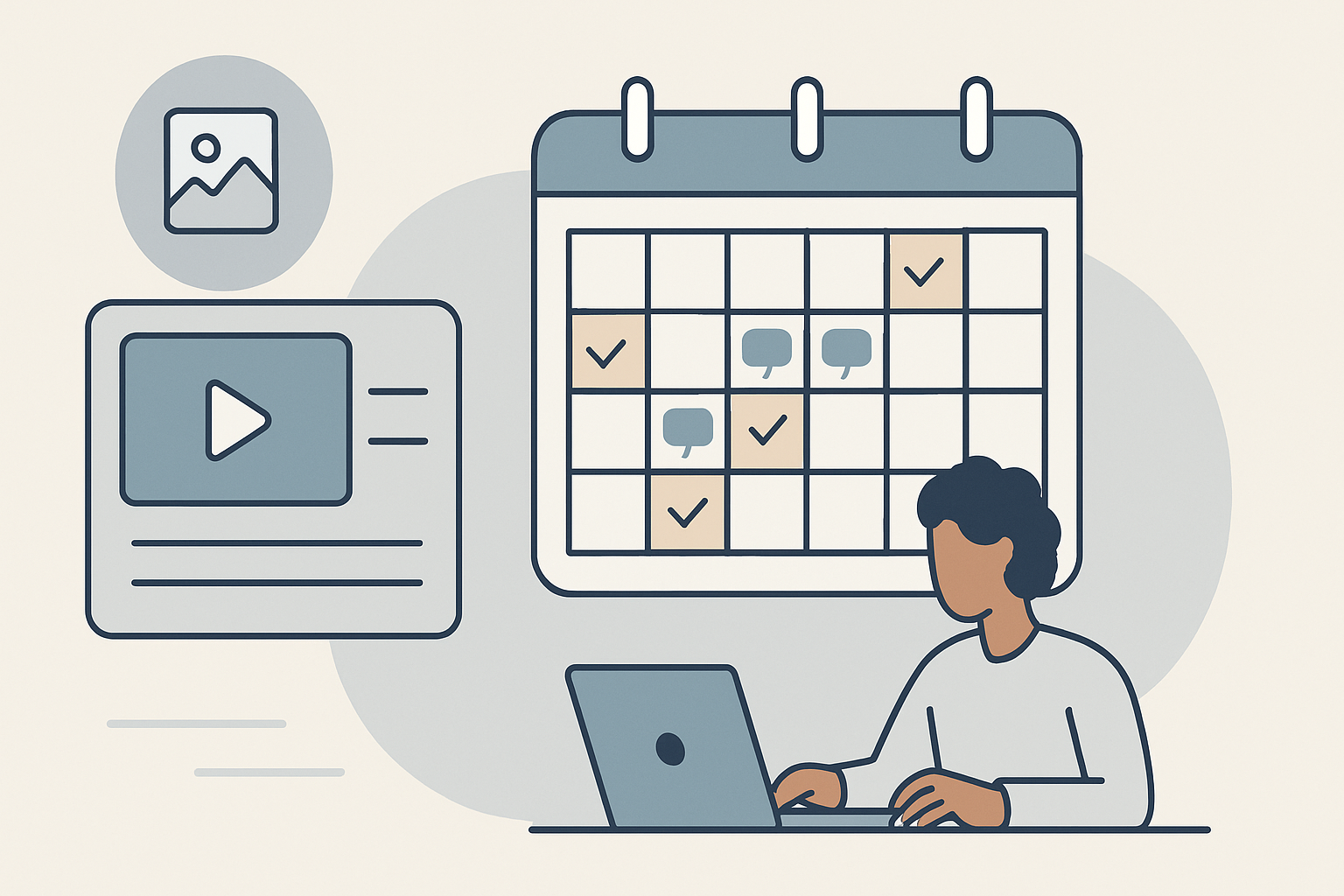
Use a 30-day content calendar split into weekly stages to organize research, production, publishing, and analysis so you can keep publishing consistent and manage workload. The plan pairs clear goals, core content pillars, and shared digital tools to make each step repeatable.
Key takeaways
- A content calendar is a roadmap that states what you will publish, which platforms you will use, and when.
- Follow a week-by-week 30-day plan: week 1 for research and brainstorming; week 2 for drafting; week 3 for design and production; week 4 for distribution and analysis.
- Start by identifying core content pillars that align with your brand and audience, and use digital tools like Google Calendar or Trello to organize the schedule visually.
- Set specific, measurable, time-bound objectives and track KPIs such as likes, shares, comments, website traffic, or engagement; the article gives examples like increasing website traffic by 20% or boosting social media engagement by 30%.
- Review and update the calendar regularly, collaborate with your team using shared tools, include flexibility for spontaneous opportunities, and avoid overloading the schedule to keep production sustainable.
In the ever-evolving digital landscape, content creators often find themselves overwhelmed by the sheer volume of work required to maintain a consistent and engaging online presence. This is where a robust strategy for content calendar planning creators becomes indispensable. By developing a structured 30-day plan, creators can streamline their workflow, enhance their content strategy, and ultimately achieve greater engagement and success. This guide will walk you through an effective plan, with insights into best practices and common pitfalls to avoid, ensuring your content calendar planning is as effective as possible. For more insights into the importance of structured planning in content creation, you can explore resources like Copyblogger.
1. Understanding the Basics of Content Calendar Planning Creators
To effectively engage in content calendar planning creators, it's crucial to understand the basics. A content calendar is essentially a roadmap that outlines what content you will publish, on which platforms, and when. This strategic tool helps creators maintain consistency, save time, and ensure a balanced mix of content types.
- Practical point 1: Begin by identifying your core content pillars. These are the main themes or topics that align with your brand and audience interests.
- Practical point 2: Use a digital tool like Google Calendar or Trello to organize your content schedule visually.
- Practical point 3: Incorporate flexibility in your calendar to accommodate spontaneous content opportunities or trends.
For a deeper understanding of aligning your content strategy with business goals, explore our article on Boost Your Strategy with LinkedIn Content Systems for Teams.
2. Setting Goals and Objectives
Effective content calendar planning creators starts with setting clear goals and objectives. Knowing what you aim to achieve with your content helps in creating a focused plan that drives results.
- Specificity: Define precise objectives such as increasing website traffic by 20% or boosting social media engagement by 30%.
- Measurable metrics: Identify key performance indicators (KPIs) to track progress, such as likes, shares, and comments.
- Time-bound targets: Set deadlines for achieving these goals to maintain momentum and accountability.
For insights into setting realistic goals, consider reading from the Content Marketing Institute, which provides comprehensive strategies and examples.
3. Crafting a 30-Day Content Plan
Creating a 30-day content plan involves detailed scheduling and strategic planning. By following this process, you can ensure your content calendar planning creators is effective and manageable.
- Week 1: Focus on research and brainstorming. Gather data on trending topics and audience preferences.
- Week 2: Develop content drafts. This includes writing, video scripting, or podcast planning.
- Week 3: Design and production. Create visuals, edit videos, and refine content.
- Week 4: Distribution and analysis. Publish content and engage with your audience to gather feedback.
To understand how AI can streamline this process, explore our interview on AI and the Future of Content Marketing: A Dynamic Discussion.
4. Real-World Applications of Content Calendar Planning
Applying content calendar planning creators strategies in the real world involves analyzing successful case studies and adapting those insights to your own creation process.
- Example 1: A tech blogger increased traffic by regularly updating their content calendar to align with industry events and product launches.
- Example 2: A fashion influencer boosted engagement by planning seasonal content well in advance, allowing for timely and relevant posts.
For a closer look at how strategic planning impacts success, check out our article on Maximizing Success: LinkedIn Content Systems for Consultants.
5. Best Practices for Content Calendar Planning Creators
Implementing best practices in content calendar planning creators can enhance your efficiency and effectiveness significantly.
- Best Practice 1: Regularly review and update your content calendar to reflect changes in audience preferences or market trends.
- Best Practice 2: Collaborate with your team using shared tools to ensure everyone is aligned and informed.
- Best Practice 3: Avoid overloading your calendar. Maintain a sustainable pace that allows for quality content production.
Discover more tips on enhancing your content strategy in our comprehensive resources available at ContentPod.
6. Overcoming Challenges in Content Calendar Planning Creators
Even with a well-structured plan, content calendar planning creators face several challenges. Understanding these common mistakes can help you mitigate risks and optimize your workflow.
- Challenge 1: Neglecting analytics. Regularly analyze performance data to refine your strategy and improve results.
- Challenge 2: Being inflexible. Allow room for spontaneity to capitalize on trending topics and timely content opportunities.
- Challenge 3: Overcomplicating the process. Keep your content calendar simple and focused to avoid overwhelming yourself and your team.
For additional resources on overcoming content strategy challenges, visit HubSpot.
Conclusion: Making the Most of Content Calendar Planning Creators
By mastering content calendar planning creators, you can transform your content strategy into a powerful tool for growth and engagement. Remember, consistency and adaptability are key. As you integrate these strategies, consider leveraging platforms like ContentPod for expert insights and resources. Start planning today, and watch your content reach new heights.
Frequently Asked Questions
What is content calendar planning creators?
Content calendar planning for creators involves organizing and scheduling content creation and publication in advance. This strategic approach helps maintain consistency, aids in achieving business goals, and enhances audience engagement.
How do I start content calendar planning creators?
Begin by defining your content goals, understanding your audience, and selecting the right tools. Use a mix of content types and maintain flexibility to adapt to changes and trends.
What tools can assist in content calendar planning creators?
Tools like Trello, Google Calendar, and CoSchedule can help organize and visualize your content calendar, ensuring you stay on track with your planning and publishing schedule.
References & Further Reading
- How to Create a Content Calendar
- Content Planning Strategy
- Marketing Statistics 2025
- Content Marketing Tools
Put this into practice
Share this post
You Might Also Like
Discover more content tailored to your interests
 Highly Relevant
Content Repurposing Examples from One Source
Content repurposing examples are practical ways to turn one original asset, such as a webinar, interview, or blog post, into multiple formats like social posts, email copy, short videos, FAQs, and downloadable guides.
Read More Highly Relevant
AI-Assisted Content Repurposing Marketing in 30 Days
Use AI to turn one strong source into multiple channel-ready assets while your team edits and approves them. A practical 30-day plan starts with a content audit, moves into template-based drafting and clear ownership, and finishes with measurement so you know which formats to scale next month.
Read More Highly Relevant
Content Calendar Planning for B2B: Mistakes to Avoid
Align your calendar to recurring buyer questions and buying-stage needs so each asset helps prospects compare options, reduce implementation risk, or move closer to purchase. Pick a sustainable cadence of fewer, stronger pieces and make the calendar a repeatable operating system rather than a collection of urgent one-offs.
Read MoreReady to create amazing podcast content?
Choose a plan and start generating professional podcast content with AI
View Pricing Plans