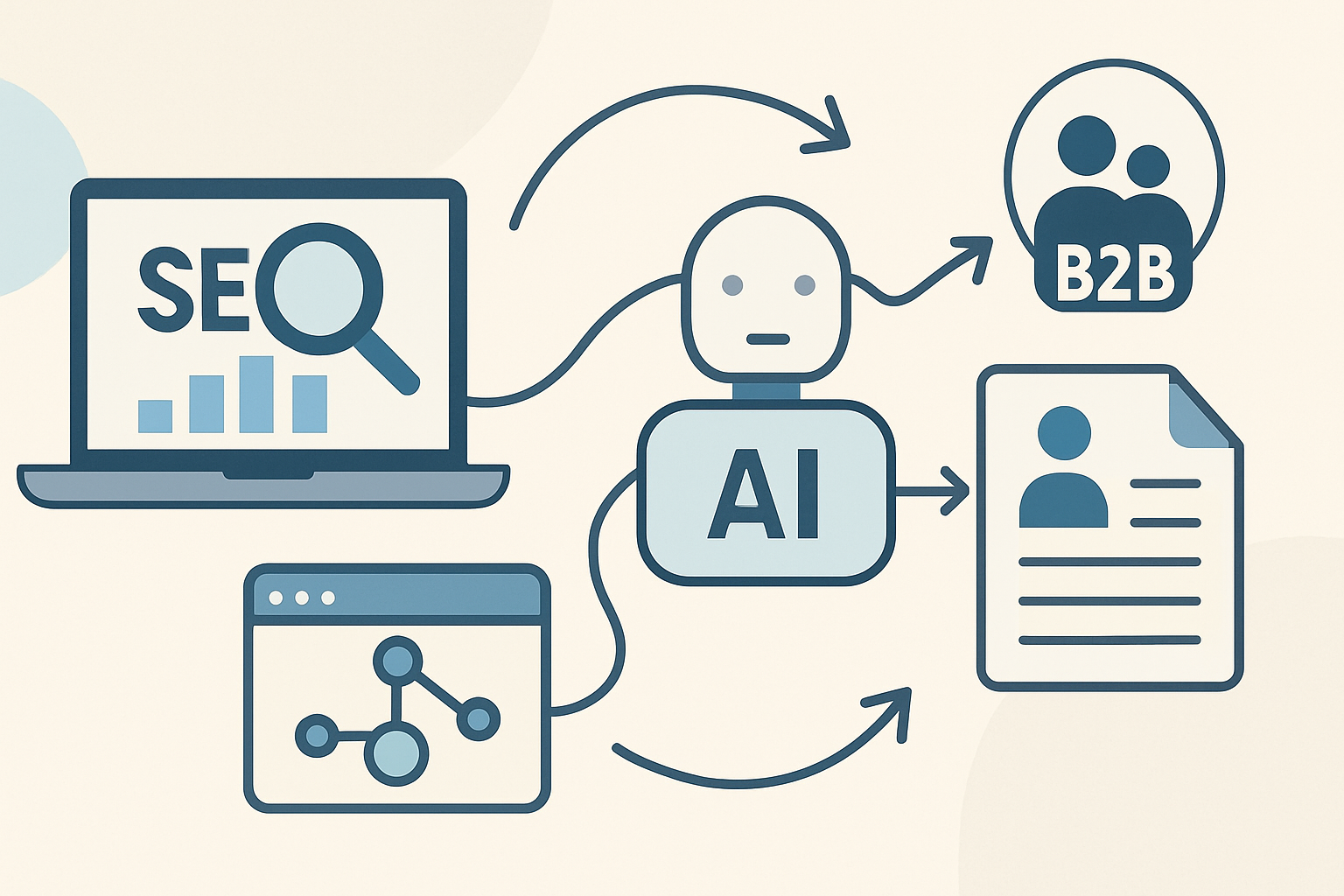
Build an SEO workflow that ties a clear keyword strategy to content mapped to the buyer's journey, with regular audits and performance tracking. Use AI tools to speed content creation and automate updates so your content stays relevant while the team focuses on strategy and conversion.
Establish a repeatable SEO workflow that includes keyword research, content creation, on-page optimization, and performance monitoring, and use a content calendar plus AI tools to automate routine work and maintain consistency. That combination helps improve search rankings and keeps your content aligned with audience intent.
Using AI inside SEO workflows helps content consultants increase efficiency and consistency and make content decisions more data-driven. AI automates routine tasks and surfaces performance insights so consultants can focus on strategy and quality.
Follow a focused 30-day workflow that sequences keyword research, content creation, on-page optimization, and regular performance analysis to improve search visibility and make content production more efficient. The plan also shows how to use AI tools and a content calendar to speed production and keep content aligned with your audience and business goals.
An effective SEO workflow combines clear team roles, focused keyword research, AI tools for analysis and automation, regular content audits, and a content calendar so AI-assisted content is both search-optimized and engaging. Following this framework reduces time on repetitive work, helps content stay aligned with analytics and algorithm updates, and improves visibility.
Pair a defined SEO process—keyword research, content creation, on-page optimization, and performance analysis—with selected AI tools and clear role assignments to increase efficiency and search visibility. Use AI to automate repetitive tasks and analyze data, while keeping humans responsible for strategy and quality control.
A structured SEO workflow that combines keyword research, content planning, on-page optimization, and performance analysis helps content teams produce work that ranks and increases organic traffic. This playbook explains how to set goals, understand audience needs, use tools like Moz and Ahrefs, integrate SEO into content creation, and follow practical best practices for ongoing improvement.
A structured 30-day workflow that aligns B2B content to business goals and target audiences will improve organic visibility and audience engagement. Set clear objectives, use a keyword strategy, add selective AI for editing and analytics, and measure performance weekly to make adjustments.
Use a structured, repeatable SEO workflow that starts with keyword research and content planning, continues through optimized content creation, and includes defined roles, tool integration, and ongoing training to improve efficiency, consistency, and search performance. The article outlines a 30-day plan with practical steps to help content teams build and adopt those workflows.
Embed AI across your SEO workflow to automate keyword research, generate consistent SEO-ready content, personalize distribution, and apply NLP for voice search. These steps make SaaS content more relevant, easier to scale, and more likely to drive higher organic traffic and engagement.
A structured SEO workflow that starts with keyword research, then content planning, and on-page optimization improves a piece of content's chance to rank and attract the intended audience. Using tools and repeatable steps makes SEO work measurable and easier to apply across multiple pieces.
You can implement effective SEO workflows by following a repeatable process that guides keyword research, content creation, and on-page and technical optimization, and by aligning that process with audience insights, a content calendar, and measurable performance metrics. Adding off-page work such as backlinks and regular content updates helps improve visibility and lets you track results.