Amazon Unveils Next-Generation Robot in $11.6B European Push
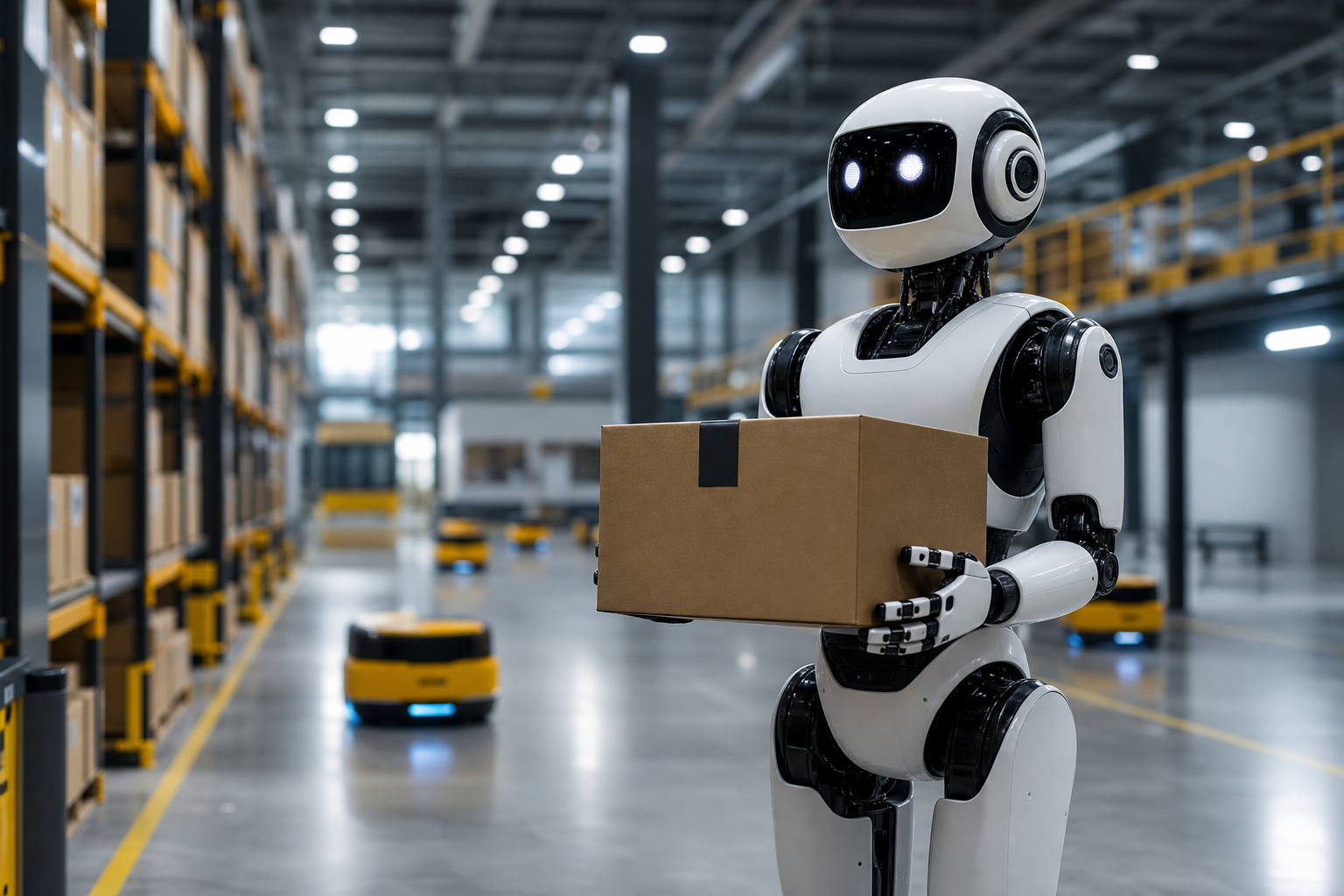
Amazon has launched a next-generation warehouse robot as part of an $11.6 billion investment in Europe to accelerate automation across its logistics network. The robot uses AI, machine learning, sensors and IoT to operate autonomously and shorten order processing and delivery times.
Key takeaways
- The robot combines real-time data processing, sensors, cameras, machine learning and IoT so it can navigate warehouses and manage inventory with reduced human intervention.
- Amazon is deploying the technology across Europe as part of an $11.6 billion plan to increase operational capacity, address labor shortages and speed deliveries.
- Pilot programs produced measurable results: tests in Germany reduced order processing times, and Amazon’s internal studies report a 20% increase in packaging throughput in Italy.
- Integration challenges include high initial deployment costs, the need for a skilled workforce to manage and maintain systems, and potential resistance from employees concerned about jobs.
- Recommended steps for businesses are to begin with pilot programs, invest in workforce training for working alongside robots and regularly update robotics strategy to align with new technology and business goals.
In a strategic move that underscores its technological ambitions, Amazon has introduced its next-generation robot, part of a substantial $11.6 billion investment in Europe. This announcement has stirred significant excitement and curiosity in the tech community. As Amazon unveils this next-generation robot, stakeholders are keen to understand its potential impact on logistics and e-commerce. In this article, we delve into the features of this innovative technology, explore its implications for the industry, and analyze what this means for businesses and consumers alike. Read the original announcement here.
1. Understanding the Technology Behind Amazon's Next-Generation Robot
The unveiling of Amazon's next-generation robot marks a significant leap in automation technology. Designed to enhance operational efficiency, this robot integrates advanced AI and machine learning capabilities to optimize warehouse operations. The robot is equipped with sensors and cameras that allow it to navigate and manage inventories autonomously.
- Practical point 1: The robot utilizes real-time data processing to adapt to dynamic warehouse environments, reducing human intervention.
- Practical point 2: Its machine learning algorithms improve over time, learning from patterns to increase productivity.
- Practical point 3: The integration of IoT devices ensures seamless communication with other automated systems.
For more insights into AI's transformative role in technology, check out our exploration of AI in podcasting on ContentPod.
2. Strategic Implications of Amazon's $11.6B European Investment
Amazon’s decision to deploy its next-generation robot across Europe signifies a strategic pivot towards enhancing its logistics and supply chain resilience. This substantial investment not only aims to bolster Amazon's operational capacity but also to address labor shortages and meet increasing consumer demand in the region. By automating warehouses, Amazon can streamline its operations, ensuring faster delivery times.
Moreover, this move is poised to influence the competitive landscape significantly, prompting other e-commerce giants to ramp up their own technological investments. As companies strive to keep pace, the adoption of robotics could become a standard in supply chain management.
For businesses looking to understand the broader implications of AI in industry, our guide on AI evaluation at enterprise scale offers valuable insights.
3. Challenges and Considerations in Robot Integration
While the benefits of Amazon's next-generation robot are clear, integrating such advanced technology poses several challenges. From technical hurdles to workforce adaptation, businesses must navigate a complex landscape to implement robotics effectively.
One significant challenge is the initial cost of deployment, which may be prohibitive for smaller enterprises. Additionally, the integration process requires a skilled workforce capable of managing and maintaining these complex systems. Companies must also address potential resistance from employees concerned about job security.
For a deeper understanding of AI's impact on the workforce, consider our interview on AI's future in business.
4. Real-World Applications of Amazon's Next-Generation Robot
The real-world applications of Amazon’s next-generation robot extend beyond mere efficiency improvements. By automating repetitive tasks, the robot frees up human workers to focus on more strategic activities, potentially leading to innovation in product handling and customer service.
- Example 1: In Amazon's warehouses, robots handle picking and sorting, significantly reducing order processing times, as evidenced by the pilot program in Germany.
- Example 2: In Italy, robots assist in packaging, which has resulted in a 20% increase in throughput, according to Amazon’s internal studies.
To see how structured planning can enhance your operations, explore our content calendar planning guide.
5. Best Practices for Implementing Robotics in Business
For businesses considering the adoption of robotics, following best practices can ease the transition and maximize benefits. Here are some strategies to consider:
- Best Practice 1: Begin with a pilot program to test the integration of robotics. This allows for adjustments before full-scale implementation.
- Best Practice 2: Invest in training programs for your workforce to ensure they are equipped to work alongside robotic systems.
- Best Practice 3: Regularly review and update your robotics strategy to align with technological advancements and business goals.
For more on aligning AI with business strategies, refer to our discussion on AI and content marketing.
6. Navigating Common Mistakes and Challenges
Despite the potential advantages, businesses may face several obstacles when implementing robotics. Common mistakes include underestimating the complexity of integration and failing to plan for long-term maintenance. Additionally, companies might overlook the importance of cybersecurity, which is crucial to protect sensitive operational data.
To mitigate these challenges, it is essential to conduct thorough planning and risk assessments. Seek guidance from industry experts and stay informed about the latest developments in robotics technology.
For further reading, explore expert advice on robotics challenges from Content Marketing Institute.
Conclusion: Making the Most of Amazon Unveils Next-Generation Robot
As Amazon unveils its next-generation robot, the landscape of logistics and e-commerce is poised for transformation. By understanding and leveraging this technology, businesses can enhance their efficiency, reduce costs, and improve service delivery. Whether you are an industry leader or a small business, integrating next-generation robotics can offer a competitive edge. For tailored strategies and insights, visit ContentPod to explore expert content on technological advancements.
Frequently Asked Questions
What is amazon unveils next-generation robot?
Amazon's next-generation robot is an advanced automation tool designed to optimize warehouse operations through AI and machine learning. It enhances efficiency by autonomously managing inventory and streamlining logistical processes.
How will Amazon's robot impact the e-commerce industry?
The introduction of this robot is expected to set new benchmarks in logistics efficiency, prompting other e-commerce companies to adopt similar technologies to remain competitive. This could lead to faster delivery times and improved customer satisfaction.
What are the challenges of implementing Amazon's next-generation robot?
Key challenges include high initial costs, technical integration complexities, and workforce adaptation. Companies must invest in training and infrastructure to fully benefit from this technology.
References & Further Reading
- Amazon’s European Expansion with Robotics
- Content Marketing Institute
- How Robots Are Transforming Logistics
- The Future of Robotics in Logistics
Put this into practice
Share this post
You Might Also Like
Discover more content tailored to your interests
 Highly Relevant
Newsletter Growth Marketing Teams: Practical Playbook
A newsletter growth marketing team is a repeatable operating model that combines audience targeting, signup conversion, editorial planning, and performance review into one shared workflow to attract qualified subscribers, retain attention, and produce measurable business results. For the model to work, teams must define a clear audience and a primary growth outcome before deploying tactics.
Read More Highly Relevant
Content Calendar Planning for B2B: Mistakes to Avoid
Align your calendar to recurring buyer questions and buying-stage needs so each asset helps prospects compare options, reduce implementation risk, or move closer to purchase. Pick a sustainable cadence of fewer, stronger pieces and make the calendar a repeatable operating system rather than a collection of urgent one-offs.
Read More Highly Relevant
Newsletter Growth SaaS Companies Complete Guide 2026
Newsletter growth for SaaS means growing qualified email subscribers who support activation, retention, pipeline, and revenue rather than chasing list size alone. The most effective approach pairs a clear subscriber promise with targeted signup paths, useful content and segmentation, and measurement that links to business outcomes.
Read MoreReady to create amazing podcast content?
Choose a plan and start generating professional podcast content with AI
View Pricing Plans