Explained: Why AI Can’t Match Human Creative Work
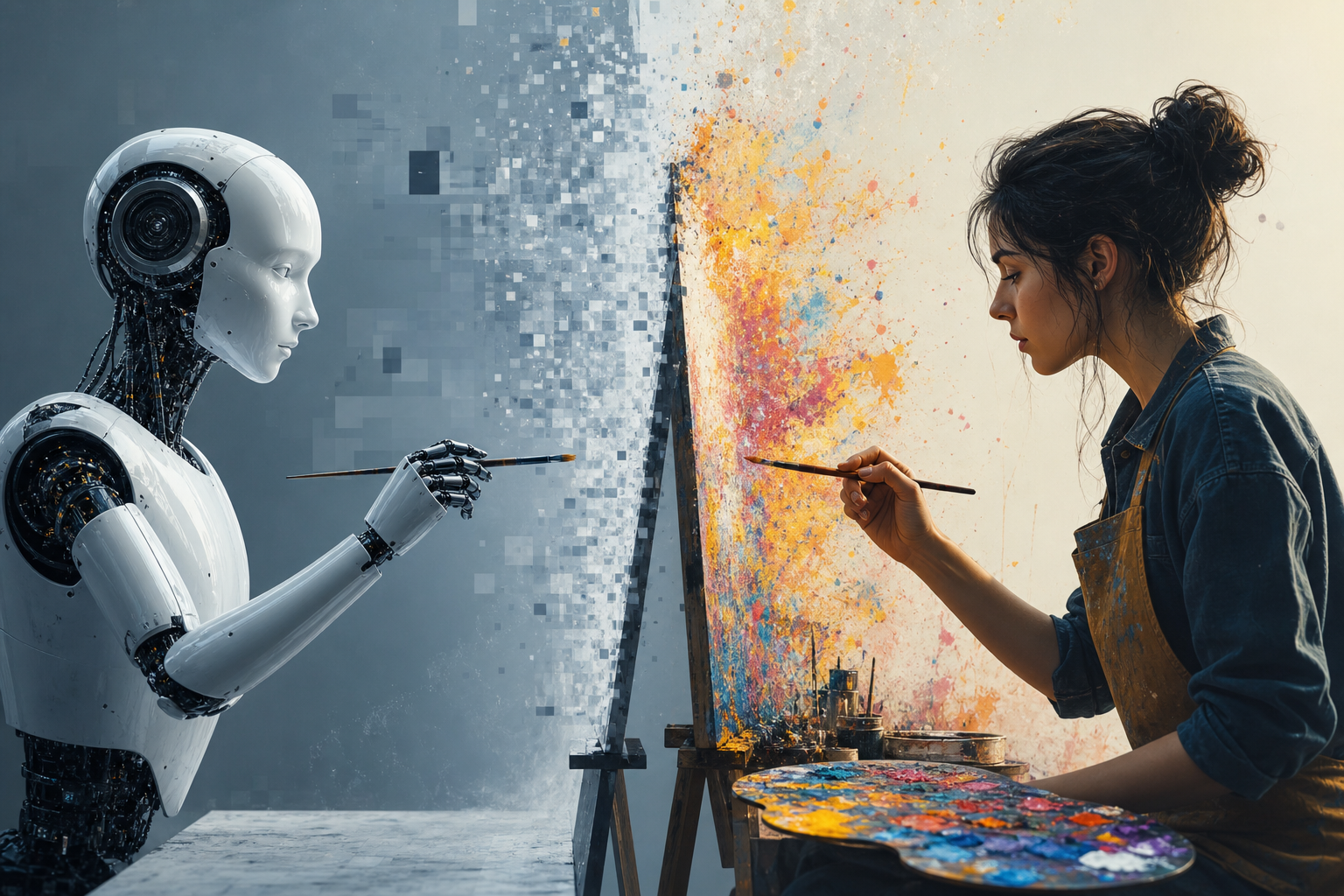
AI cannot match human creative work because it lacks the intrinsic understanding, emotional nuance and ability to originate genuinely new ideas; it can identify patterns and help with routine tasks, but it cannot reproduce the depth, context or spontaneity of human-created art and literature.
Key takeaways
- AI depends on large datasets and pattern recognition, which limits its ability to create truly original work.
- AI struggles with abstract thinking and spontaneity, two qualities often central to creativity.
- Ethical concerns around AI-generated content include unclear creative ownership, biased training data, and potential impacts on employment in creative fields.
- Case studies show AI-generated paintings often lack emotional connection and AI-written prose can miss the depth and complexity of human-authored novels.
- Recommended practices are to assign repetitive tasks to AI, use AI as a collaborative brainstorming tool, and avoid over-reliance so human oversight preserves context and originality.
Artificial intelligence has undoubtedly transformed various industries by automating tasks and enhancing efficiency. However, when it comes to creative work, AI still struggles to reach the level of human creativity. This discrepancy raises an intriguing question: why can't AI match human creative work? Understanding the nuances of creativity and the limitations of AI can provide insights into this complex topic. Let’s delve into the factors that make human creative work unique and why AI faces challenges in replicating it.
1. The Essence of Creativity: Can AI Truly Match Human Creative Output?
Creativity is inherently a human trait, characterized by originality, emotional depth, and the ability to convey complex ideas. While AI can process data and identify patterns, it lacks the intrinsic understanding and emotional intelligence that humans possess. The question remains: can match human creative work ever be fully automated by AI?
- Emotional Intelligence: Human creativity often involves emotional nuances, which AI struggles to comprehend and replicate.
- Originality and Innovation: Humans have the unique ability to create something entirely new, whereas AI relies on existing data and patterns.
- Contextual Understanding: Humans can interpret cultural and historical contexts, adding depth to creative works.
For more insights on how AI is being used in creative industries, visit ContentPod.
2. Technological Limitations: Why AI Can’t Match Human Creative Processes
Despite advancements, AI technology still faces limitations that hinder its ability to match human creativity. These limitations include the lack of intuitive understanding and the inability to engage in abstract thinking.
- Pattern Recognition vs. Abstract Thinking: AI excels in recognizing patterns but struggles with abstract concepts that are often central to creativity.
- Data Dependency: AI requires large datasets to learn, which can limit its ability to create original work.
- Lack of Spontaneity: Creativity often involves spontaneous ideas, a feature that AI cannot emulate.
For a deeper exploration of AI's role in content creation, see our article on SEO Workflows for AI Content for B2B Founders.
3. Ethical Considerations: Can AI’s Creative Potential Match Human Standards?
As AI continues to evolve, ethical considerations become increasingly important. The question of whether AI can match human creative standards is not only a technological issue but also an ethical one.
- Creative Ownership: Who owns the rights to AI-generated content?
- Bias in Data: AI can inadvertently perpetuate biases present in the data it is trained on.
- Impact on Employment: The automation of creative tasks could impact jobs in sectors reliant on human creativity.
Explore more about AI's implications in the business realm in our AI and the Future of Content Marketing: A Dynamic Discussion.
4. Case Studies: Real-World Examples Where AI Can’t Match Human Creative
Several case studies illustrate the challenges AI faces in creative domains. These examples highlight the areas where AI falls short and the irreplaceable value of human creativity.
- Example 1: In the art world, AI-generated paintings lack the emotional connection and personal narrative that human artists convey.
- Example 2: In literature, AI can generate text, but it often misses the depth and complexity of human-authored novels.
For further exploration of AI's role in creative industries, read our Explained: Aithor Launches Humanizer API for AI-Assisted Content Teams and Businesses.
5. Best Practices for Integrating AI Without Sacrificing Human Creativity
While AI may not fully replicate human creativity, it can enhance creative processes when used effectively. Here are some best practices for integrating AI without losing the essence of human creativity.
- Leverage AI for Repetitive Tasks: Use AI to automate routine tasks, allowing humans to focus on creative aspects.
- Collaborative Tools: Utilize AI as a collaborative tool to brainstorm ideas and provide insights.
- Avoid Over-Reliance: Ensure that AI complements human creativity rather than replacing it entirely.
For more strategies on leveraging AI in content creation, visit ContentPod.
6. Challenges and Mistakes: Why AI Can’t Always Match Human Creative
Integrating AI into creative processes presents challenges and potential pitfalls. Understanding these can help in better utilization of AI tools.
- Mistake 1: Over-reliance on AI can lead to a lack of originality and innovation.
- Mistake 2: Ignoring the importance of human oversight can result in AI-generated content that lacks context and relevance.
- Mistake 3: Failing to address ethical concerns can undermine the credibility of AI-generated creative work.
For additional resources on overcoming these challenges, explore articles from OpenAI.
Conclusion: Making the Most of AI in Human Creative Processes
AI can enhance creative processes, but it cannot fully match human creative work. The key lies in leveraging AI as a tool that supports and enhances human creativity rather than attempting to replace it. By understanding AI's limitations and ethical considerations, creatives can harness its potential effectively. For more insights on integrating AI in creative work, visit ContentPod.
Frequently Asked Questions
What is "can match human creative" work?
The phrase "can match human creative" refers to the ability, or lack thereof, of AI systems to replicate the depth, originality, and emotional resonance found in human creativity. While AI can assist in creative processes, its output often lacks the nuanced understanding and personal touch that characterize human artistry.
Why can't AI fully replicate human creativity?
AI struggles to fully replicate human creativity due to its reliance on data and patterns, which limit its ability to generate original and emotionally resonant content. Additionally, AI lacks the intuitive and contextual understanding that humans have, making it difficult to produce truly innovative and meaningful creative work.
How can AI be used effectively in creative industries?
AI can be effectively used in creative industries by automating repetitive tasks, providing analytical insights, and serving as a collaborative tool to enhance human creativity. It's important to use AI as a complement to human efforts rather than a replacement, ensuring that the unique qualities of human creativity are preserved.
References & Further Reading
- AI Creativity: Challenges and Opportunities
- OpenAI Research
- Anthropic AI: Ethical Considerations
- NIST: Ethical AI and Creativity
Put this into practice
Share this post
You Might Also Like
Discover more content tailored to your interests
 Highly Relevant
How AI Technical Debt Problems Spread Through Codebases
AI technical debt problems are the maintenance, reliability, security, and architecture costs that build up when AI systems generate code faster than teams can review, test, document, and own it.
Read More Highly Relevant
Why Anthropic Model Rivals Fable on Enterprise Cost
Anthropic's model is being pitched as close enough in quality to a premium frontier model that cost-conscious enterprises may switch or diversify. The real test for buyers is whether the model delivers acceptable output on their highest-volume tasks while lowering total operating cost and governance overhead.
Read More Highly Relevant
AI Risks to Global Security at the U.N. Briefing 2026
AI risks to global security are the ways advanced AI systems can increase cyberattacks, accelerate disinformation, lower barriers to biological or weapons misuse, and outpace the laws meant to control them. In the AI briefing to the U.N.
Read MoreReady to create amazing podcast content?
Choose a plan and start generating professional podcast content with AI
View Pricing Plans