Maximizing LinkedIn Content Systems for Teams: A 30-Day Plan
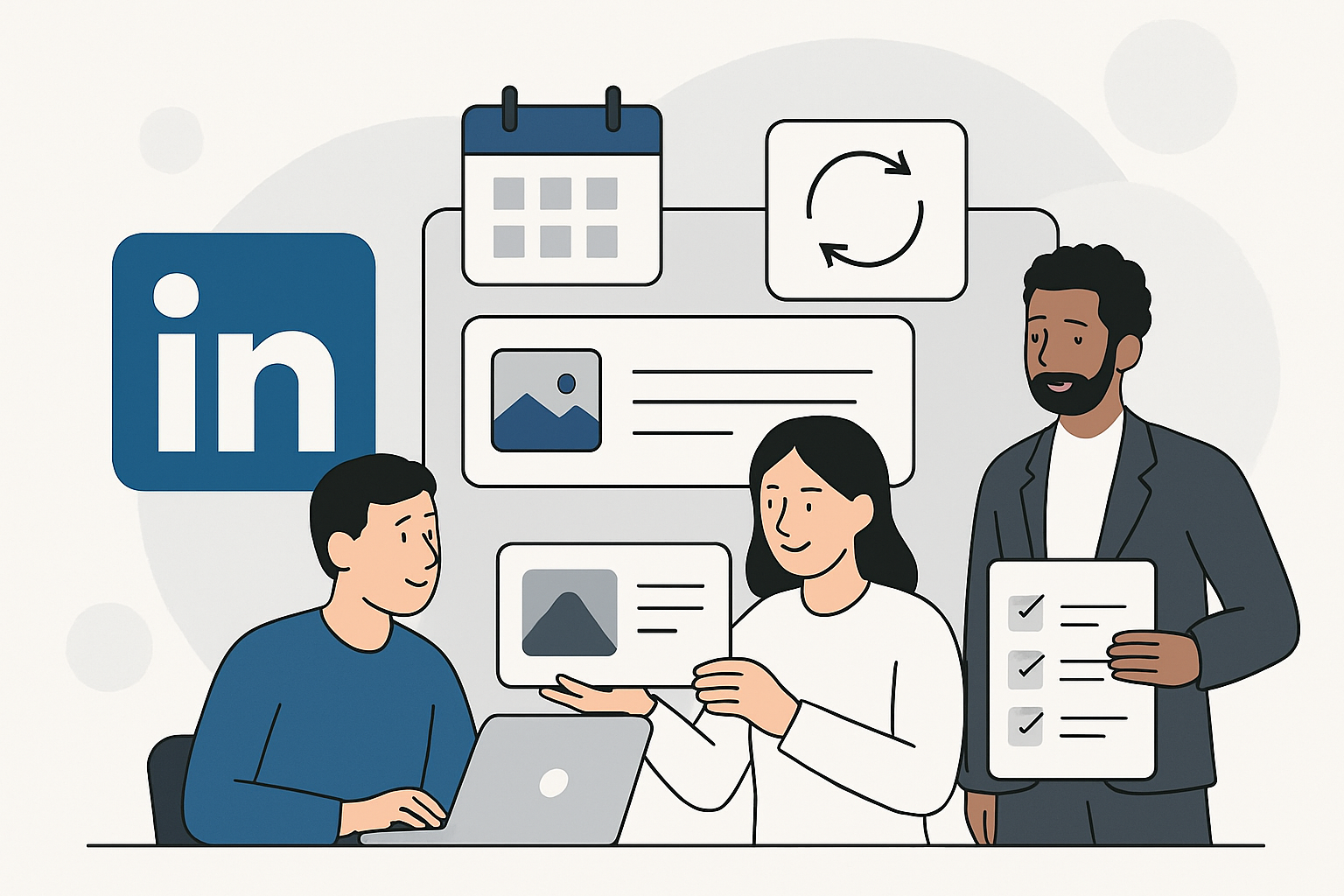
Build a 30-day system that moves from goal setting to foundation building to execution and review. Start by defining clear objectives and audience, create a monthly content calendar and team roles, then publish consistently, engage with your audience, and use LinkedIn Analytics to refine the plan.
Key takeaways
- Set specific team objectives such as brand awareness, lead generation, or thought leadership before planning content.
- Develop a monthly content calendar that schedules a mix of articles, updates, videos, infographics, and polls to maintain consistency.
- Assign clear roles—content creators, editors, and social media managers—to streamline production and approvals.
- Use LinkedIn Analytics to track engagement and adjust content and posting strategy based on performance data.
- Practical tactics from case studies include using video and live webinars to increase engagement (one example rose 40%) and collaborating with industry influencers for guest posts to boost brand awareness.
In today's digital age, developing effective linkedin content systems teams is vital for maximizing reach and engagement on social platforms. LinkedIn, in particular, offers unique opportunities for content teams to connect with professionals worldwide. This article explores how you can establish a robust LinkedIn content system over 30 days, providing a structured approach to enhance your team's content strategy. By the end of this guide, you'll have actionable insights and a comprehensive plan to elevate your LinkedIn presence. For more on effective content strategies, visit HubSpot's Marketing Statistics.
1. Understanding LinkedIn Content Systems for Teams
Developing linkedin content systems teams starts with understanding the platform's unique dynamics. LinkedIn caters to professionals seeking insightful, industry-specific content. Establishing a content system involves creating a strategic plan that aligns with team goals and leverages LinkedIn's features effectively.
- Practical point 1: Define your team's objectives, focusing on brand awareness, lead generation, or thought leadership.
- Practical point 2: Analyze your audience demographics to tailor content that resonates with their interests and needs.
- Practical point 3: Utilize LinkedIn Analytics to track engagement and refine your strategy accordingly.
For more on crafting effective strategies, check out our guide on content calendar planning.
2. Building the Foundation of Your Content System
To create a successful linkedin content systems teams, it’s crucial to lay a solid foundation. This involves setting up a content calendar, defining content types, and assigning roles within your team. A well-structured system ensures consistency and quality in your content output.
- Content Calendar: Develop a monthly content calendar to schedule posts, ensuring a mix of articles, updates, and multimedia content.
- Content Types: Diversify content types including articles, infographics, videos, and polls to engage different audience segments.
- Team Roles: Assign specific roles such as content creators, editors, and social media managers to streamline processes.
To dive deeper into content system foundations, explore this insightful article on AI and content systems.
3. Implementing Your LinkedIn Content Strategy
With the foundation in place, it's time to implement your linkedin content systems teams. This phase involves executing your content calendar, engaging with your audience, and monitoring performance. Regular interaction with your audience not only boosts engagement but also strengthens your brand's presence.
- Content Execution: Follow your content calendar diligently, ensuring all posts align with your strategy and brand voice.
- Audience Engagement: Respond to comments, participate in discussions, and join relevant LinkedIn groups to increase visibility.
- Performance Monitoring: Use LinkedIn's analytics tools to assess the performance of your content and adjust your strategy as needed.
For an in-depth discussion on future trends in content marketing, consider our interview on AI and content marketing.
4. Case Studies and Real-World Applications
Examining case studies can provide practical insights into how linkedin content systems teams function in real-world scenarios. These examples highlight successful strategies and common pitfalls, offering valuable lessons for your team.
- Example 1: A technology company increased its LinkedIn engagement by 40% by integrating video content and hosting live webinars.
- Example 2: A marketing agency successfully boosted brand awareness by collaborating with industry influencers for guest posts and interviews.
For more case studies and strategic insights, visit our blog on AI policy impacts on content.
5. Best Practices for LinkedIn Content Systems Teams
To optimize your linkedin content systems teams, adhere to best practices that enhance content quality and engagement. These practices ensure that your content resonates with your audience and supports your overall business objectives.
- Best Practice 1: Consistently post high-quality, relevant content that addresses your audience's pain points and interests.
- Best Practice 2: Leverage LinkedIn's advertising tools to expand your reach and target specific demographics effectively.
- Best Practice 3: Avoid common pitfalls such as neglecting engagement metrics or failing to update your content strategy regularly.
Explore more best practices in our interview on AI's role in business content.
6. Common Mistakes and Challenges
Even the most experienced teams can face challenges when managing linkedin content systems teams. Understanding these common mistakes helps you navigate potential pitfalls and maintain a robust content strategy.
- Overlooking Analytics: Ignoring analytics can prevent you from understanding what content resonates with your audience.
- Lack of Consistency: Inconsistent posting can lead to decreased engagement and interest from your audience.
- Ignoring Audience Feedback: Not addressing audience feedback can result in missed opportunities for improvement and growth.
For further resources on overcoming challenges, consider reading MarketingProfs.
Conclusion: Making the Most of LinkedIn Content Systems Teams
In conclusion, implementing a structured linkedin content systems teams can significantly enhance your LinkedIn strategy, leading to increased engagement and brand visibility. By following the strategies outlined in this guide, your team can effectively manage content, engage with your audience, and achieve your business goals. For more insights and resources, visit ContentPod.
Frequently Asked Questions
What is linkedin content systems teams?
A LinkedIn content system for teams is a strategic approach to managing and distributing content on LinkedIn, focusing on consistency, engagement, and alignment with business objectives.
How can teams benefit from linkedin content systems?
Teams can benefit from LinkedIn content systems by improving content quality, enhancing audience engagement, and achieving a stronger brand presence on LinkedIn.
What are common challenges in managing linkedin content systems teams?
Common challenges include maintaining consistency, effectively utilizing analytics, and staying responsive to audience feedback.
References & Further Reading
- How to Use LinkedIn to Build Your Personal Brand
- Marketing Statistics 2025
- Content Marketing: The Ultimate Guide
- MarketingProfs
Put this into practice
Share this post
You Might Also Like
Discover more content tailored to your interests
 Highly Relevant
How to Write Thought Leadership Content People Actually Read
How to write thought leadership content starts with a narrow point of view, original material from your real experience, and a structure that makes the main claim clear in the first few lines.
Read More Highly Relevant
8 Thought Leadership Content Examples That Work
Thought leadership content examples are posts, articles, interview-based pieces, and opinion-driven frameworks that teach something specific from firsthand experience and give readers a clearer way to think about a problem.
Read More Highly Relevant
LinkedIn Content Systems Creators: Complete Guide 2026
A LinkedIn content system is a repeatable workflow for planning, drafting, publishing, and measuring posts so creators stay consistent without starting from zero each day. With a maintained system you reduce decision fatigue, protect thinking time, and improve future posts by using performance feedback.
Read MoreReady to create amazing podcast content?
Choose a plan and start generating professional podcast content with AI
View Pricing Plans