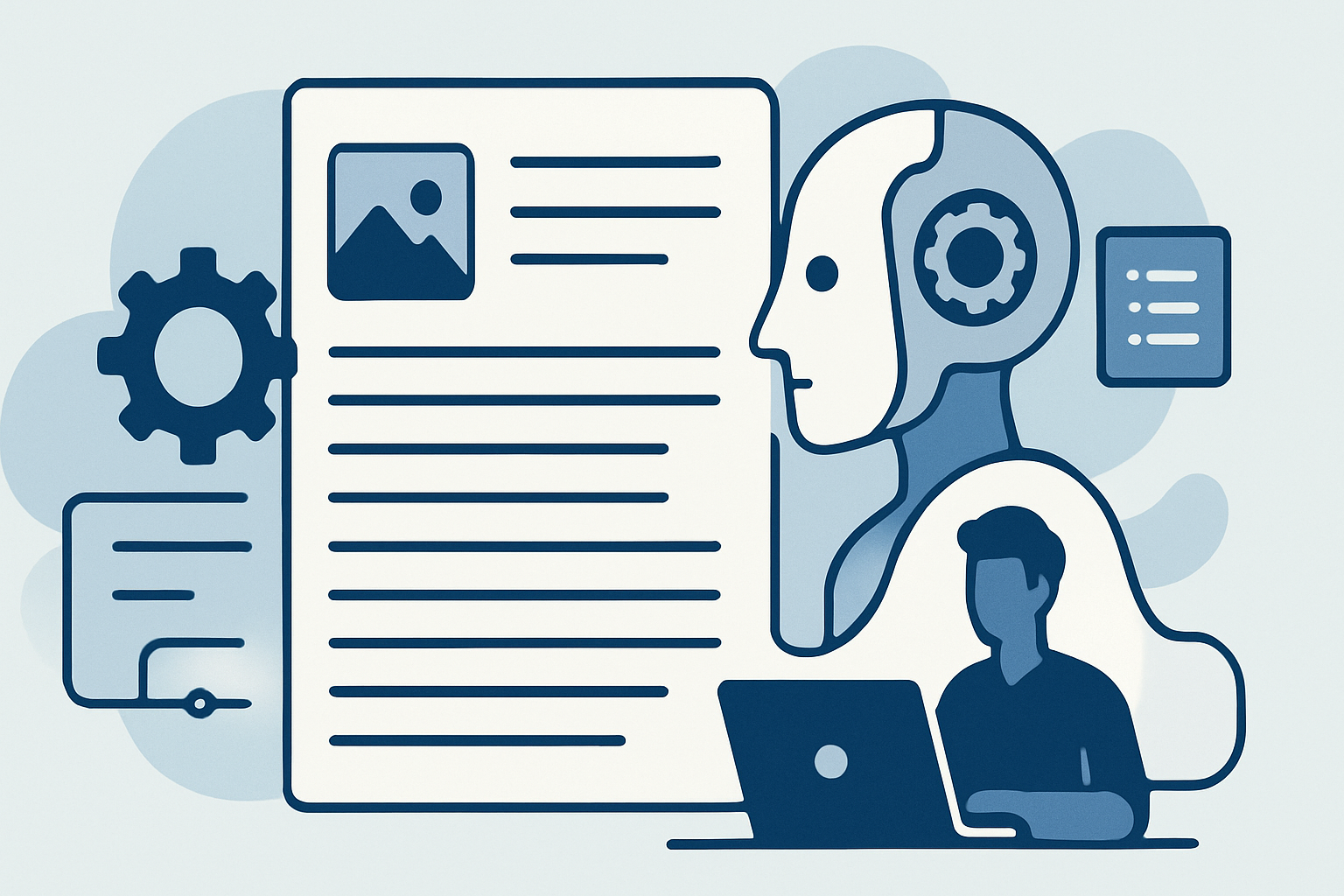
AI can automate large parts of technical documentation workflows so teams spend less time on manual drafting and keep documentation more current and searchable. It combines automated draft generation, continuous updates, readability improvements, and usage analytics to make docs easier to maintain and use.
Key takeaways
- AI can automatically generate initial documentation drafts from existing code comments and metadata, significantly speeding up the documentation process.
- Some AI tools update documentation in real time as code changes, which helps keep documentation accurate and consistent with the codebase.
- Natural language processing features let AI refine technical writing to improve readability for non-technical audiences.
- The article includes real-world results: one company reduced API documentation update time by 50% and a startup improved user satisfaction by 30% after using AI to suggest relevant documents.
- Recommended practices are to train AI models regularly, choose tools that support collaboration between developers and writers, and keep human oversight to catch nuances AI might miss.
In the rapidly evolving tech landscape, AI is revolutionizing various facets of software development, including the creation of technical documentation. As developers seek more efficient ways to manage the ever-increasing complexity of software systems, AI technical documentation emerges as a key solution. This approach not only streamlines the documentation process but also enhances accuracy and accessibility. In this guide, you will learn how to leverage AI for creating robust technical documentation, explore the tools available, and understand best practices for integrating AI into your documentation workflows. For a deeper dive into the impact of AI on content creation, you might find this HubSpot article on marketing statistics insightful.
1. Understanding AI Technical Documentation
AI technical documentation refers to the use of artificial intelligence to generate, maintain, and update technical documents. This includes user manuals, API documentation, and internal development guides. By automating repetitive tasks and providing intelligent insights, AI helps reduce the time and effort required by developers and technical writers.
- Practical point 1: AI can automatically generate initial drafts of documentation based on existing code comments and metadata, significantly speeding up the documentation process.
- Practical point 2: AI-driven tools can update documentation in real-time as code changes, ensuring that documentation is always current and accurate.
- Practical point 3: Natural language processing (NLP) capabilities allow AI to refine and improve the readability of technical documents, making them more accessible to non-technical audiences.
For example, platforms like ContentPod offer solutions to integrate AI in content creation, helping streamline documentation processes.
2. Tools for AI Technical Documentation
There are numerous AI documentation tools available that cater to different aspects of technical documentation. These tools range from comprehensive platforms that handle all documentation tasks to specialized tools focusing on particular aspects like API documentation or code commenting.
- Tool 1: SEMrush offers a suite of AI-driven SEO tools that can be used to optimize digital documentation for better searchability.
- Tool 2: GitHub Copilot uses AI to assist developers in writing code and corresponding documentation by suggesting code snippets and comments as you type.
- Tool 3: Tools like Document360 provide AI-enhanced features for creating, managing, and analyzing technical documentation, offering insights into user engagement and content effectiveness.
These tools not only enhance productivity but also ensure that documentation is aligned with industry standards. For a comprehensive strategy on leveraging AI in digital campaigns, refer to the AI Email Generator article.
3. Automating Documentation Processes
Automation is at the heart of automated docs, offering a significant advantage by reducing manual effort required in maintaining up-to-date documentation. AI can automate various tasks, such as generating API documentation directly from code bases, which ensures accuracy and saves time.
For instance, AI and the Future of Content Marketing discusses how automation is transforming content processes, a principle that applies equally to technical documentation.
- Automation Benefit 1: Automatically detecting changes in code and updating corresponding documentation helps maintain consistency.
- Automation Benefit 2: AI-driven analytics can assess the usage of documentation, highlighting areas for improvement or expansion.
4. Implementing AI in Documentation: Real-World Examples
Many organizations have successfully integrated AI into their documentation processes, yielding significant benefits. Here are some real-world examples:
- Example 1: A major software company used AI to automate its API documentation, reducing the time spent on updates by 50%. The AI tool scanned the codebase for changes and updated the documentation in real-time.
- Example 2: A tech startup implemented AI to help users navigate their documentation portal. AI analyzed user queries to suggest relevant documents, improving user satisfaction by 30%.
For more insights into optimizing content processes, check out the Content Repurposing Strategy article.
5. Best Practices for AI Technical Documentation
To maximize the effectiveness of AI in technical documentation, consider the following best practices:
- Best Practice 1: Regularly train your AI models with updated datasets to ensure they provide accurate and relevant outputs.
- Best Practice 2: Integrate AI tools that offer seamless collaboration features, allowing developers and writers to work together efficiently.
- Best Practice 3: Avoid over-reliance on AI; human oversight is crucial to catch nuances that AI might miss.
For additional strategies on maximizing content impact, visit ContentPod.
6. Common Challenges in AI Technical Documentation
Implementing AI in documentation processes comes with its own set of challenges. Understanding and addressing these can lead to smoother integration and better results.
- Challenge 1: Ensuring data privacy and security when using AI tools, especially those that require access to sensitive code or documentation.
- Challenge 2: Overcoming the learning curve associated with new AI tools and technologies, which may require training and adaptation time for teams.
For more on overcoming AI integration challenges, refer to Moz's guide on SEO.
Conclusion: Making the Most of AI Technical Documentation
AI technical documentation offers significant advantages in terms of efficiency, accuracy, and accessibility. By leveraging AI tools, developers can streamline their documentation processes, ensuring that they keep pace with rapid changes in software development. As you integrate AI into your workflows, consider partnering with platforms like ContentPod to enhance your content creation strategies. Embracing AI in technical documentation not only saves time but also empowers teams to focus on innovation and development.
Frequently Asked Questions
What is AI technical documentation?
AI technical documentation refers to the use of artificial intelligence to automate the creation, maintenance, and enhancement of technical documents, such as user guides and API documentation. This approach helps ensure that documentation is accurate, up-to-date, and accessible.
How can AI documentation tools improve the process?
AI documentation tools can automate repetitive tasks, such as updating documents in line with code changes, suggest improvements in readability, and provide analytics on document usage to refine content strategy.
What are the best practices for implementing AI in technical writing?
To successfully implement AI in technical writing, regularly update AI models, encourage collaboration between AI tools and team members, and maintain human oversight to ensure quality and accuracy.
References & Further Reading
- Beginner's Guide to SEO - moz.com
- Technical SEO Best Practices - semrush.com
- Marketing Statistics 2025 - hubspot.com
- Effective B2B Content Marketing Tactics for Lead Generation - contentpod.co
Put this into practice
Share this post
You Might Also Like
Discover more content tailored to your interests
 Highly Relevant
SEO Workflows Content SaaS: Practical 30-Day Plan Guide
A 30-day operational system turns AI-assisted drafts into search-performing SaaS content by creating a repeatable pipeline with weekly checkpoints. Focus the month on building a research spine, validating intent, and establishing measurement so you publish fewer low-performing posts and more useful articles.
Read More Highly Relevant
SEO Workflows for Content Consultants: Step-by-Step Playbook
Build a documented, repeatable workflow that combines human judgment and AI so you can research topics, write and brief reliably, review factual accuracy, optimize for search intent, and publish with clear acceptance criteria. That system makes content that ranks, connects to your services, and is easier to maintain week to week.
Read More Highly Relevant
SEO Workflows for Content Marketing: Mistakes to Avoid
Consistent SEO results from AI-assisted content require a documented editorial workflow that enforces research, subject-matter review, and a plan for ongoing updates. Treat AI as one input in that workflow, not a shortcut that replaces briefs, editing, and accountability.
Read MoreReady to create amazing podcast content?
Choose a plan and start generating professional podcast content with AI
View Pricing Plans