The Second Industrial Revolution: An Era of Data Center Development
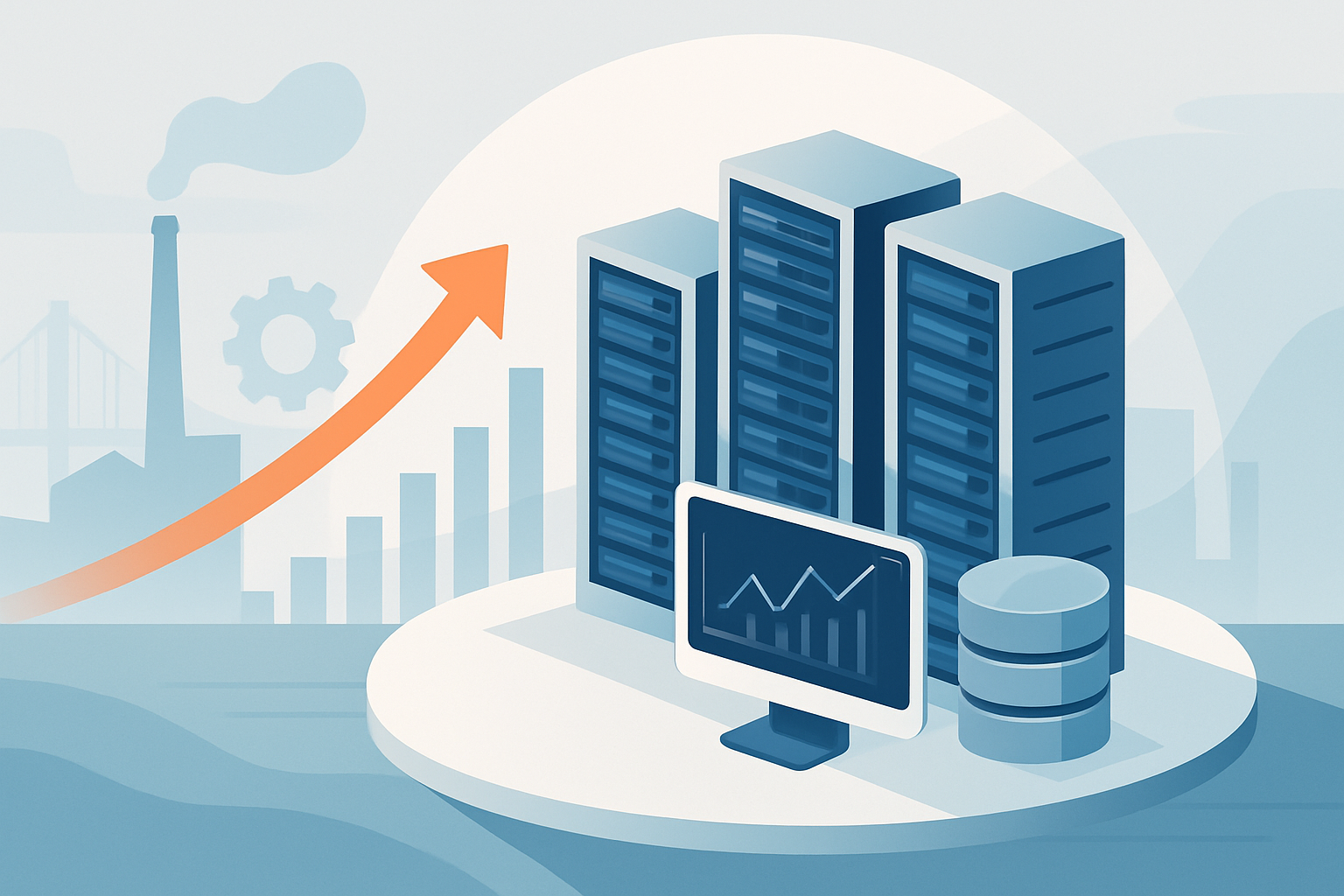
The era of data center development is a shift in how organizations store, manage and access data driven by cloud computing, AI and IoT. Businesses are changing infrastructure and operations to meet rising demand for performance, security and sustainability.
Key takeaways
- Data centers are adopting green technologies to become more energy-efficient and reduce their carbon footprint.
- New cooling system designs are lowering data center energy consumption and supporting more sustainable operations.
- Edge computing is being adopted to process data closer to its source, which reduces latency and improves efficiency.
- The main drivers of this era are exponential data growth, the need for faster processing and increased security concerns, prompting moves toward hyper-converged infrastructure.
- AI-driven data analysis, quantum computing and blockchain are among the technological innovations shaping modern data center capabilities.
The Second Industrial Revolution: An Era of Data Center Development
The rapid advancement of technology has ushered in a new era of data center development, reminiscent of the transformative impact of the Industrial Revolution. As businesses and individuals increasingly rely on digital solutions, the demand for efficient and innovative data centers grows exponentially. This article explores the paradigm shift in data center development, offering insights into how this evolution parallels the Industrial Revolution's profound influence on society. By the end, you'll understand why this era is crucial for future technological advancements and how it affects various sectors. For a deeper dive into the current trends, check out this report on data center innovations.
1. Understanding the Era of Data Center Development
The era of data center development marks a significant shift in how data is stored, managed, and accessed. Much like the Industrial Revolution, which enhanced manufacturing processes, this era transforms data management. Companies are now investing in advanced infrastructure to support the massive data influx driven by cloud computing, AI, and IoT.
- Practical point 1: Data centers are becoming more energy-efficient, utilizing green technologies to reduce their carbon footprint.
- Practical point 2: Innovations in cooling systems help data centers reduce energy consumption, ensuring sustainability in operations.
- Practical point 3: Edge computing is gaining traction, allowing data processing closer to data sources, reducing latency and improving efficiency.
2. Drivers of the Era in Data Center Development
Several key factors drive the current era of data center development. These include the exponential growth of data, the need for faster processing, and heightened security concerns. Companies are increasingly moving towards hyper-converged infrastructure to meet these demands. For further insights into data management innovations, read our post on how AI tools aid data handling.
3. Technological Innovations Shaping This Era
The technological advancements in this era of data center development are akin to the machinery innovations during the Industrial Revolution. These include AI-driven data analysis, quantum computing, and the integration of blockchain for enhanced security. By embracing these technologies, data centers are poised to meet the growing demands of the digital age. For a perspective on AI's role, refer to our interview about AI in content marketing.
4. Real-World Applications and Case Studies
Real-world applications of the era's advancements in data center development are evident across various sectors. For instance, financial institutions leverage advanced data centers to perform high-frequency trading operations at unprecedented speeds. Additionally, healthcare organizations utilize these centers to store and analyze massive datasets, facilitating breakthroughs in medical research. Explore our case study on AI in public records for more examples.
- Example 1: A leading bank uses AI-powered data centers to improve transaction speed and security, thereby enhancing customer experience.
- Example 2: A healthcare provider adopts cloud-based data centers for secure patient data management, enabling faster diagnostic processes.
5. Best Practices for Navigating the Era of Data Center Development
As you navigate this era of data center development, adopting best practices is crucial. These include investing in scalable infrastructure, prioritizing cybersecurity, and embracing sustainable practices. For more strategic insights, consider exploring ContentPod's resources.
- Best Practice 1: Implement scalable solutions to accommodate future data growth without overhauling existing systems.
- Best Practice 2: Integrate comprehensive cybersecurity measures to protect against data breaches and cyber threats.
- Best Practice 3: Avoid siloed data management systems; instead, promote interoperability for seamless data flow.
6. Overcoming Challenges in the Era of Data Center Development
Despite the opportunities, this era of data center development presents challenges such as data privacy concerns, high operational costs, and the need for continuous innovation. Overcoming these obstacles requires strategic planning and investment in advanced technologies. For additional guidance, read this article on effective data strategies.
Conclusion: Making the Most of the Era of Data Center Development
In conclusion, the era of data center development represents a transformative period akin to the Industrial Revolution. By understanding the drivers, embracing new technologies, and adopting best practices, companies can harness the full potential of this era. As you explore solutions, consider utilizing resources from ContentPod to stay ahead in this rapidly evolving landscape.
Frequently Asked Questions
What is the era of data center development?
The era of data center development refers to the ongoing transformation in how data centers operate and evolve, driven by advancements in technology, increased data demands, and the need for sustainability.
How does this era impact businesses?
This era impacts businesses by providing opportunities to enhance data processing capabilities, improve security, and enable scalability, thus supporting better decision-making and innovation.
What are the key technologies in this era?
Key technologies include AI, edge computing, and quantum computing, which enhance data processing efficiency and security, supporting the growing needs of modern businesses.
References & Further Reading
- Data Center Innovations
- Effective Data Strategies
- Marketing Profs: Data Insights
- ContentPod
Share this post
You Might Also Like
Discover more content tailored to your interests
 Highly Relevant
Newsletter Growth Marketing Teams: Practical Playbook
A newsletter growth marketing team is a repeatable operating model that combines audience targeting, signup conversion, editorial planning, and performance review into one shared workflow to attract qualified subscribers, retain attention, and produce measurable business results. For the model to work, teams must define a clear audience and a primary growth outcome before deploying tactics.
Read More Highly Relevant
Content calendar planning for B2B: mistakes to avoid
Align your calendar to recurring buyer questions and buying-stage needs so each asset helps prospects compare options, reduce implementation risk, or move closer to purchase. Pick a sustainable cadence of fewer, stronger pieces and make the calendar a repeatable operating system rather than a collection of urgent one-offs.
Read More Highly Relevant
newsletter growth saas companies complete guide 2026
Newsletter growth for SaaS means growing qualified email subscribers who support activation, retention, pipeline, and revenue rather than chasing list size alone. The most effective approach pairs a clear subscriber promise with targeted signup paths, useful content and segmentation, and measurement that links to business outcomes.
Read MoreReady to create amazing podcast content?
Choose a plan and start generating professional podcast content with AI
View Pricing Plans