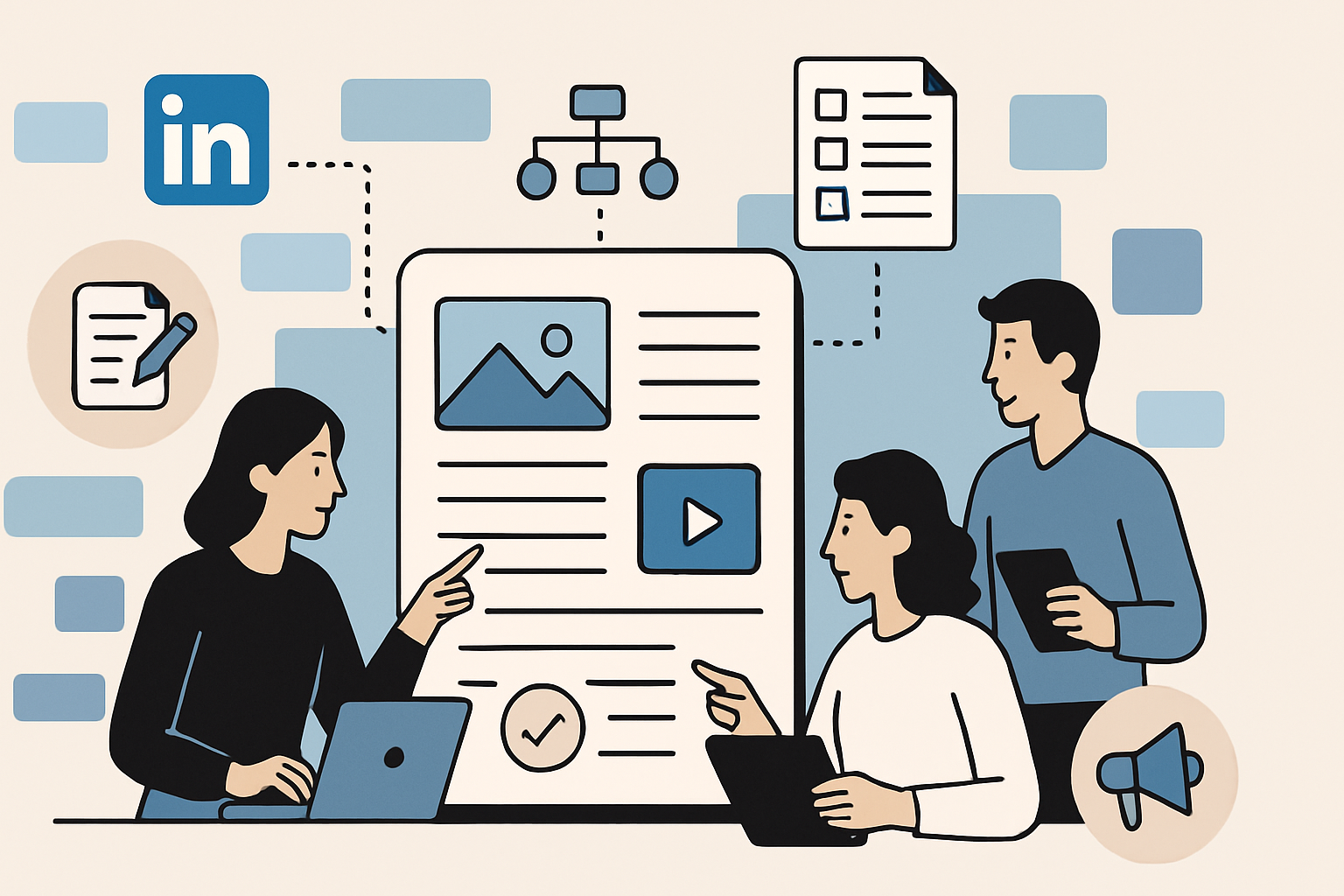
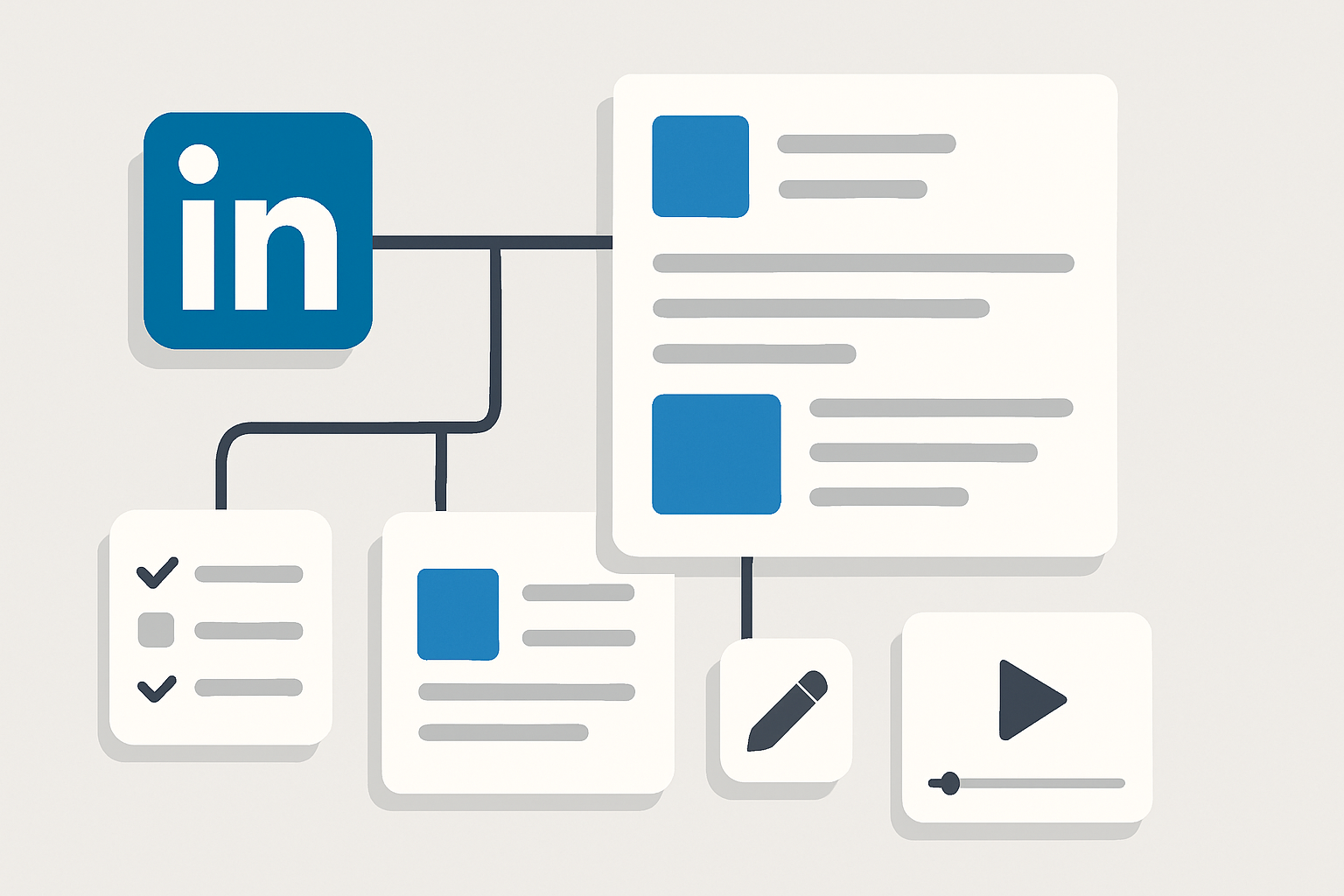
Build a LinkedIn content system that sets clear objectives, targets a professional audience, and enforces a regular content calendar so your team publishes consistent, value-driven posts. Coordinate work with shared documents, assigned tasks, and feedback loops, and use a mix of articles, infographics, and videos to improve reach and engagement.
Build a repeatable LinkedIn content system to create consistent, engaging content that aligns with your business goals and attracts clients. That system should include a clear audience definition, measurable goals, regular posting, use of LinkedIn formats, and ongoing measurement with analytics.
SaaS companies should adopt a structured, data-driven LinkedIn content system so posting stays consistent, content matches the target audience, and performance is measured to prevent low-value or erratic publishing. That system centers on a clear strategy, a routine content schedule, and active audience interaction.
A structured LinkedIn content system that includes defined content pillars, a posting calendar, use of native LinkedIn features, and regular audience engagement helps creators keep publishing consistently, build thought leadership, and increase content discoverability. The article offers practical steps, feature recommendations, examples, and common pitfalls to guide creators through setting up that system.
A structured LinkedIn content system helps consultants increase visibility, build authority, and generate client leads by aligning posts with clear objectives and audience needs. Use platform features such as articles, videos, and polls to amplify reach.
A reliable LinkedIn content system for consultants uses a simple, repeatable framework: set clear objectives, publish consistently, and use analytics and tools to measure and improve performance. That framework should determine what you publish, who you target, and how you engage on the platform.
A structured LinkedIn content system that plans, distributes, and measures content lets SaaS companies increase engagement and align posts with product and business goals. This guide shows how to avoid common mistakes that derail results and implement practical, measurable tactics to improve LinkedIn performance.
Build a 30-day system that moves from goal setting to foundation building to execution and review. Start by defining clear objectives and audience, create a monthly content calendar and team roles, then publish consistently, engage with your audience, and use LinkedIn Analytics to refine the plan.
A strategic LinkedIn content system helps B2B founders increase brand visibility, generate leads, and build authority. Achieving those outcomes requires clear content objectives, audience targeting, regular use of LinkedIn features, and measurement with analytics.
Create a repeatable LinkedIn content system that uses a content calendar, LinkedIn analytics, and mixed media to publish consistent, measurable content that increases engagement and strengthens your brand presence. The article provides templates, platform-specific tactics such as LinkedIn Pulse and native video, and practical best practices to streamline creation and track performance.
Adopt a defined content system: set clear objectives, schedule posts with a content calendar, and use LinkedIn analytics to guide what your team publishes. Combine that system with consistent branding, prompt audience engagement, and relevant LinkedIn features to improve reach and consistency.
Optimizing LinkedIn content systems for teams means creating a repeatable process that aligns professional, value-driven content with team roles and measurable outcomes. Run that process consistently and use platform results to refine what the team produces.