black myth zhong kui and the no-gen-AI design bet
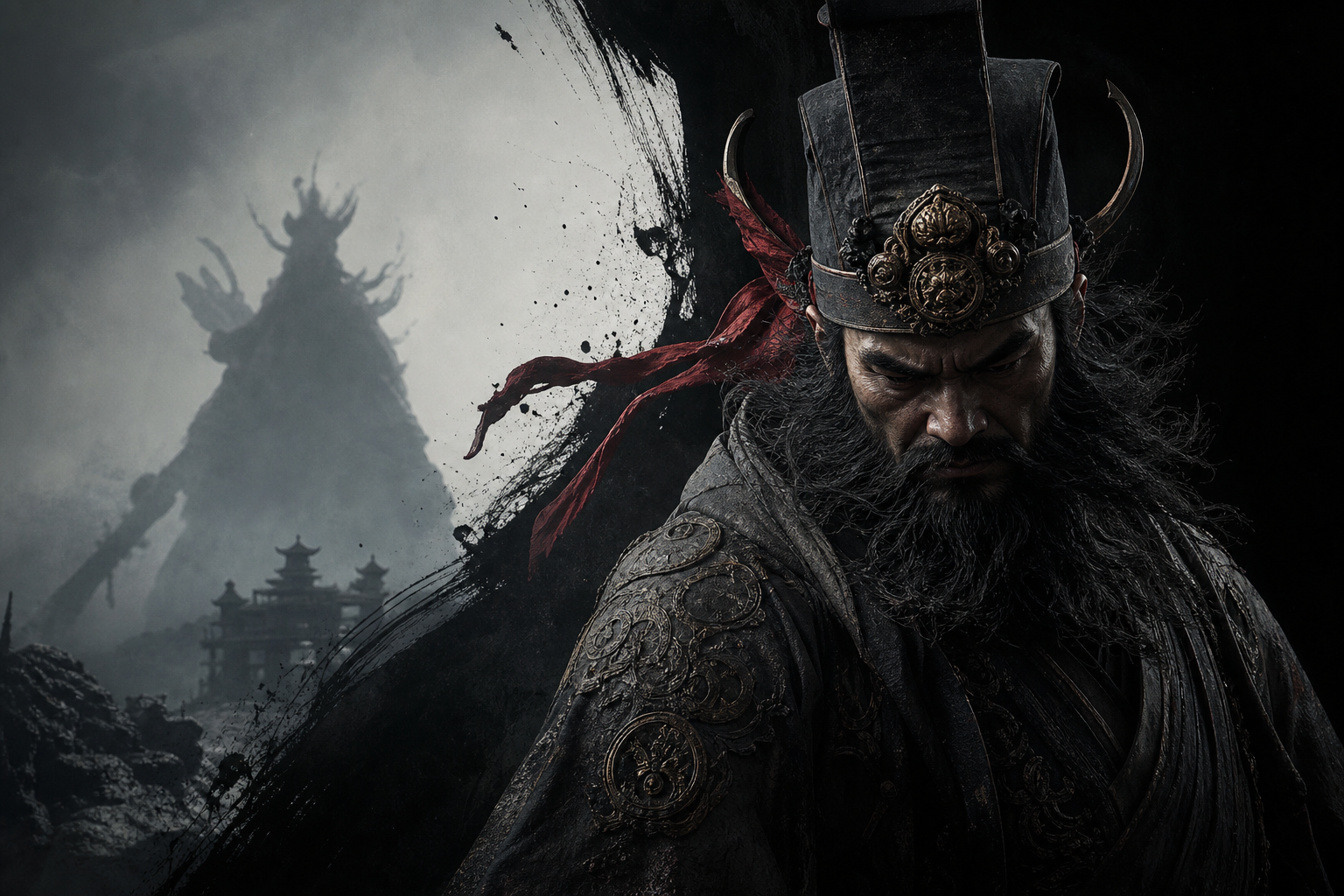
Zhong Kui Studio is reportedly avoiding generative AI for final design and asset production and instead using a human-led pipeline to keep authorship, style consistency, and asset provenance under direct human control. That choice is presented as a production decision that also affects brand trust and how the project signals its artistic identity.
Key takeaways
- Saying no to generative AI usually means rejecting AI-produced final assets, not rejecting conventional software assistance such as procedural tools, version control, middleware, or workflow automation.
- A human-led pipeline simplifies provenance discipline and internal review because teams can be more confident about what was created, sourced, or licensed.
- Studios may avoid generative AI because generated outputs can break visual coherence across multiple deliverables and create expensive cleanup work to match costume logic, material response, brush treatment, and other style details.
- The most practical lesson is governance: creative teams need explicit rules that define where AI is allowed, where it is limited, and who is accountable for outputs.
black myth zhong kui and the no-gen-AI design bet
The reason this matters is simple: players, artists, and investors are all asking the same question about black myth zhong kui: is avoiding generative AI a creative principle, a production decision, or a reputational hedge? If you work in games, marketing, or AI policy, the answer is all three. This article breaks down what the reported position likely means inside a studio, why the distinction between idea support and asset production matters, what tradeoffs come with a human-first pipeline, and what practical takeaways you can apply to your own content or product team.
1. What the black myth zhong kui claim actually means
The most accurate reading of the black myth zhong kui claim is that Zhong Kui Studio is reportedly avoiding generative AI in the parts of development where authorship, style consistency, and asset provenance matter most. That wording matters because many people hear “no AI” and assume a studio is rejecting all software assistance. That is usually not the issue. A modern game team can still use procedural tools, version control, middleware, batch processing, and workflow automation without relying on text-to-image or text-to-3D systems for final production. If you want a simple framework, think of the reported black myth zhong kui position as anti-generated assets, not anti-technology.
For readers outside game development, “design and asset production” covers a lot of ground: concept art, character exploration, environment mockups, props, texture passes, UI elements, promotional key art, and possibly support materials used in trailers or store pages. Choosing not to use generative AI in those areas is a statement about who makes the visual decisions and what source material enters the pipeline. That is also why this topic has implications beyond games. Teams using ContentPod or any editorial workflow platform face a similar question: where does automation help, and where does it dilute the original voice or create rights uncertainty?
- Creative authorship: A human-led pipeline gives art directors clearer control over style, revisions, and continuity across characters, locations, and marketing materials.
- Provenance discipline: Avoiding generated assets can simplify internal review when teams need confidence about what was created, sourced, or licensed.
- Audience signaling: The black myth zhong kui stance tells players and artists that craftsmanship is part of the project’s identity, not just a production detail.
That distinction is the foundation for the rest of the analysis. Once you see the issue as a pipeline choice rather than a culture-war slogan, the decision becomes much easier to evaluate.
2. Why a studio would avoid generative AI even when the tools are available
A studio would avoid generative AI because speed is not the only variable in production; consistency, accountability, and long-term brand value often matter more. The most obvious reason is visual coherence. Generated outputs can look impressive in isolation but still create expensive cleanup work when a team needs the same costume logic, material response, brush treatment, mythology references, or camera language across dozens of deliverables. If Zhong Kui Studio is truly taking this route, then the choice behind black myth zhong kui is not just philosophical; it is operational.
There is also a trust issue. Players increasingly care about whether a game’s world feels authored rather than statistically assembled. Artists care about whether studios are replacing exploration and craft with prompt iteration. Marketing teams care because any ambiguity around AI usage can shift attention away from the game itself and toward controversy management. That broader climate is part of why AI governance has become a bigger business conversation, a theme also explored in Explained: AI fear factor hits fever in 2026.
Another reason is process stability. When a studio says no to generative assets, it removes a class of debates from the review cycle: Was this image too derivative? Does this model fit the art bible? Can legal or publishing partners verify how it was made? That can be especially valuable for teams working on myth-inspired properties, where cultural motifs and symbolic design choices need careful handling rather than broad visual approximation. If you publish or analyze AI-facing content regularly, the discipline required here is similar to the editorial structure recommended in Interview-Based Content Marketing Teams Templates Guide: define sources, define ownership, and define accountability before scaling output.
According to the NIST AI Risk Management Framework, organizations should evaluate AI use in terms of governance, risk, and accountability rather than defaulting to adoption for its own sake. That lens helps explain why a team might deliberately keep generative systems out of final creative production even if those tools are technically available.
3. black myth zhong kui is really a pipeline governance story
black myth zhong kui is best understood as a pipeline governance story because the headline issue is not whether AI exists, but where a studio draws the line between assistance and authorship. In game development, governance means more than policy documents. It means deciding what enters the art pipeline, who can approve it, how provenance is documented, and what quality bar applies at each stage. A studio that avoids generative AI for final assets is making a governance decision about quality control as much as a creative one.
That decision can actually reduce downstream friction. For example, an art lead reviewing hand-built environmental props knows exactly what to ask for: silhouette cleanup, material balance, wear logic, or lore alignment. A lead reviewing generated outputs may spend time first establishing whether the piece is even structurally valid for the project. Multiply that across dozens of assets, and the supposed speed advantage can become uneven. This is one of the most practical takeaways from black myth zhong kui: tools that compress ideation can still expand revision risk.
If you manage a team, this is also where communication matters. Public audiences may interpret “no generative AI” as a cultural declaration, while internal staff need concrete rules. A useful policy usually answers three questions:
- What is prohibited: Define whether the ban covers concept art, textures, 3D meshes, voices, scripts, marketing visuals, or all of the above.
- What is allowed: Clarify whether search, tagging, scheduling, or non-generative automation tools are still in use.
- Who approves exceptions: Give one accountable owner the authority to interpret edge cases.
This is where adjacent discussions on AI strategy can help. The interview The Future of AI in Business: From Hype to Reality is useful because it frames adoption as a decision about fit, not inevitability. The same logic applies to black myth zhong kui: a mature team decides where AI belongs instead of assuming it belongs everywhere.
4. The real tradeoffs behind black myth zhong kui are speed, control, and proof
The real tradeoffs behind black myth zhong kui are not mysterious: a no-gen-AI workflow usually gives you more control and clearer proof of origin, but it may demand more staffing, time, and production discipline. That tradeoff is why this story resonates outside gaming. Every creative operation now has to choose between faster speculative output and slower, more defensible authorship. Neither path is free.
Here is a practical comparison of what a studio gains and gives up when it avoids generative AI for design and asset production:
| Decision Area | Human-First Pipeline | Generative-Heavy Pipeline |
|---|---|---|
| Style consistency | Higher control through art direction and revision loops | Potentially faster exploration, but uneven consistency |
| Asset provenance | Easier to document who made what | More review needed around source uncertainty |
| Iteration speed | Often slower in early concept volume | Often faster in rough ideation |
| Reputation management | Clearer message to artists and players | May require more public explanation |
The most useful analysis is to separate asset categories. A studio might find that character design, hero props, and key art benefit most from the black myth zhong kui approach, while non-creative scheduling or documentation tasks remain automated. That selective thinking is common in other industries too. For example, teams planning editorial output often divide high-authorship work from process work, as shown in content calendar planning creators templates guide.
- Example 1: A mythology-heavy boss character may require repeated human iteration to preserve symbolism, silhouette, and cultural logic that generic prompts would flatten.
- Example 2: A marketing banner can be produced faster with generated drafts, but if the studio’s credibility rests on artisan-led visuals, that shortcut may create more brand damage than benefit.
That is why the black myth zhong kui decision is not simply “traditional versus modern.” It is really a choice about where quality, trust, and proof matter enough to justify a slower path.
5. How to evaluate the black myth zhong kui approach for your own team
You should evaluate the black myth zhong kui approach by mapping your work into categories where originality, consistency, and rights clarity are mission-critical and separating them from tasks where automation is low-risk. This keeps the conversation practical. Most teams do not need a total ban or total embrace. They need a rule set tied to business goals.
If you run a content, product, or creative operation, use a simple decision framework. A platform like ContentPod can help organize editorial workflow, but the deeper issue is your operating model: what work must remain unmistakably human, and what work benefits from structured assistance without changing authorship?
- Start with asset criticality: List the outputs that define your brand or product identity. In a game, that may be concept art, hero renders, UI motifs, and lore visuals. In publishing, it may be thought-leadership drafts, interviews, and brand voice pieces. High-criticality outputs are where the black myth zhong kui logic is strongest.
- Write a use-policy by workflow stage: Do not say “AI allowed” or “AI banned” in the abstract. Say whether AI is allowed for brainstorming, reference organization, scheduling, QA support, or production assets. Specificity prevents confusion.
- Build a review trail: Require teams to record who created the first usable draft, what tools were used, and who approved the final. Provenance is easier to defend when it is documented from the start.
One more point deserves attention: adopting the black myth zhong kui mindset can improve hiring and team morale if your staff values craft and ownership. At the same time, it can create pressure if timelines stay aggressive while headcount does not. That is why this model only works when leadership aligns schedule, scope, and quality expectations.
For many teams, the smartest move is not ideological purity. The smartest move is a clear operating boundary: no generative AI in signature creative assets, selective automation elsewhere, and transparent communication to stakeholders.
6. Where the biggest misunderstandings happen
The biggest misunderstandings happen when people confuse “avoiding generative AI” with “rejecting innovation,” or when they assume a no-gen-AI statement automatically proves superior quality. Neither conclusion is reliable. The reported black myth zhong kui approach may protect style and trust, but it still requires strong direction, enough time, and disciplined production management. Human-made work is not automatically good; it is simply more attributable and often easier to align with a deliberate artistic vision.
A second misunderstanding is treating every AI use case as identical. A studio can avoid AI image generation while still benefiting from search, transcription, localization assistance, bug triage, or production planning tools. That nuance gets lost in social media debates. If you want a broader lens on how public perception shapes these discussions, Explained: google ceo sundar pichai on AI shake-up offers helpful context on why executive messaging around AI often sounds more complicated than the actual workflows.
A third misunderstanding is assuming legal or ethical certainty exists on either side. Avoiding generated assets can reduce some risks, but it does not remove the need for licensing discipline, reference management, and clear contracts with artists and vendors. Likewise, using AI tools does not automatically create infringement, but it does raise questions about process transparency and acceptable use. According to Anthropic’s discussion of Constitutional AI, responsible AI deployment depends on intentional constraints and evaluative frameworks. Even though that work is not about game art specifically, the governance principle still applies: boundaries matter.
The practical lesson from black myth zhong kui is to stop debating AI at the slogan level. Ask sharper questions instead. Which tasks benefit from speed? Which assets require traceable authorship? Which stakeholder group cares most about the answer? Once you frame the decision that way, the noise falls away and the real tradeoffs become manageable.
Conclusion: Making the Most of black myth zhong kui
black myth zhong kui matters because it turns an abstract AI debate into a concrete production question: where should creative teams draw the line between assistance and authorship? If the reported position is accurate, Zhong Kui Studio is signaling that design identity, asset provenance, and player trust are important enough to justify a human-first pipeline in core visual work. That does not make the studio anti-tooling. It makes the studio opinionated about where tools should stop.
If you are building a game, running a content team, or setting AI policy inside a creative business, the strongest takeaways are practical. Define your high-value assets. Decide which workflows demand human ownership. Document exceptions. Communicate your policy early, not after a controversy. If you need a cleaner way to plan, publish, and manage that human-first process, ContentPod can support the editorial and operational side without turning your entire workflow into an AI experiment.
Bottom line: black myth zhong kui shows that avoiding generative AI in design and asset production is less about nostalgia and more about protecting authorship, consistency, and trust where those qualities matter most.
Frequently Asked Questions
What is black myth zhong kui?
black myth zhong kui is the topic or reported case of Zhong Kui Studio avoiding the use of generative AI for design and asset production. The phrase is being discussed as an example of a game project choosing a human-led creative pipeline to preserve visual identity, control, and confidence in asset origins.
Why would a game studio avoid generative AI for art assets?
A game studio may avoid generative AI for art assets because final visual production needs consistency, clear authorship, and easier approval across a large pipeline. A studio may also want to reduce public controversy, maintain a stronger relationship with artists, and ensure that key designs reflect deliberate direction rather than fast but uneven output.
Does black myth zhong kui mean the studio is against all AI tools?
black myth zhong kui does not necessarily mean the studio rejects all AI or all automation. In most practical workflows, avoiding generative AI for design and asset production can still allow the use of conventional software, non-generative automation, production tooling, and other digital systems that do not replace human authorship in core creative assets.
References & Further Reading
Put this into practice
Share this post
You Might Also Like
Discover more content tailored to your interests
 Highly Relevant
How AI technical debt problems spread through codebases
AI technical debt problems are the maintenance, reliability, security, and architecture costs that build up when AI systems generate code faster than teams can review, test, document, and own it.
Read More Highly Relevant
Why anthropic model rivals fable on enterprise cost
Anthropic's model is being pitched as close enough in quality to a premium frontier model that cost-conscious enterprises may switch or diversify. The real test for buyers is whether the model delivers acceptable output on their highest-volume tasks while lowering total operating cost and governance overhead.
Read More Highly Relevant
AI risks to global security at the U.N. briefing 2026
AI risks to global security are the ways advanced AI systems can increase cyberattacks, accelerate disinformation, lower barriers to biological or weapons misuse, and outpace the laws meant to control them. In the AI briefing to the U.N.
Read MoreReady to create amazing podcast content?
Choose a plan and start generating professional podcast content with AI
View Pricing Plans