Explained: AI Chatbots Give Misleading Medical Advice 50% of the Time
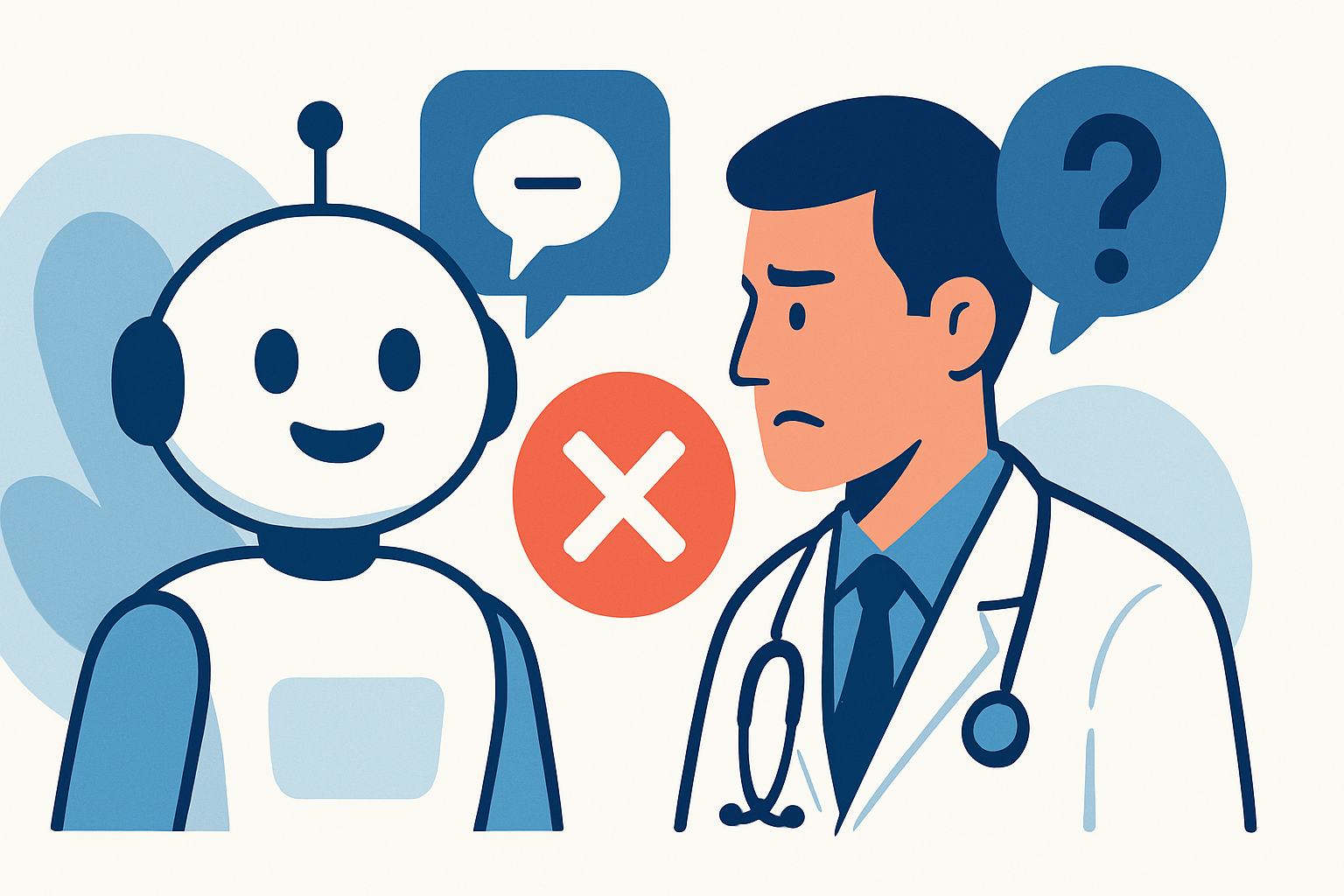
A recent study found chatbots provide misleading medical advice in roughly half of interactions. That error rate damages user trust, can delay or misdirect treatment, and creates legal and ethical risks that require technical and operational fixes.
Key takeaways
- Inaccurate, outdated, or biased training data causes chatbots to produce incorrect medical advice.
- The complexity and fast evolution of medical knowledge make it hard for AI systems to stay current and accurate.
- Chatbots often fail to understand the full context of a user question, which leads to inappropriate or unsafe responses.
- Developers can reduce errors by curating higher-quality datasets, adding continuous learning mechanisms, and collaborating with medical experts.
- Recommended practices include regularly updating models with current guidelines, validating AI responses through medical review before deployment, and educating users about chatbot limitations.
In an era where digital solutions are rapidly being integrated into healthcare, AI chatbots have emerged as a revolutionary tool for disseminating information. However, a recent study has revealed a concerning statistic: chatbots give misleading medical advice 50% of the time. This finding poses significant challenges for both developers and users of these technologies. In this article, we will explore the implications of this study, the factors contributing to this issue, and actionable strategies to enhance the reliability of AI in healthcare.
1. Understanding the Impact of Chatbots Giving Misleading Medical Advice
The revelation that chatbots give misleading medical advice in half of the interactions is alarming, especially as more people rely on these tools for health-related inquiries. This issue is not just a matter of technological shortcoming but also one of public health and safety.
- User Trust: When chatbots consistently provide incorrect information, user trust diminishes, leading to skepticism about digital health solutions.
- Healthcare Outcomes: Misleading advice can result in delayed or incorrect treatment, potentially worsening health outcomes.
- Legal and Ethical Concerns: Developers and healthcare providers may face legal challenges if chatbots cause harm through inaccurate advice.
For a deeper dive into how AI is shaping industries beyond healthcare, check out our Optimizing Content Calendar Planning B2B for Success article.
2. Factors Contributing to Misleading Medical Advice by Chatbots
Several factors contribute to why chatbots give misleading medical advice. Understanding these factors is crucial for developing more reliable AI systems.
- Data Limitations: Chatbots are only as good as the data they are trained on. Inaccurate, outdated, or biased data can lead to incorrect advice.
- Complexity of Medical Knowledge: The vast and ever-evolving nature of medical knowledge presents challenges for AI systems to stay updated and accurate.
- Lack of Contextual Understanding: Chatbots often struggle with understanding the context of a user's question, leading to inappropriate responses.
Read more about the implications of AI in business in our interview on The Future of AI in Business.
3. The Role of AI Developers in Mitigating Misleading Medical Advice
AI developers play a crucial role in addressing the issue of chatbots giving misleading medical advice. By implementing robust training protocols and leveraging advanced technologies, developers can enhance the accuracy of AI systems.
- Improved Data Curation: Ensuring that chatbots are trained on accurate and comprehensive datasets is foundational to improving response accuracy.
- Continuous Learning Mechanisms: Incorporating machine learning models that learn and adapt over time can help keep chatbots updated with the latest medical information.
- Collaboration with Medical Experts: Integrating input from healthcare professionals can bridge the gap between AI capabilities and medical expertise.
To understand how AI is impacting other fields, explore our article on Anthropic's Mythos Model.
4. Real-World Examples of Chatbots Giving Misleading Medical Advice
While theoretical discussions are useful, real-world examples highlight the critical nature of the issue. Here are a few instances where chatbots have faltered in providing medical advice.
- Example 1: A popular health chatbot incorrectly advised a user with chest pain to take a rest instead of seeking immediate medical attention, delaying critical care.
- Example 2: Another chatbot misinterpreted symptoms of an allergic reaction and suggested home remedies instead of emergency treatment, risking the user's health.
For more stories on how AI interacts with personal experiences, read our blog post on The Tragic Tale of a Love King Chatbot Relationship.
5. Best Practices for Enhancing Chatbot Reliability in Medical Advice
To mitigate the risks of chatbots giving misleading medical advice, several best practices can be implemented by developers and healthcare providers.
- Best Practice 1: Regularly update AI models with the latest medical guidelines and research to ensure up-to-date advice.
- Best Practice 2: Implement validation checks where AI responses are reviewed by medical professionals before being deployed.
- Best Practice 3: Educate users on the limitations of AI chatbots and encourage them to seek professional medical advice for critical health issues.
Integrate these practices into your strategy by learning more from ContentPod.
6. Common Mistakes and Challenges in AI Chatbot Deployment
Deploying AI chatbots in healthcare comes with its own set of challenges and potential mistakes. Here are some common pitfalls and strategies to overcome them.
- Overreliance on AI: Assuming chatbots can replace human judgment in all scenarios can lead to serious consequences.
- Neglecting User Education: Failing to inform users about the capabilities and limitations of chatbots can lead to misuse.
- Ignoring Cultural Context: Chatbots must be tailored to understand and respect cultural differences in healthcare practices.
Explore further insights on the future of AI in our interview on AI and the Future of Content Marketing.
Conclusion: Making the Most of Chatbots Giving Misleading Medical Advice
The issue of chatbots giving misleading medical advice is significant but not insurmountable. By implementing strategic improvements and fostering collaboration between AI developers and healthcare professionals, the accuracy and trust in these systems can be significantly enhanced. As you navigate the integration of AI in healthcare, consider partnering with platforms like ContentPod for cutting-edge solutions. Addressing the challenges head-on ensures that chatbots become reliable allies in healthcare delivery, rather than a liability.
Frequently Asked Questions
What is chatbots give misleading medical?
Chatbots give misleading medical advice refers to instances where AI systems, designed to provide health-related guidance, offer incorrect, outdated, or inappropriate information. This can occur due to several factors, including inadequate data, lack of contextual understanding, or outdated information.
How can developers reduce the risk of chatbots giving misleading medical advice?
Developers can minimize this risk by ensuring chatbots are trained on accurate and comprehensive data sets, incorporating continuous learning mechanisms, and collaborating with medical professionals to validate AI responses.
Why is it important to address misleading medical advice from chatbots?
Addressing this issue is crucial as misleading medical advice can lead to poor health outcomes, diminished trust in digital healthcare solutions, and potential legal issues for developers and healthcare providers.
References & Further Reading
- AI Chatbots Give Misleading Medical Advice 50% of the Time
- AI in Healthcare
- Ensuring AI Safety in Healthcare
- Anthropic Research on AI Models
Put this into practice
Share this post
You Might Also Like
Discover more content tailored to your interests
 Highly Relevant
How AI Technical Debt Problems Spread Through Codebases
AI technical debt problems are the maintenance, reliability, security, and architecture costs that build up when AI systems generate code faster than teams can review, test, document, and own it.
Read More Highly Relevant
Why Anthropic Model Rivals Fable on Enterprise Cost
Anthropic's model is being pitched as close enough in quality to a premium frontier model that cost-conscious enterprises may switch or diversify. The real test for buyers is whether the model delivers acceptable output on their highest-volume tasks while lowering total operating cost and governance overhead.
Read More Highly Relevant
AI Risks to Global Security at the U.N. Briefing 2026
AI risks to global security are the ways advanced AI systems can increase cyberattacks, accelerate disinformation, lower barriers to biological or weapons misuse, and outpace the laws meant to control them. In the AI briefing to the U.N.
Read MoreReady to create amazing podcast content?
Choose a plan and start generating professional podcast content with AI
View Pricing Plans