Explained: Why Checkout Could Become AI Agents' New Front Door
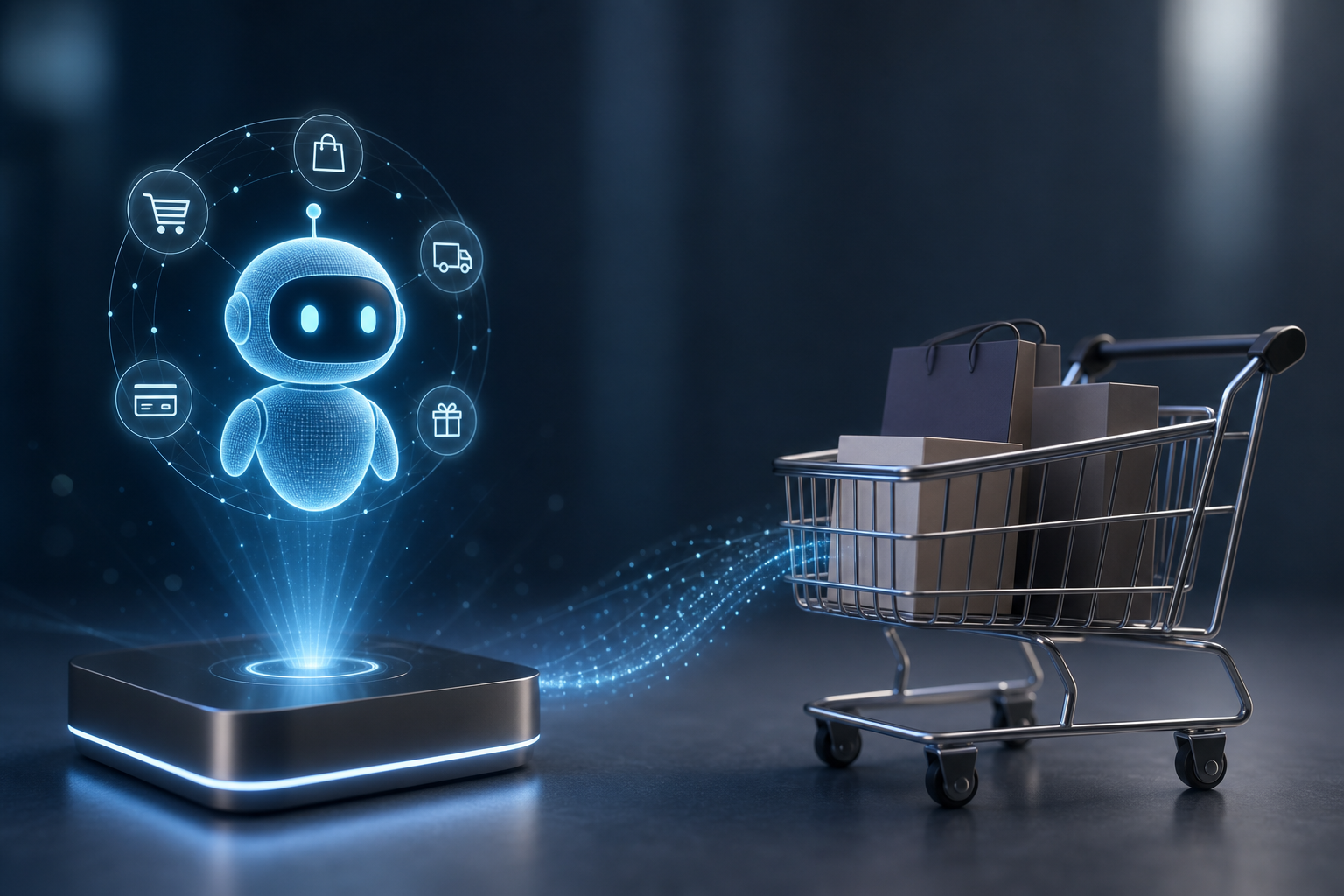
Integrating AI agents at checkout turns the checkout step into an interactive, personalized point of sale that guides payments, suggests complementary products, and addresses customer questions in real time. That interaction reduces friction, lowers cart abandonment, and raises conversion and satisfaction by combining targeted recommendations, automated payment handling, and fraud detection.
Key takeaways
- AI agents can reduce cart abandonment by offering last-minute discounts or free shipping options.
- AI-driven checkout systems use advanced fraud detection algorithms to help ensure secure transactions.
- AI agents increase sales through more effective upselling and cross-selling, for example personalized recommendations that produced a 25% increase in sales conversion in one case.
- Best practices for implementation include running a pilot project, training systems on diverse datasets to avoid bias, and regularly updating algorithms to match changing consumer behavior.
- Common challenges are data privacy concerns, integration with existing systems, and ensuring AI accuracy; guidelines from organizations such as NIST can help address these issues.
Imagine a world where your online shopping experience is not only seamless but also tailored precisely to your needs. This is not a distant dream; it's a reality unfolding in 2026. The concept that checkout could become agents is transforming the e-commerce landscape. By harnessing AI agents at the checkout stage, businesses are redefining customer interactions, driving sales, and improving user satisfaction. This article will delve into how AI agents are revolutionizing the checkout process and why this trend is gaining momentum.
1. The Evolution of AI Agents in E-commerce
The integration of AI into e-commerce is not new, but the role of AI at the checkout stage is becoming increasingly significant. AI agents are now capable of personalizing the checkout experience, offering customized suggestions, and even facilitating payment processes. These agents analyze user data to predict preferences and streamline the purchasing journey. For example, an AI agent might recommend complementary products based on your shopping cart contents.
- Practical point 1: AI agents can reduce cart abandonment by offering last-minute discounts or free shipping options.
- Practical point 2: They ensure secure transactions by using advanced fraud detection algorithms.
- Practical point 3: Real-world application includes AI-driven chatbots that guide users through complex checkout processes.
2. How Checkout Could Become Agents in Customer Experience
The idea that checkout could become agents is not merely about automation but enhancing customer experience. AI agents at checkout can engage with customers in real-time, addressing queries and providing support. This level of interaction can significantly improve customer satisfaction and loyalty.
Consider how AI agents enhance the checkout experience at SaaS companies by optimizing workflows and reducing friction points. Additionally, authoritative sources like OpenAI highlight the importance of machine learning in understanding consumer behavior, which directly impacts checkout efficiency.
3. The Impact of AI-Driven Checkouts on Sales
AI-driven checkouts are not just a technological advancement but a strategic tool for increasing sales. These systems can upsell and cross-sell products more effectively than traditional methods. For instance, an AI agent might suggest related items that enhance the primary purchase, thereby increasing the average order value.
In a recent interview, experts discussed how AI could unlock local visibility and drive sales by understanding regional consumer trends. This type of targeted marketing is only possible through AI agents that analyze data and predict buying patterns.
4. Real-World Examples of AI Agents in Checkout
Several companies have already implemented AI agents in their checkout processes with notable success. These real-world examples illustrate the potential impact on customer engagement and business outcomes.
- Example 1: An online retailer uses AI agents to provide personalized product recommendations, resulting in a 25% increase in sales conversion rates.
- Example 2: A subscription service integrates AI to predict customer needs, reducing churn by 15% through proactive engagement.
Such applications demonstrate the tangible benefits of AI agents at checkout, as discussed in our article on how AI assists in content repurposing.
5. Best Practices for Implementing AI Agents in Checkout
To successfully integrate AI agents at checkout, businesses must consider several best practices. These guidelines help ensure a smooth transition and maximize the benefits of AI.
- Best Practice 1: Start with a pilot project to test AI capabilities and gather data on user interactions.
- Best Practice 2: Ensure AI systems are trained on diverse datasets to avoid bias and improve accuracy.
- Best Practice 3: Regularly update AI algorithms to adapt to changing consumer behaviors and market trends.
For more strategies on leveraging AI, visit ContentPod for insights and tools.
6. Overcoming Challenges in AI-Driven Checkout Systems
While the benefits are clear, implementing AI in checkout systems is not without challenges. Businesses must address these issues to fully realize the potential of AI agents.
Common challenges include data privacy concerns, integration with existing systems, and ensuring AI accuracy. Resources like the National Institute of Standards and Technology (NIST) provide guidelines on AI implementation to help overcome these obstacles.
Conclusion: Making the Most of Checkout Could Become Agents
In conclusion, the potential for checkout to become agents is immense. By leveraging AI, businesses can enhance customer experiences, increase sales, and remain competitive in an evolving market. As AI technology continues to advance, it will play a crucial role in shaping the future of e-commerce. For more insights on AI integration, consider exploring resources at ContentPod.
Frequently Asked Questions
What is checkout could become agents?
This concept refers to the use of AI agents at the checkout stage of e-commerce to enhance user interaction, streamline processes, and personalize customer experiences.
How can businesses benefit from AI agents at checkout?
Businesses can benefit through increased sales, improved customer satisfaction, and reduced cart abandonment rates by using AI to provide personalized recommendations and streamline the checkout process.
What are the common challenges of implementing AI in checkout systems?
Challenges include ensuring data privacy, integrating AI with existing systems, and maintaining the accuracy of AI algorithms. Addressing these challenges is crucial for successful implementation.
References & Further Reading
- Why Checkout Could Become AI Agents' New Front Door
- OpenAI Research
- NIST Artificial Intelligence Program
- Anthropic on AI Safety
Put this into practice
Share this post
You Might Also Like
Discover more content tailored to your interests
 Highly Relevant
How AI Technical Debt Problems Spread Through Codebases
AI technical debt problems are the maintenance, reliability, security, and architecture costs that build up when AI systems generate code faster than teams can review, test, document, and own it.
Read More Highly Relevant
Why Anthropic Model Rivals Fable on Enterprise Cost
Anthropic's model is being pitched as close enough in quality to a premium frontier model that cost-conscious enterprises may switch or diversify. The real test for buyers is whether the model delivers acceptable output on their highest-volume tasks while lowering total operating cost and governance overhead.
Read More Highly Relevant
AI Risks to Global Security at the U.N. Briefing 2026
AI risks to global security are the ways advanced AI systems can increase cyberattacks, accelerate disinformation, lower barriers to biological or weapons misuse, and outpace the laws meant to control them. In the AI briefing to the U.N.
Read MoreReady to create amazing podcast content?
Choose a plan and start generating professional podcast content with AI
View Pricing Plans