How AI Develops Beauty Standards Without Human Input
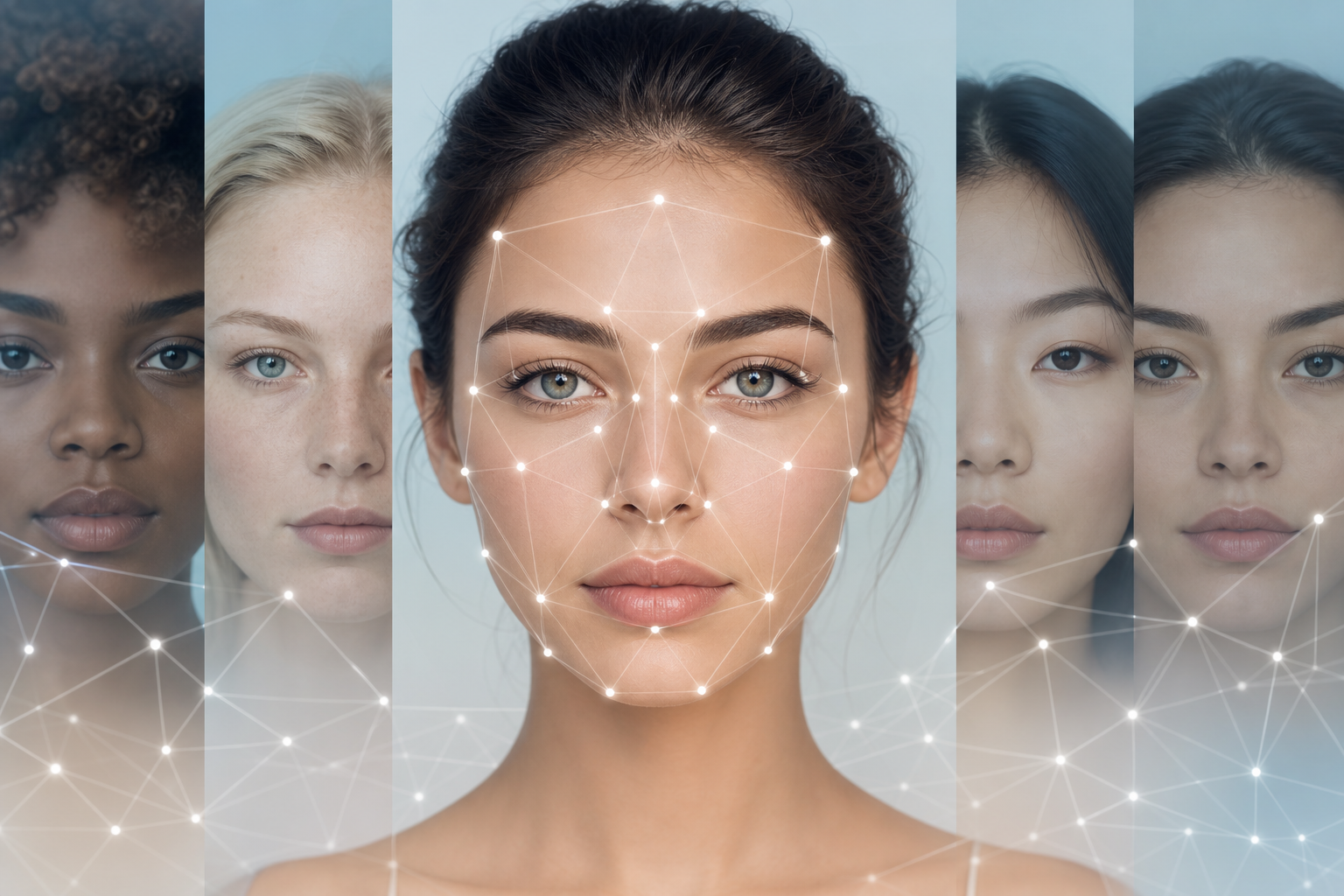
AI develops beauty standards when a model learns visual patterns that line up with human judgments of attractiveness even though nobody explicitly trained it to score beauty. When people say AI develops beauty standards , they usually mean that a system trained for another vision task forms internal rankings or preferences for faces through exposure to large image datasets, feedback signals, and pattern compression.
Key takeaways
- Emergent beauty scoring is usually indirect: A vision model can learn face rankings that resemble attractiveness judgments without receiving explicit “beautiful” or “not beautiful” labels.
- Training data still matters: Even when AI develops beauty standards without direct instruction, the images, captions, clicks, and proxy objectives still come from human-made environments.
- Latent features can encode bias: Symmetry, skin quality, age signals, lighting, makeup, and cultural conventions can all become mixed together inside a model’s face embeddings.
- Deployment is the real risk point: A research finding becomes harmful when an implicit beauty score is used to rank people, personalize treatment, or make a decision that affects opportunity or dignity.
The surprising part is not that machines can sort images. The surprising part is that a model can drift toward beauty judgments on its own, then produce outputs that look uncannily social, cultural, and subjective. That raises a practical question for anyone working with AI develops beauty standards research coverage: what exactly did the system learn, what signals pushed it there, and what risks appear when those learned preferences move into hiring, advertising, moderation, or cosmetic apps? You will see how spontaneous learning happens, why the phrase “without human input” needs a careful reading, where the science is solid, and where your caution should be strongest.
1. why AI develops beauty standards through indirect signals
AI develops beauty standards through indirect signals because modern vision systems compress whatever regularities help them predict, classify, retrieve, or recommend images, and those regularities often include human aesthetic preferences. A model trained on faces does not need a “beauty” column in the dataset to form a beauty-related dimension in its internal representation. If attractive faces receive more engagement, are photographed more professionally, appear more often in commercial imagery, or correlate with tags such as “popular,” “glamour,” or “recommended,” a model can absorb those relationships as useful shortcuts.
This is a standard pattern in artificial intelligence facial recognition and adjacent computer vision work. Neural networks do not reason about beauty in the human, philosophical sense. They learn statistical structure. If a latent vector helps predict image similarity, user preference, or downstream labels, the system keeps it. Over time, one of those latent directions may act like an attractiveness axis even if nobody named it that way.
The phrase “without human input” is therefore incomplete. A better phrasing is “without explicit human beauty labels.” Humans still selected the data, the task, the objective function, the crop style, and the deployment environment. If you write about this topic for a technical audience, that distinction matters. It is also why the black box problem keeps getting harder. ContentPod has published useful reporting on this in Why the AI black box problem is getting harder to solve, which is relevant because emergent aesthetic scoring often appears before developers can clearly explain it.
- Proxy objectives matter: Image ranking, recommendation, identity clustering, and caption alignment can all create side effects that look like machine learning beauty perception.
- Data context matters: Studio lighting, filters, makeup, editing, and social engagement may become part of the learned signal instead of facial structure alone.
- Interpretation matters: A model output that correlates with beauty ratings does not prove the system “understands” beauty. It proves the model found a useful statistical pattern.
2. what researchers usually mean when AI develops beauty standards
AI develops beauty standards usually means that a model’s internal features or rankings correlate with human attractiveness judgments strongly enough that researchers can detect a beauty-like structure after training. In practice, researchers often discover this by probing embeddings, clustering similar faces, or testing whether a model’s predictions align with separate ratings gathered from people. The important point is that the beauty-related behavior emerges from general learning, not from a clean, single-purpose beauty module.
This distinction matters because readers can easily confuse emergent behavior with deliberate product design. A recommender system that pushes some faces more than others may not contain an explicit “beauty score,” but the effect on users may look similar. That is one reason governance discussions now focus on computer vision beauty standards as a systems issue, not just a labeling issue. If your team wants context for safety tradeoffs in large models, the ContentPod piece OpenAI chief scientist on AI safety scaling challenges is helpful because it frames why scale tends to produce behavior developers did not directly script.
You should also keep a plain technical model in mind. A face model learns high-dimensional representations. Researchers then inspect those representations for latent factors such as age, pose, expression, identity, and attractiveness. If attractiveness appears as a separable direction in latent space, observers may say AI develops beauty standards. That phrase is shorthand, not proof that the machine adopted a stable moral or cultural theory of beauty.
A few conditions make this more likely:
- Large mixed datasets: Broad internet image corpora carry social preference signals whether developers want them or not.
- Contrastive learning: Models trained to align images with text may pick up words and contexts associated with attractiveness.
- Optimization pressure: If a beauty-like feature improves retrieval, engagement, or classification, the network has a reason to retain it.
3. why “without human input” is true and misleading at the same time
AI develops beauty standards without human input only in the narrow sense that no person may have typed in explicit rules such as “symmetrical faces are prettier,” but human choices still shape every layer of the learning process. Data collection, camera angles, image quality, labeling conventions, moderation rules, and product metrics all affect what the system finds useful. If you skip that context, you risk treating an engineered pipeline as if it were natural law.
The cleaner way to explain the phenomenon is this: the model is not handed a beauty rulebook, yet it still converges on beauty-related distinctions because those distinctions are present in the environment. That is classic AI spontaneous learning. The model finds structure in the data because the structure helps solve adjacent tasks.
This is also why debates around AI aesthetic preferences have moved beyond computer science. Once a system reflects beauty judgments back to users, it can shape self-image, ad delivery, visibility, and even pricing. If you want the business angle on how AI outputs move from technical possibility to operational use, the interview The Future of AI in Business: From Hype to Reality adds a practical frame for how organizations translate model behavior into products.
For your own analysis, separate four layers that often get mixed together:
- Representation learning: The model encodes patterns in facial images.
- Probe or measurement: Researchers test whether those patterns correlate with attractiveness ratings.
- Application design: A product team decides whether to use the output in ranking, recommendation, or personalization.
- Social effect: Users experience a system that may reward one look over another.
When those layers are separated, the topic becomes easier to discuss. The claim is not that the machine invented beauty from nothing. The claim is that a machine found beauty-related structure without direct beauty instruction.
4. where AI develops beauty standards causes the biggest problems
AI develops beauty standards becomes a serious problem when an implicit preference shifts from research observation into product ranking, gatekeeping, or feedback loops that affect how people are treated. A latent beauty score sitting inside a lab notebook is one thing. A latent beauty score influencing who gets seen, matched, trusted, or clicked is another. That is where you should focus your scrutiny.
The most obvious risk is that a beauty-related signal gets entangled with protected or sensitive attributes. Age, skin tone, gender presentation, disability, and local style norms can be mixed with attractiveness proxies in ways that are hard to untangle after training. The NIST AI Risk Management Framework is useful here because it treats harm as a lifecycle problem. You evaluate data sources, model behavior, downstream use, and monitoring together, not as isolated boxes.
A second problem is feedback. If an app ranks polished faces higher, users post more polished faces. If users engage more with those outputs, the data loop tightens. That makes computer vision beauty standards look stable and objective even when they are mostly artifacts of platform incentives.
- Example 1: A photo app trained to recommend “best profile pictures” may drift toward youth, symmetry, brighter skin presentation, and heavy retouching because those traits correlate with click behavior.
- Example 2: A moderation or safety model may score some faces as more trustworthy or less suspicious if aesthetic cues are unintentionally entangled with earlier training distributions.
You can see adjacent concerns in sectors outside beauty. The ContentPod report How nurses attitudes toward AI healthcare are changing shows a related pattern: once model outputs touch people directly, questions about bias, trust, and oversight stop being abstract. The same logic applies here. When AI develops beauty standards, the technical question is only the first half of the story. The harder half is deciding where those standards should never be used.
5. how to evaluate systems after AI develops beauty standards
AI develops beauty standards should trigger an evaluation workflow that tests for hidden ranking behavior, demographic skew, and misuse risk before a model reaches users. If you manage content, product, or research operations, you do not need a philosophy debate first. You need a repeatable audit process. A practical review also helps you explain the issue to legal, policy, and executive teams in plain language.
A workable framework starts with the model’s actual job. If the system is meant to cluster identities, rate image quality, or recommend thumbnails, ask whether beauty-like scoring helps the core task or merely reflects contaminated training signals. Teams documenting AI topics for internal stakeholders often use publishing systems such as ContentPod to keep model notes, risk summaries, and decision logs in one place, which is useful when questions about face-related outputs surface months later.
- Map the proxy signals: List every training or feedback input that may correlate with attractiveness. Include likes, profile completion, ad performance, captions, and image enhancement tools.
- Probe the embeddings: Test whether model representations correlate with external attractiveness ratings or with look-based factors such as makeup, lighting, and age cues. The point is not to create a better beauty score. The point is to detect one.
- Stress-test by subgroup: Compare behavior across skin tones, age bands, gender presentation, disability visibility, and image quality conditions. Hidden skew often appears only when sliced.
- Set use restrictions: Ban the use of beauty-related latent features for hiring, credit, admissions, or any ranking that affects access to opportunities.
- Monitor post-launch drift: Recheck outputs after new data, fine-tuning, or engagement optimization. AI develops beauty standards again and again if the environment keeps rewarding the same proxies.
This process turns a vague ethics concern into an operating practice. It also makes your documentation better, because each decision can be linked to data evidence rather than intuition.
6. the biggest mistakes people make when AI develops beauty standards
AI develops beauty standards is often misunderstood because people make three recurring mistakes: they treat emergent behavior as intentional design, they treat correlation as understanding, and they ignore deployment context. Each mistake pushes the conversation toward bad policy or bad products.
The first mistake is assuming that if a model ranks faces in beauty-like ways, the developers must have built a beauty classifier. Sometimes that is true. Often it is not. The second mistake is more technical. A model that predicts human ratings may still be reading superficial cues such as lighting, grooming, editing, or cultural familiarity. Prediction quality does not equal conceptual depth. The third mistake is the one that matters most in practice. Organizations argue over whether the model “really knows beauty” while users are already being sorted by outputs that act like beauty judgments.
You can reduce those errors by pairing technical review with policy review. OpenAI’s safety work and Anthropic research both point to the same broad lesson: capable models produce behavior that needs monitoring even when that behavior was not directly specified. In face-related systems, that means tracing where latent preferences can enter recommendations, filters, assistants, and analytics.
If you are writing or briefing on this topic in 2026, keep your claims narrow and checkable:
- Do say: A model may learn attractiveness-related patterns without explicit beauty labels.
- Do say: Those patterns can reflect data composition and platform incentives.
- Do not say: A model discovered universal beauty truths.
- Do not say: The absence of direct labels means the system had no human influence.
Conclusion: Making the Most of AI develops beauty standards
AI develops beauty standards is a useful phrase if you use it carefully. It describes an emergent pattern in which a model learns beauty-like distinctions from indirect signals, not magic, and not pure independence from people. The right response is not panic and not dismissal. The right response is to inspect the data path, identify the proxy signals, test for hidden ranking behavior, and block uses that turn aesthetic preference into unfair treatment. If your team needs a place to organize research notes, editorial analysis, and governance documentation as these topics keep moving, ContentPod can fit naturally into that workflow.
Bottom line: AI develops beauty standards when statistical learning picks up human preference signals, and the real decision is whether you allow those signals to shape outcomes that affect real people.
Frequently Asked Questions
What is AI develops beauty standards?
AI develops beauty standards refers to a situation where an AI model learns patterns that match human judgments of facial attractiveness without receiving explicit beauty labels or hand-written beauty rules. The phrase usually describes emergent behavior in computer vision systems that were trained on large image datasets and discovered beauty-related structure as part of a broader task.
How can an AI model judge facial beauty if nobody trained it to do that?
An AI model can judge facial beauty indirectly by learning from proxy signals such as image popularity, professional photography patterns, recommendation feedback, caption associations, or other face-related tasks. A model does not need a label called “beauty” if attractiveness cues improve prediction, retrieval, or ranking inside the training setup.
Should companies use facial beauty scores in products or decisions?
Companies should avoid using facial beauty scores for hiring, admissions, lending, insurance, or any system that affects access, pay, status, or opportunity. Beauty-related signals are subjective, culturally loaded, and often entangled with age, skin tone, gender presentation, editing quality, and other factors that can create unfair treatment.
References & Further Reading
Put this into practice
Share this post
You Might Also Like
Discover more content tailored to your interests
 Highly Relevant
How AI Technical Debt Problems Spread Through Codebases
AI technical debt problems are the maintenance, reliability, security, and architecture costs that build up when AI systems generate code faster than teams can review, test, document, and own it.
Read More Highly Relevant
Why Anthropic Model Rivals Fable on Enterprise Cost
Anthropic's model is being pitched as close enough in quality to a premium frontier model that cost-conscious enterprises may switch or diversify. The real test for buyers is whether the model delivers acceptable output on their highest-volume tasks while lowering total operating cost and governance overhead.
Read More Highly Relevant
AI Risks to Global Security at the U.N. Briefing 2026
AI risks to global security are the ways advanced AI systems can increase cyberattacks, accelerate disinformation, lower barriers to biological or weapons misuse, and outpace the laws meant to control them. In the AI briefing to the U.N.
Read MoreReady to create amazing podcast content?
Choose a plan and start generating professional podcast content with AI
View Pricing Plans