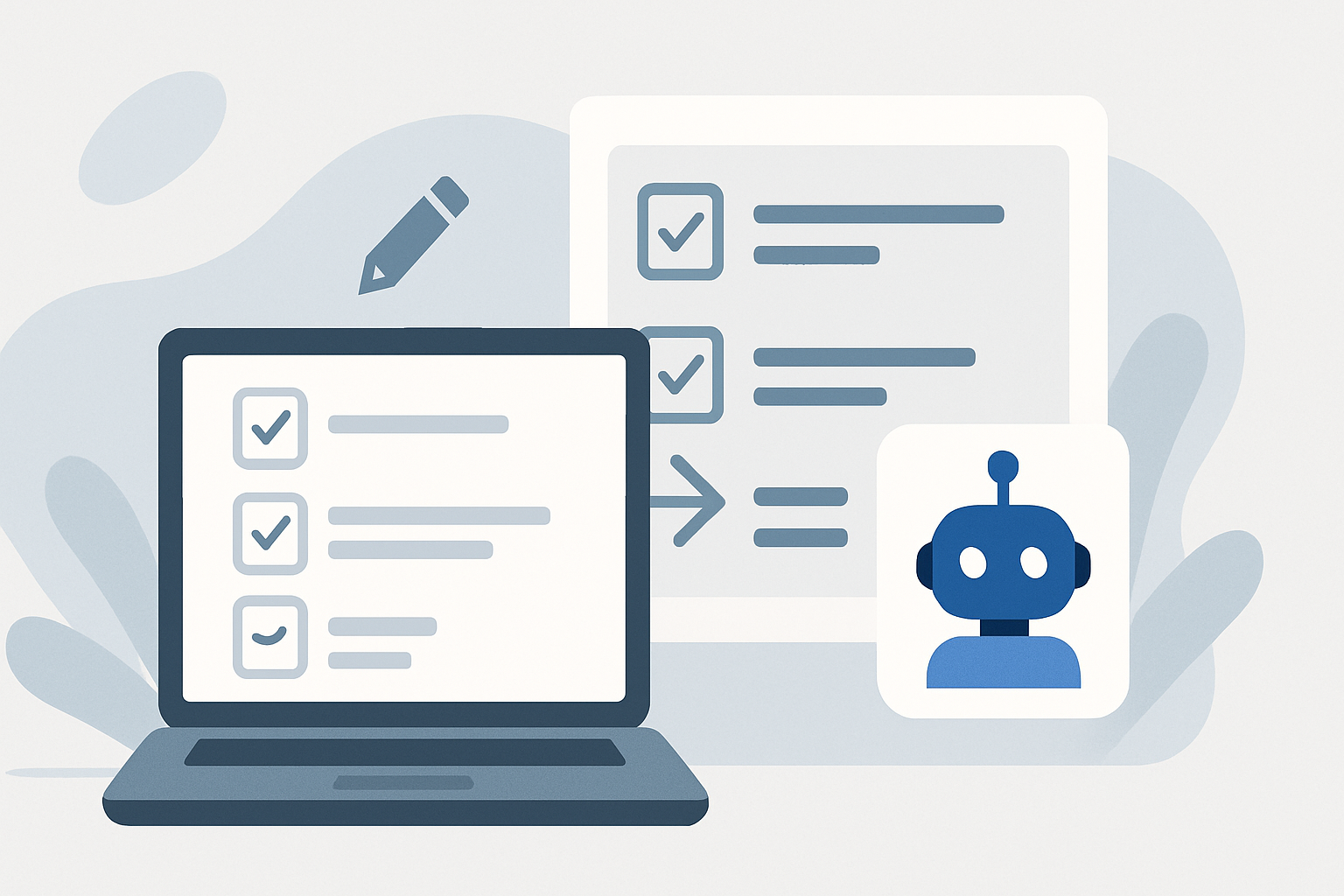
An AI guide generator automates drafting of step-by-step tutorials by using natural language processing and machine learning to expand a simple topic into a detailed, consistent guide. Define the guide's scope before generation and apply human review to edit for accuracy and creative quality.
Key takeaways
- An AI guide generator uses natural language processing and machine learning to turn a simple topic input into a detailed step-by-step guide, saving hours of manual writing.
- AI lets creators rapidly prototype and iterate guides by analyzing user feedback and adjusting content accordingly.
- Using an AI guide generator improves efficiency, scalability, and consistency; when trained on large datasets, it can keep guides aligned with current industry standards.
- Real-world uses include producing product manuals for software companies and updating e-learning tutorials to match new educational standards.
- Best practices are to define scope and objectives before generating content, regularly review and edit AI output, avoid over-reliance on AI for creative elements, and plan time for initial setup and training.
In today's digital landscape, creating comprehensive guides and tutorials is more important than ever. With the rise of AI technology, the process of generating these instructional contents has become more streamlined and efficient. Enter the AI guide generator, a game-changer for content creators. This tool not only automates the creation of how-to guides but also enhances their quality and relevance. In this article, you will discover how an AI guide generator can transform your tutorial writing and learn best practices for leveraging this innovative tool effectively. For more on AI's impact on content creation, check out HubSpot's AI insights.
1. Understanding the AI Guide Generator
The AI guide generator is a sophisticated tool designed to automate the creation of step-by-step guides. It leverages natural language processing and machine learning to understand user input and produce coherent and informative guides. This technology is invaluable for businesses and individuals looking to streamline their content creation processes.
- Practical point 1: The generator can take a simple topic input and expand it into a detailed guide, saving countless hours of manual writing.
- Practical point 2: It ensures consistency and accuracy, as the AI is trained to follow specific guidelines and standards.
- Practical point 3: Real-world applications include creating product manuals, educational content, and even complex technical documentation.
2. How AI is Revolutionizing How-To Guide Creation
The integration of AI into how-to guide creation is nothing short of revolutionary. By automating the process, creators can focus more on strategy and less on the minutiae of writing. This innovation is particularly beneficial for those producing high volumes of content, such as e-learning platforms and technical support teams.
One of the key advantages is the ability to rapidly prototype and iterate guides based on user feedback. AI can analyze this feedback and adjust the guide content accordingly, ensuring it meets the needs of its audience. For more on maximizing content strategy, explore our article on long-form content strategies.
3. Benefits of Using an AI Guide Generator
Utilizing an AI guide generator offers numerous benefits, including efficiency, scalability, and enhanced quality of instructional content. By automating repetitive tasks, AI frees up valuable time for content creators to focus on more strategic initiatives.
Furthermore, the AI's ability to learn from vast datasets means that the guides produced are not only relevant but also up-to-date with the latest industry standards and trends. This is particularly beneficial in fast-evolving fields like technology and digital marketing. For insights into the future of AI in content marketing, consider our interview on AI and the Future of Content Marketing.
4. Real-World Applications of AI-Generated Guides
AI-generated guides are being utilized across various industries, proving their versatility and effectiveness. From product manuals to complex technical guides, the applications are endless.
- Example 1: A software company uses an AI guide generator to create detailed user manuals for its applications, ensuring that customers have access to clear and helpful instructions.
- Example 2: An e-learning platform employs AI-generated tutorials to quickly update course content, keeping pace with new educational standards and methods.
To learn more about how AI is streamlining content creation, visit our social media content generator article.
5. Best Practices for Using an AI Guide Generator
When implementing an AI guide generator, there are several best practices to ensure you get the most out of this technology.
- Best Practice 1: Clearly define the scope and objectives of your guide before inputting data into the AI. This helps in generating content that is aligned with your goals.
- Best Practice 2: Regularly review and edit the AI-generated content to ensure accuracy and relevancy. Human oversight is crucial in maintaining quality.
- Best Practice 3: Be aware of common pitfalls, such as over-reliance on AI for creativity. While AI can handle factual content well, creative aspects might still need a human touch.
For insights into successfully implementing AI in your content strategy, visit ContentPod.
6. Common Challenges and How to Overcome Them
While the benefits of using an AI guide generator are significant, there are also challenges that users may face. Understanding these challenges is key to overcoming them and maximizing the utility of AI in content creation.
One common issue is the initial setup and training of the AI to understand your specific content needs. This requires time and patience but is essential for achieving accurate results. Additionally, maintaining the balance between AI-generated and human-edited content can be tricky. It's important to establish a workflow that incorporates both elements effectively.
For additional tips on overcoming these challenges, consider resources from Moz's comprehensive guides.
Conclusion: Making the Most of AI Guide Generator
The use of an AI guide generator represents a significant advancement in the field of content creation. By understanding and leveraging this technology, you can create high-quality, consistent, and engaging guides that meet the needs of your audience. Consider integrating AI into your workflow to save time and improve the quality of your instructional content. For further resources and support, explore ContentPod.
Frequently Asked Questions
What is an AI guide generator?
An AI guide generator is a tool that automates the creation of instructional content by utilizing artificial intelligence to process and organize information into structured guides.
How does an AI guide generator improve the efficiency of tutorial writing?
It enhances efficiency by automating repetitive writing tasks, allowing creators to focus on strategy and content quality, while also ensuring consistency and accuracy.
Can AI-generated guides fully replace human-written content?
While AI-generated guides are highly efficient and accurate, they often require human oversight for creative input and final edits to ensure content quality and relevance.
References & Further Reading
- Beginner's Guide to SEO - moz.com
- Artificial Intelligence Insights - hubspot.com
- How to Write a How-To Guide - semrush.com
- AI Impact on Business - forbes.com
Put this into practice
Share this post
You Might Also Like
Discover more content tailored to your interests
 Highly Relevant
SEO Workflows Content SaaS: Practical 30-Day Plan Guide
A 30-day operational system turns AI-assisted drafts into search-performing SaaS content by creating a repeatable pipeline with weekly checkpoints. Focus the month on building a research spine, validating intent, and establishing measurement so you publish fewer low-performing posts and more useful articles.
Read More Highly Relevant
SEO Workflows for Content Consultants: Step-by-Step Playbook
Build a documented, repeatable workflow that combines human judgment and AI so you can research topics, write and brief reliably, review factual accuracy, optimize for search intent, and publish with clear acceptance criteria. That system makes content that ranks, connects to your services, and is easier to maintain week to week.
Read More Highly Relevant
SEO Workflows for Content Marketing: Mistakes to Avoid
Consistent SEO results from AI-assisted content require a documented editorial workflow that enforces research, subject-matter review, and a plan for ongoing updates. Treat AI as one input in that workflow, not a shortcut that replaces briefs, editing, and accountability.
Read MoreReady to create amazing podcast content?
Choose a plan and start generating professional podcast content with AI
View Pricing Plans