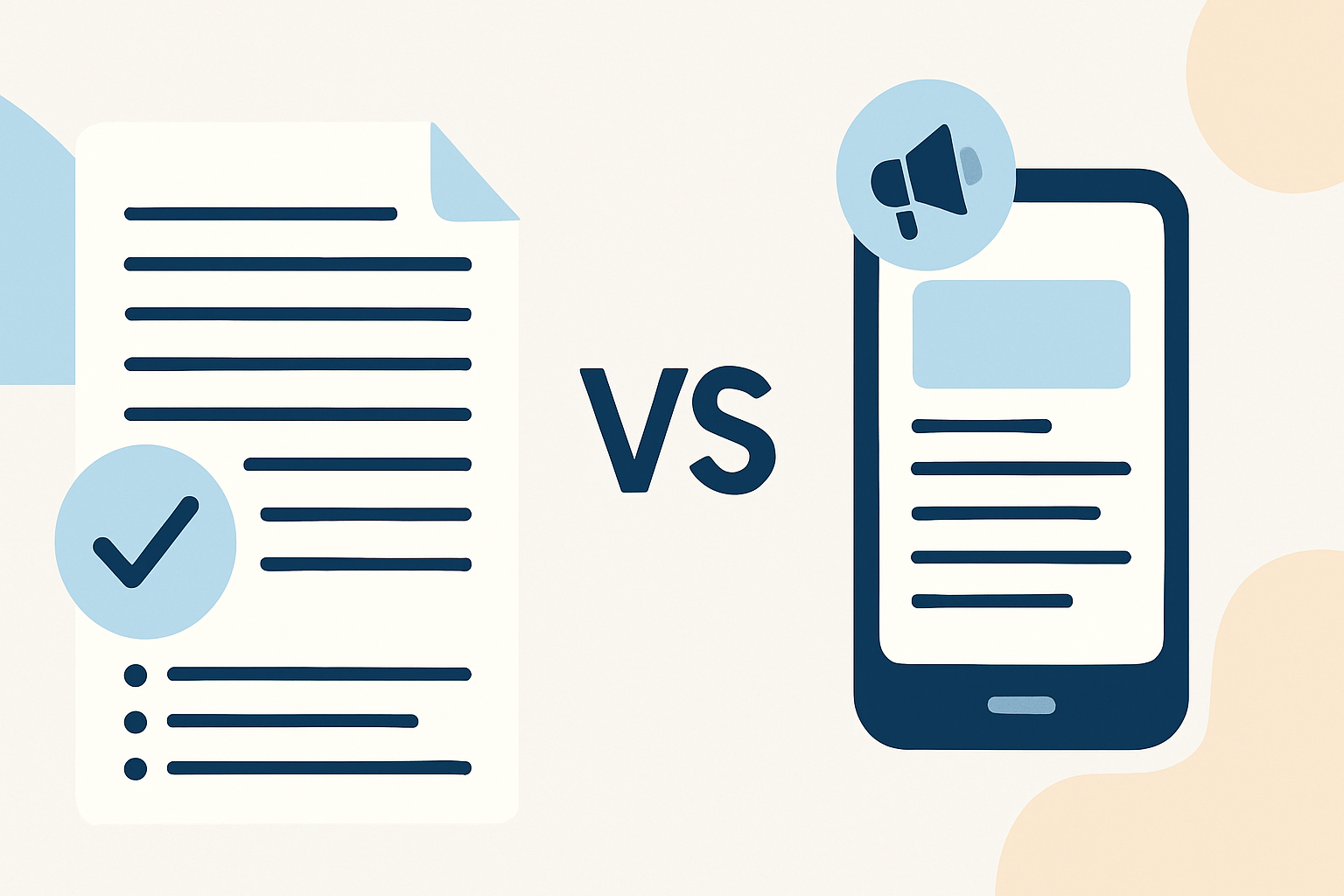
Use long-form content when you need in-depth coverage to build authority and improve search rankings. Use short-form content for quick reads, social distribution, and frequent updates.
Key takeaways
- Long-form content is typically over 1,500 words and lets you cover a topic in depth.
- Short-form content is typically under 1,000 words and is ideal for social media, emails, and mobile consumption.
- ContentPod reports that long-form content can improve dwell time, a key metric for content-length SEO.
- A tech company case study in the article shows long-form guides increased organic traffic by 150% over six months.
- Recommended practices for long-form content include thorough research, using visuals, natural keyword use with internal and external links, identifying your audience, planning comprehensive outlines, and regularly updating articles.
In the digital world, the battle between long-form and short-form content rages on. As businesses strive to capture attention and convey value, choosing the right content length can significantly impact SEO and audience engagement. A well-executed long-form content strategy can drive substantial traffic and provide in-depth information that short-form content might miss. This article will explore the nuances of long-form and short-form content, guiding you on when to use each format for maximum impact.
1. Understanding Long-Form Content Strategy
A long-form content strategy involves creating pieces that are typically over 1,500 words, offering comprehensive coverage on a specific topic. This approach allows for a deep dive into subjects, providing readers with detailed insights and positioning your brand as an authority. According to ContentPod, long-form content can improve dwell time, a critical metric for content length SEO. Here are some critical points to consider:
- Authority Building: Long-form content establishes you as an industry expert, encouraging trust and credibility among your audience.
- SEO Benefits: Search engines favor comprehensive content, enhancing your chances of ranking higher for your target keywords.
- Engagement Metrics: Longer content tends to keep readers on your page longer, increasing the likelihood of conversions.
2. The Role of Short-Form Content in Your Strategy
Short-form content, typically under 1,000 words, is perfect for quick reads and snappy insights. It suits platforms like social media and emails, where brevity is crucial. Incorporating short-form content into your content format strategy can help maintain engagement across different channels. Here’s how:
- Quick Engagement: Short-form content is ideal for capturing attention in busy feeds, making it perfect for mobile consumption.
- Frequent Posting: Shorter pieces allow for more frequent updates, keeping your audience engaged with fresh content.
- Variety and Flexibility: This format lets you experiment with different topics and styles, broadening your appeal.
For instance, Semrush indicates that short-form is excellent for sharing breaking news or quick tips, complementing your long-form efforts.
3. Implementing Long-Form Content Strategy Effectively
When developing a long-form content strategy, it's crucial to balance depth with readability. This involves structuring your content with clear headings and engaging narratives. According to experts in content marketing, the following strategies can enhance your long-form efforts:
- Research Thoroughly: Ensure your content is backed by data and expert opinions to provide value.
- Use Visuals: Infographics and images can break up text, making it more digestible.
- Optimize for SEO: Integrate keywords naturally and include internal and external links to boost your article's authority.
4. Real-World Examples of Successful Content Strategies
Examining successful case studies helps understand the practical application of content strategies. For example, measuring content ROI can reveal the impact of your long-form pieces over time. Consider these examples:
- Case Study 1: A tech company used long-form guides to increase organic traffic by 150% over six months.
- Case Study 2: A financial blog leveraged short-form content on social media, boosting engagement by 40%.
These examples demonstrate how tailored content can meet specific business goals, whether through in-depth analysis or quick updates.
5. Best Practices for Long-Form Content Strategy
Implementing a successful long-form content strategy requires following best practices to maximize effectiveness. Here are key steps to consider:
- Identify Your Audience: Tailor your content to meet the needs and interests of your target readers.
- Create Comprehensive Outlines: Plan your content structure to ensure you cover all necessary points thoroughly.
- Regularly Update Content: Refresh old articles with new data and insights to maintain relevance and accuracy.
By adhering to these practices, you can enhance your content’s value and performance, as highlighted in ContentPod's AI content quality insights.
6. Common Mistakes and Challenges in Content Strategies
While developing a content strategy, it's easy to make mistakes that can hinder success. Avoid these common pitfalls:
- Overlooking Audience Feedback: Failing to consider reader engagement and feedback can lead to misaligned content.
- Neglecting SEO: Ignoring SEO principles can reduce visibility and traffic, as noted by industry experts at Moz.
- Underestimating Promotion: Without proper distribution, even the best content may fail to reach its intended audience.
Addressing these challenges ensures your content efforts are both effective and efficient.
Conclusion: Making the Most of Your Long-Form Content Strategy
Incorporating a robust long-form content strategy can significantly enhance your brand’s online presence. By balancing long-form and short-form content, you cater to various audience needs and optimize for search engines. As you implement your strategy, remember to integrate feedback, update regularly, and promote effectively. For further guidance, explore ContentPod for expert resources and insights. A well-executed strategy not only boosts SEO but also solidifies your authority in the market.
Frequently Asked Questions
What is long-form content strategy?
A long-form content strategy involves creating detailed articles over 1,500 words, designed to provide in-depth information and establish authority on a topic. It enhances SEO by improving dwell time and engagement.
When should I use short-form content?
Short-form content is ideal for quick updates and engaging audiences on platforms like social media. It's best used when you need to convey information swiftly or when your audience prefers concise content.
How can I measure the success of my content strategy?
Success can be measured by tracking engagement metrics, such as page views, time on page, and conversion rates. Tools like Google Analytics and insights from ContentPod's ROI measurement techniques can provide valuable data.
References & Further Reading
- Marketing Statistics 2025 - hubspot.com
- Beginners Guide to SEO - moz.com
- What is Content Marketing? - contentmarketinginstitute.com
- Best Content Strategy Practices - semrush.com
Put this into practice
Share this post
You Might Also Like
Discover more content tailored to your interests
 Highly Relevant
Content Repurposing Examples from One Source
Content repurposing examples are practical ways to turn one original asset, such as a webinar, interview, or blog post, into multiple formats like social posts, email copy, short videos, FAQs, and downloadable guides.
Read More Highly Relevant
AI-Assisted Content Repurposing Marketing in 30 Days
Use AI to turn one strong source into multiple channel-ready assets while your team edits and approves them. A practical 30-day plan starts with a content audit, moves into template-based drafting and clear ownership, and finishes with measurement so you know which formats to scale next month.
Read More Highly Relevant
Content Calendar Planning for B2B: Mistakes to Avoid
Align your calendar to recurring buyer questions and buying-stage needs so each asset helps prospects compare options, reduce implementation risk, or move closer to purchase. Pick a sustainable cadence of fewer, stronger pieces and make the calendar a repeatable operating system rather than a collection of urgent one-offs.
Read MoreReady to create amazing podcast content?
Choose a plan and start generating professional podcast content with AI
View Pricing Plans