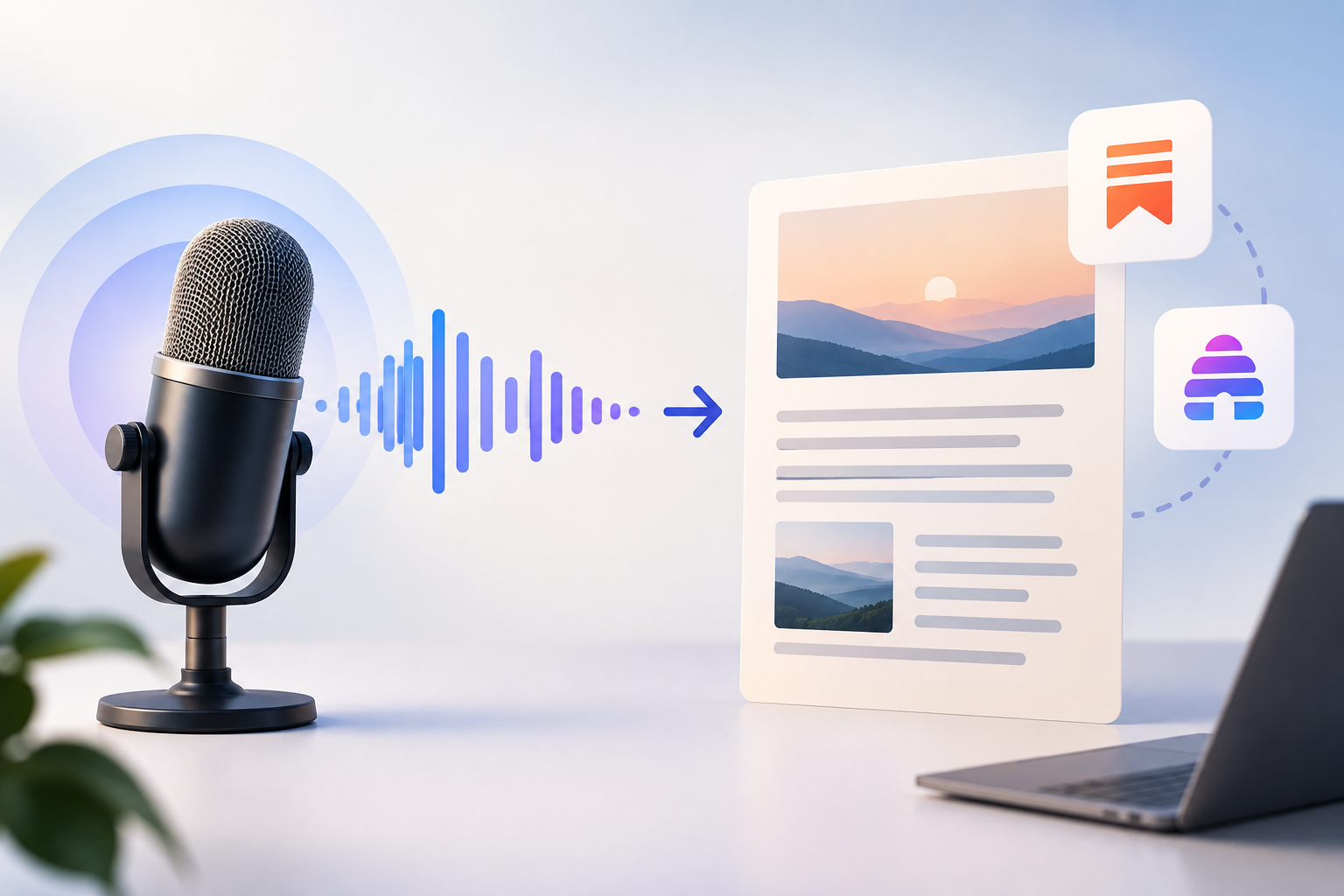
To turn a podcast into a newsletter , start with a clean transcript, pick one clear angle from the episode, rewrite the spoken ideas for email readability, and package the result with a strong subject line, a short intro, useful links, and one call to action. A podcast newsletter works best when it is edited for scanning, not pasted from the transcript, because email readers want a tight takeaway they can read in a few minutes.
Key takeaways
- A transcript is only source material: A raw transcript is not a newsletter draft because spoken language repeats, wanders, and assumes the listener will stay for the full episode.
- One episode can produce more than one email: A long interview often supports a summary issue, a quote-driven issue, and a follow-up issue with resources or reader questions.
- The best podcast newsletter has a single promise: Readers open and finish newsletter issues more often when each email answers one clear question or teaches one clear lesson.
- Your call to action should match the goal of the issue: If the goal is listens, link the episode; if the goal is replies, ask one direct question; if the goal is growth, point readers to your signup path and archive.
If you already record interviews, solo episodes, or panel discussions, you already have raw material for email. The problem is that spoken content and newsletter content behave differently. A 40 minute conversation may contain two great insights, six side stories, and a rough opening that sounds fine in audio but drags in inbox form. Learning how to turn a podcast into a newsletter means deciding what the email is really about, cutting what does not belong, and building a repeatable workflow. This guide walks through that workflow step by step, with beginner-friendly examples, platform choices such as a podcast to Substack newsletter or podcast to beehiiv newsletter, and practical ways to keep each issue useful for readers. If you want broader context on email and newsletters, that hub is a good companion resource.
What you need before you start
You need five simple inputs before you can turn a podcast into a newsletter: the audio, a transcript, a target reader, a publishing home, and a consistent template. Most beginners slow themselves down by trying to design the whole system at once. You do not need that. You need enough structure to make issue one easy to ship and issue five easier than issue one.
- The episode file: Use the final audio, not an early cut, so your quotes and timestamps match what listeners hear.
- A readable transcript: The transcript does not need to be perfect, but names, product terms, and links should be checked manually.
- A reader definition: Decide who the email is for. Existing listeners, new subscribers, clients, members, or industry peers will each need a different angle.
- A sending platform: You can publish as a podcast to Substack newsletter, a podcast to beehiiv newsletter, or through a standard email tool if your list already lives elsewhere.
- A simple structure: For beginners, a repeatable issue format cuts editing time and keeps your writing focused.
If your list is new, read these welcome email examples before inviting podcast subscribers onto it. If you already plan to nurture new subscribers after signup, this explainer on email sequence vs drip campaign helps you choose what happens after the first newsletter lands.
Step 1: get a clean transcript before you turn a podcast into a newsletter
A clean transcript is the fastest path to a good draft because it lets you find the real ideas without replaying the full episode every time you edit. Beginners often try to write directly from memory after recording. That works for short solo episodes, but it fails when the conversation is detailed or guest-heavy.
- Export or create the transcript. Use the transcript from your recording or editing workflow if you have one.
- Fix the obvious errors first. Correct speaker names, company names, URLs, and repeated filler phrases. You do not need literary polish yet.
- Mark standout moments. Highlight strong lines, surprising examples, and sections where the guest says something concrete.
- Ignore spoken clutter. Remove false starts, backtracking, and throat-clearing when you lift text into the email draft.
Your newsletter should not read like a transcript with paragraph breaks. Spoken language often depends on tone, pauses, and listener patience. Email depends on clarity at a glance. That is why the transcript is source material, not the finished product.
One useful test is this: if a paragraph only makes sense after hearing the previous five minutes of conversation, that paragraph needs editing before it enters your newsletter. Self-contained paragraphs are easier for readers and easier for search engines or AI systems to quote accurately.
Step 2: pull the three strongest ideas from the transcript
The easiest way to turn a podcast into a newsletter is to extract three candidate ideas, then choose one primary angle for the issue. Most podcast episodes cover more ground than a single email should. Your job is not to preserve everything. Your job is to decide what belongs in this issue and what can wait.
- Ask what the listener would remember tomorrow. If someone heard the episode once, what one or two ideas would stick?
- Look for utility. Tips, frameworks, mistakes, and specific examples travel well into email.
- Choose one main angle. A newsletter with one core lesson is easier to open, read, and forward.
- Keep two backup angles. Those can become future emails, social posts, or a follow-up sequence.
For example, imagine you host a founder interview about fundraising. The episode covers pitch decks, investor updates, and managing rejection. A weak newsletter would summarize all three in equal weight. A stronger newsletter would pick one angle, such as “the investor update email founders should send monthly,” and then use the episode to support that angle with one quote, one story, and one next step.
This approach is also how you stop your email from sounding like show notes. Show notes list what happened. A newsletter interprets what matters. If you want to see how an interview can branch into different content assets, this ContentPod interview on raising your first round is a useful example of a conversation that could support several distinct email angles depending on the audience.
Step 3: choose the format and platform that fit the issue
The best format is the one you can repeat every week or every episode without rebuilding the process from scratch. Beginners often spend too much time deciding between platforms when the bigger choice is editorial format: summary, lesson, curated takeaway, or personal note plus clip.
Start with one of these newsletter formats:
- Episode summary: Best when the audience already knows the show and wants the main points fast.
- Single lesson email: Best when one idea from the episode deserves expansion and examples.
- Quote plus commentary: Best for interview podcasts with memorable guest lines.
- Resource roundup: Best when the episode mentions books, tools, studies, or templates worth collecting.
| Option | Best for | What to watch |
|---|---|---|
| Podcast to Substack newsletter | Creators who want a simple publishing home with public posts and email in one place | Public archive decisions matter because some readers will find the post on the web before they subscribe |
| Podcast to beehiiv newsletter | Creators focused on newsletter growth, referrals, and publication-style workflows | Growth tools help, but the issue still needs a clear editorial promise to retain readers |
| Standard email platform | Brands with an existing list, segmented automations, or a broader email program | The podcast issue needs to fit with your existing welcome, nurture, and promotional emails |
If your podcast sits inside a larger content program, map the newsletter into the rest of your email system. A podcast issue may be a weekly editorial send, while onboarding lives in a separate sequence. This is where the distinction in email sequence vs drip campaign becomes practical, not theoretical.
Step 4: write the issue so email readers can scan it fast
To turn a podcast into a newsletter that people finish, write for scanning first and depth second. Email readers do not approach your content the way podcast listeners do. They skim subject lines, preview text, opening lines, subheads, and links before deciding whether the issue earns more attention.
- Write the subject line around one benefit. “What this founder sends investors every month” is clearer than “Episode 42 is live.”
- Open with the takeaway. Put the core lesson in the first two sentences.
- Use short sections. Break the issue into a quick intro, one main lesson, one example, and one action.
- Keep direct quotes short. Pull one or two lines from the guest, then paraphrase the rest in cleaner written language.
- End with one clear next step. Ask for a reply, point to the episode, or invite a forward.
Here is a simple structure you can reuse every time:
- Subject line: One promise or lesson.
- Opening: Two sentences that explain why the topic matters.
- Main section: The strongest idea from the episode in plain language.
- Example: A guest quote, brief story, or tactic mentioned in the conversation.
- Listen link: Link the full episode for readers who want the complete discussion.
- Call to action: One request only.
According to Litmus, teams track email performance through open-related, click-related, and conversion-related metrics, but the numbers only become useful when they connect to one clear goal per send. That makes a podcast newsletter easier to improve because you can judge each issue by the action you wanted it to drive, not by every metric at once. A practical overview of that measurement mindset appears in Litmus on email marketing metrics.
Step 5: add links, calls to action, and a clear path to subscribe
A podcast newsletter works better when every issue tells readers what to do next and makes that action obvious. Many beginner emails bury the full episode link, skip the subscribe path, or ask for three different actions at once. That creates friction and lowers response.
Choose one primary call to action based on the job of the email:
- Drive listens: Put the episode link high in the email and repeat it once near the end.
- Drive replies: Ask one concrete question tied to the episode topic.
- Drive list growth: Add a short “forward this to a friend” line and a visible signup link to your archive or newsletter home.
- Drive trust: Include one useful extra resource so the email has value even for subscribers who do not click through to audio.
If you are building a larger editorial system, your newsletter should also connect to the rest of your content. A weekly issue can point readers toward your archive, a downloadable guide, or a related article on newsletter content planning. If growth is the next problem after publication, the guide to newsletter growth marketing teams covers list-building ideas that go beyond the podcast itself.
One small but important detail: use context around links. “Listen here” is weaker than “Listen to the full episode on investor update emails.” Context tells readers why the click is worth making.
Step 6: use AI to turn a podcast into a newsletter faster
AI helps most when it speeds up repackaging and editing, not when it publishes raw output without review. If you already have the spoken source material, you can save time by using tools that convert that source into first drafts for email, social, and supporting assets.
For example, ContentPod includes an Interview Transformer that turns one interview into multiple formats, including an email newsletter draft. That kind of workflow is useful when you want your podcast conversation to become an article, a newsletter issue, a social thread, and a short executive summary without manually rewriting from scratch every time. ContentPod also has an Email Composer for marketing emails and newsletters, plus AI Refine for editing and improving content once you have a draft.
The key is to treat AI output as an editor-assisted first pass. Check for these issues before sending:
- Spoken filler left in: Remove wording that sounds natural in audio but clumsy in email.
- Over-summary: Add one concrete example or quote so the issue does not read like a thin recap.
- Wrong emphasis: Make sure the draft leads with the insight your audience cares about most.
- Generic call to action: Replace vague closing lines with one real next step.
If you want a repeatable production flow, one simple method is to record the conversation, create the transcript, transform it into a newsletter draft, then edit for your voice and platform. That is far quicker than blank-page writing, especially when the episode is interview-based.
Worked example: turn one founder interview into one newsletter issue
A worked example shows how to turn a podcast into a newsletter without losing the best parts of the conversation. Imagine you record a 35 minute interview with a startup founder about hiring the first content marketer.
- Start with the transcript. The raw conversation contains discussion about hiring criteria, compensation, onboarding, and mistakes.
- Choose one angle. You decide the email will focus on the founder’s rule for the first 30 days of onboarding because it is practical and specific.
- Write the subject line. “The first 30 days plan this founder uses for new content hires.”
- Draft the opening. “Most hiring mistakes happen after the offer is signed. In this week’s interview, one founder explained the 30 day onboarding plan that keeps early content hires focused.”
- Build the main section. Explain the plan in your own words: week one for product and audience context, week two for audit work, week three for first publishable draft, week four for feedback and priorities.
- Add one quote. Include a short line from the founder that captures the idea, then trim the rest.
- Add the listen link. Offer the full episode to readers who want the wider conversation about hiring and team structure.
- Close with one prompt. “Reply with the hardest part of onboarding your first content hire.”
That email is useful even if the reader never presses play. That is the standard to aim for. The podcast expands the idea. The newsletter delivers the idea.
This same method works for a podcast to Substack newsletter or a podcast to beehiiv newsletter. The platform changes where the issue lives and how you grow it. The editorial move stays the same: one angle, clear writing, one next step.
Common mistakes when you turn a podcast into a newsletter
Most problems come from treating email like a transcript dump or a promotional alert instead of a standalone editorial product. If your newsletter feels flat, one of these issues is usually the reason.
- Trying to summarize the whole episode: Readers do not need every point. They need the best point.
- Opening with housekeeping: “Welcome back, episode 31 is live” wastes the most valuable lines in the email.
- Using long guest quotes: A transcript may contain good speech, but email needs tighter writing. Trim and paraphrase.
- Sending without a template: A repeatable structure makes consistency easier and reduces edit time.
- Skipping the onboarding path: New subscribers need context. A welcome message or short sequence helps them understand what they will get and why it matters.
- Tracking the wrong outcome: If the goal is replies, do not judge the issue only by listens. Match the metric to the purpose.
If your issue feels thin, the fix is usually to add one practical layer. Include a mini framework, a reader question, a resource list, or one paragraph of commentary that interprets the interview. If your issue feels bloated, cut side topics and save them for future sends. One episode can feed several newsletters if you plan the angles in advance.
Conclusion: Making the Most of turn a podcast into a newsletter
To turn a podcast into a newsletter, you do not need a complicated publishing stack. You need a clean transcript, one clear angle, a scannable structure, and a call to action that matches the goal of the issue. Start by choosing a recent episode, extracting the strongest idea, and writing one email that stands on its own even for readers who never listen. Then repeat the process with a simple template, measure what each issue is meant to do, and improve from there.
If you want help moving from recorded conversation to finished email assets, ContentPod can shorten the drafting and repurposing work with tools built for interviews, newsletters, and long-form content. Pick one episode this week and turn it into one useful issue. That is enough to build the habit and prove the workflow.
Bottom line: The fastest way to turn a podcast into a newsletter is to extract one strong idea from the episode, rewrite it for inbox readers, and publish it in a repeatable format that is useful without requiring a click to the audio.
Frequently Asked Questions
What is turn a podcast into a newsletter?
Turn a podcast into a newsletter means converting the ideas from an audio episode into an email issue that readers can scan and understand quickly. The process usually includes transcribing the episode, selecting the most useful point, rewriting the spoken content for clarity, and adding a subject line, links, and one call to action.
Should a podcast newsletter include the full transcript?
A podcast newsletter should usually not include the full transcript because transcripts are repetitive and hard to scan in an inbox. A better approach is to pull one key lesson, one short quote, and one link to the full episode, then write the rest in clean, concise email language.
Which is better for a podcast newsletter, Substack or beehiiv?
Substack is a good fit when you want a simple public publishing flow with email and web posts together. Beehiiv is a good fit when newsletter growth and publication-style operations are higher priorities. The better choice depends on your workflow, audience, and whether the podcast newsletter is a side project or part of a larger email program.
References & Further Reading
- Mailchimp: Email Marketing Benchmarks
- Litmus: Email Marketing Metrics
- ConvertKit: Newsletter resources
- HubSpot: Email Marketing
Put this into practice
Share this post
You Might Also Like
Discover more content tailored to your interests
 Highly Relevant
Email Sequence vs Drip Campaign: Definitions and Use Cases
Email sequence vs drip campaign comes down to structure and trigger: an email sequence is a planned series of emails sent in a set order for a specific experience, while a drip campaign is an automated set of emails released based on time, behavior, or a predefined trigger.
Read More Highly Relevant
Explained: Google CEO Sundar Pichai on AI Shake-Up
Sundar Pichai announced that Jeff Dean is leaving after 27 years and that Demis Hassabis will take on new responsibilities, and he framed the change as a managed transition meant to reassure employees and identify who will lead Google’s AI efforts. The message functions as a signal about how Google plans to organize AI leadership rather than a routine personnel note.
Read More
Welcome Email Examples and How to Write Your Own
Welcome email examples are sample first messages you send after someone subscribes, signs up, buys, or starts a trial, and they show the structure, tone, and call to action that help new contacts take the next step.
Read MoreReady to create amazing podcast content?
Choose a plan and start generating professional podcast content with AI
View Pricing Plans