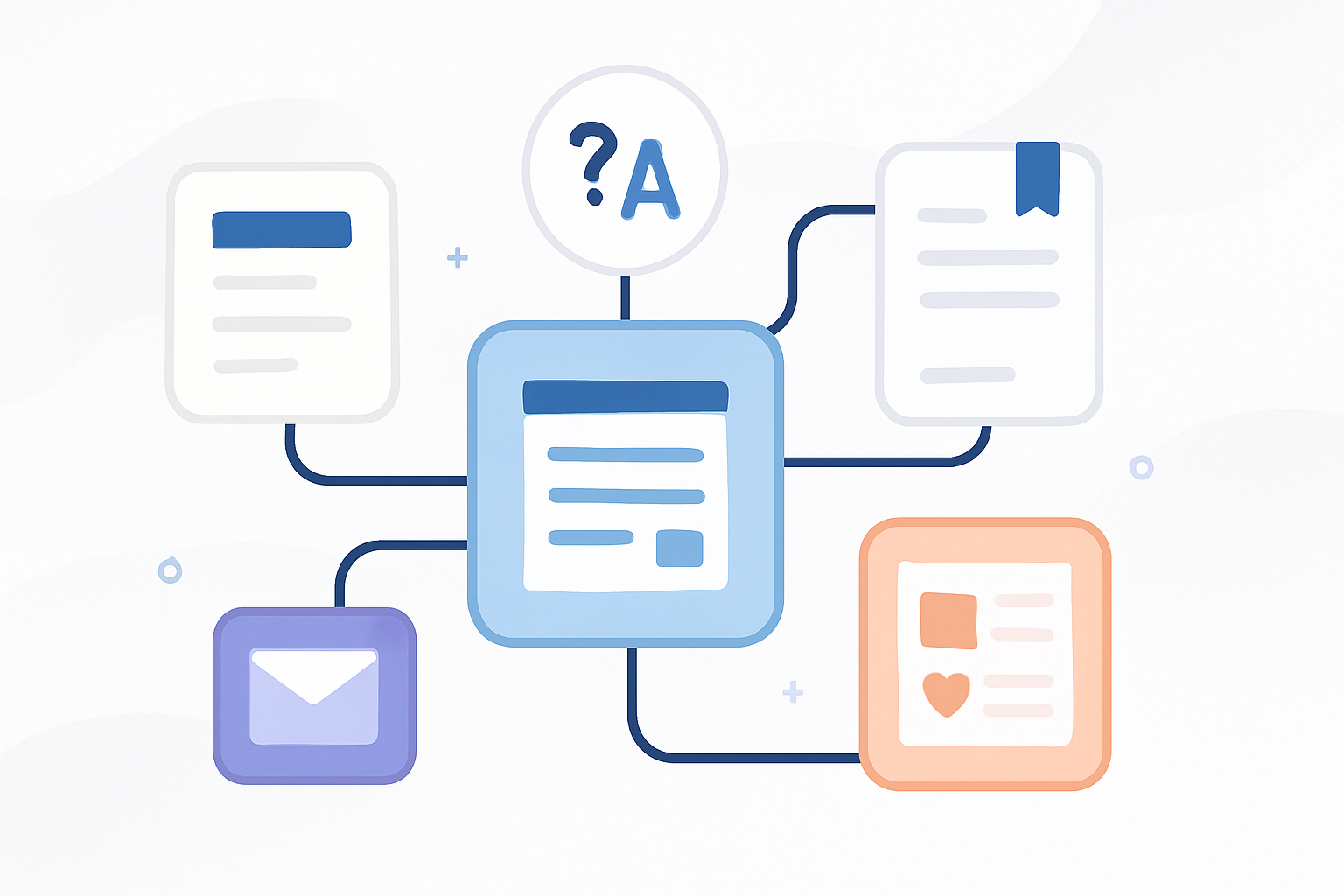
A multi-format content strategy uses multiple content types, including blogs, FAQs, guides, emails, and social media, to reach different audience preferences and increase brand visibility. Putting it into practice requires audience research, consistent messaging across channels, and tools such as ContentPod and SEMrush to coordinate distribution and measure performance.
Key takeaways
- Blogs are effective for SEO and enable in-depth exploration of topics.
- FAQs address common customer questions and can improve user experience and reduce bounce rates.
- Guides offer step-by-step instructions that help establish authority and build trust with an audience.
- An omnichannel approach synchronizes content across channels to deliver a seamless customer experience and extend reach.
- Common implementation challenges are keeping messaging consistent, maintaining quality across formats, and managing resources; analytics tools like SEMrush can guide optimization.
In today's digital landscape, a multi-format content strategy is crucial for businesses seeking to enhance their online presence and engage with diverse audiences. Leveraging a content format mix allows brands to deliver their message across various channels, ensuring maximum visibility and impact. This comprehensive guide explores the components of a successful multi-format content strategy, providing actionable insights into how you can implement it effectively. From blogs and FAQs to guides, emails, and social media, discover how to diversify your content and optimize your reach.
1. Understanding Multi-Format Content Strategy
A multi-format content strategy involves using different types of content to reach a broader audience. By diversifying the content formats, businesses can cater to different preferences and consumption habits. This strategy is integral to ContentPod's approach to content creation, ensuring messages are tailored to various platforms and audience needs.
- Practical point 1: Blogs are excellent for SEO and detailed information sharing, allowing for in-depth exploration of topics.
- Practical point 2: FAQs address common customer queries, enhancing user experience and reducing bounce rates.
- Practical point 3: Guides provide step-by-step instructions, establishing authority and trust with your audience.
2. The Importance of Content Format Mix
Integrating a diverse content format mix is essential for engaging different segments of your audience. This approach not only improves engagement but also boosts your omnichannel content strategy. Resources like Building an AI Content Workflow: From Ideation to Publishing highlight how leveraging AI can streamline the creation of varied content types, making it easier to maintain a consistent brand voice across platforms.
3. Enhancing Reach with Omnichannel Content
Implementing an omnichannel content approach ensures that your message resonates with audiences regardless of where they interact with your brand. This strategy involves synchronizing content across different channels to provide a seamless customer experience. An interview like AI and the Future of Content Marketing: A Dynamic Discussion offers insights into how AI tools can aid in managing and optimizing omnichannel content.
4. Real-World Examples of Multi-Format Content Strategy
Understanding the practical application of a multi-format content strategy can be facilitated by examining real-world case studies. These examples highlight how businesses successfully use a mix of content formats to achieve their marketing goals.
- Example 1: A tech company uses detailed guides and blogs to educate customers on product features, enhancing user engagement and satisfaction.
- Example 2: A retail brand employs FAQs and social media to address customer inquiries and boost sales through personalized interactions.
5. Best Practices for Implementing a Multi-Format Content Strategy
Adopting a multi-format content strategy requires careful planning and execution. Here are some best practices to ensure success:
- Best Practice 1: Conduct audience research to understand preferences and tailor content formats accordingly.
- Best Practice 2: Utilize tools and platforms like ContentPod to automate and optimize content distribution.
- Best Practice 3: Avoid common pitfalls such as inconsistent messaging and lack of coordination across channels.
6. Overcoming Challenges in Multi-Format Content Strategy
While a multi-format content strategy offers numerous benefits, it also presents challenges that need to be addressed. These include ensuring consistency, maintaining quality across formats, and managing resources effectively. To navigate these challenges, businesses can turn to resources such as SEMrush for analytics and insights that guide content optimization efforts.
Conclusion: Making the Most of Multi-Format Content Strategy
Incorporating a multi-format content strategy is vital for brands aiming to enhance their digital presence and connect with a diverse audience. By leveraging different content types, businesses can ensure their messages are impactful and far-reaching. As you implement this strategy, consider utilizing platforms like ContentPod to streamline your efforts and maximize results. Embrace the power of diversified content and watch your brand's reach and influence grow.
Frequently Asked Questions
What is multi-format content strategy?
A multi-format content strategy is an approach that involves using various content types, such as blogs, FAQs, guides, emails, and social media, to engage different audience segments and enhance brand visibility.
How does a content format mix benefit businesses?
By using a content format mix, businesses can cater to different audience preferences, improve engagement, and ensure their message is consistent across all channels, ultimately enhancing the overall customer experience.
What are some common challenges in implementing a multi-format content strategy?
Key challenges include maintaining consistent messaging across formats, ensuring high-quality content, and effectively managing resources. Solutions involve careful planning, utilizing analytics tools, and leveraging automation platforms.
References & Further Reading
- Beginner's Guide to SEO - moz.com
- Marketing Statistics 2025 - hubspot.com
- Content Marketing Strategy Guide - semrush.com
- What is Content Marketing? - contentmarketinginstitute.com
Put this into practice
Share this post
You Might Also Like
Discover more content tailored to your interests
 Highly Relevant
Content Repurposing Examples from One Source
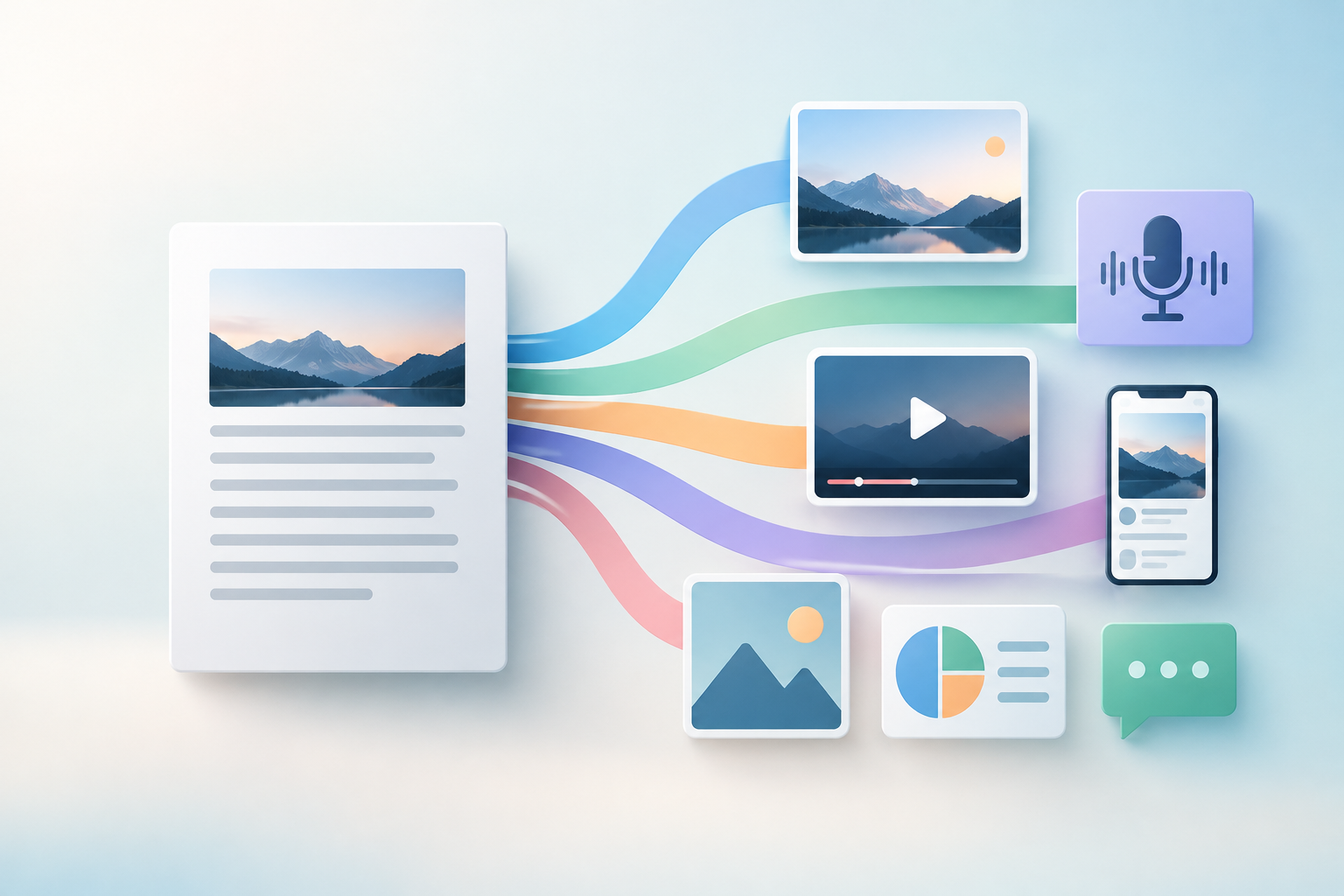
Content repurposing examples are practical ways to turn one original asset, such as a webinar, interview, or blog post, into multiple formats like social posts, email copy, short videos, FAQs, and downloadable guides.
Read More Highly Relevant
AI-Assisted Content Repurposing Marketing in 30 Days
Use AI to turn one strong source into multiple channel-ready assets while your team edits and approves them. A practical 30-day plan starts with a content audit, moves into template-based drafting and clear ownership, and finishes with measurement so you know which formats to scale next month.
Read More Highly Relevant
Content Calendar Planning for B2B: Mistakes to Avoid
Align your calendar to recurring buyer questions and buying-stage needs so each asset helps prospects compare options, reduce implementation risk, or move closer to purchase. Pick a sustainable cadence of fewer, stronger pieces and make the calendar a repeatable operating system rather than a collection of urgent one-offs.
Read MoreReady to create amazing podcast content?
Choose a plan and start generating professional podcast content with AI
View Pricing Plans