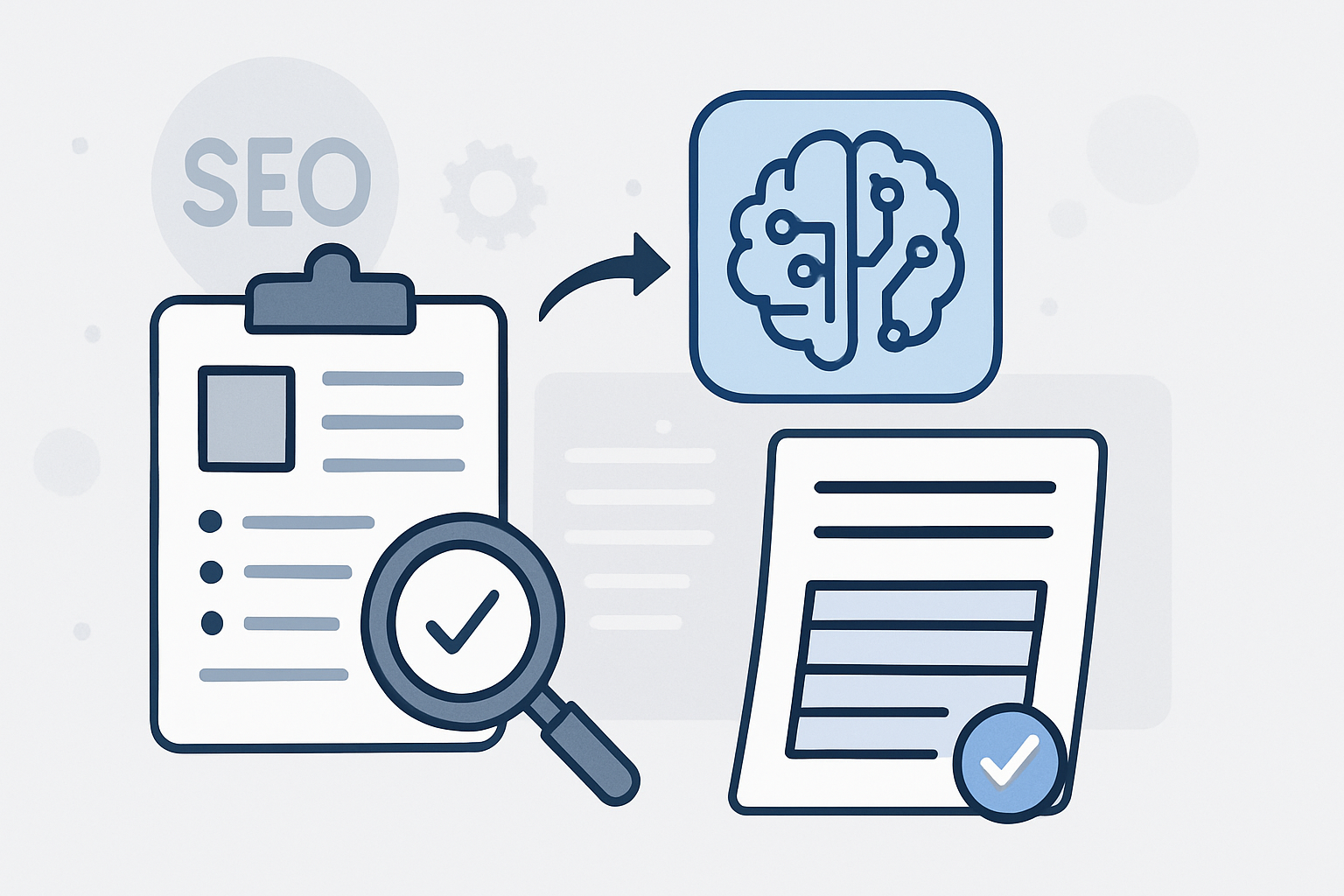
AI automates data-heavy parts of SEO content briefs, including keyword discovery, audience signals, and competitor gaps, which speeds brief creation. Treat AI output as a starting point and adjust briefs based on performance data and your content objectives.
Key takeaways
- An SEO content brief lists target keywords, audience information, content goals, and provides structured guidance for writers and editors.
- The step-by-step AI-assisted brief process in the article includes keyword research (tools cited: SEMrush and Ahrefs), audience analysis, content structure suggestions, competitor analysis, and setting performance metrics.
- Best practices are to set clear objectives, choose AI tools that align with your content goals, and regularly review and adjust briefs based on performance data and changing trends.
- Common mistakes are over-reliance on AI, ignoring data insights, and producing inconsistent briefs that confuse writers.
- The article gives two examples: an e-commerce platform that used AI for keyword analysis and saw a 30% increase in organic traffic, and a digital marketing agency that reduced content planning time by 40% using AI for audience analysis.
In the ever-evolving world of digital marketing, creating effective SEO content briefs is crucial for success. As search engine algorithms become more sophisticated, the demand for high-quality, optimized content increases. Fortunately, AI technology is revolutionizing how we approach content creation, providing powerful tools to streamline the process. This guide will explore the step-by-step process of creating SEO content briefs using AI, offering practical insights and examples along the way.
1. Understanding SEO Content Briefs
An SEO content brief is a comprehensive document that outlines the key elements necessary to create content that ranks well on search engines. It includes target keywords, audience information, content goals, and more. The purpose of an SEO content brief is to ensure that everyone involved in the content creation process has a clear understanding of what is needed to achieve optimal results.
- Structured Guidance: Provides a clear roadmap for writers and editors.
- Keyword Focus: Ensures content is optimized for specific search queries.
- Audience Insight: Aligns content with the needs and expectations of the target audience.
For more insights on the role of AI in content marketing, check out this interview with industry experts.
2. The Role of AI in SEO Brief Creation
AI technology has transformed the way we create SEO content briefs by automating and enhancing various steps in the process. AI tools can analyze vast amounts of data quickly and efficiently, offering insights that were previously inaccessible. This allows marketers to create more precise and effective content strategies.
- Data Analysis: AI can process large datasets to identify trending topics and relevant keywords.
- Content Suggestions: AI tools provide suggestions for content structure and format based on current best practices.
- Efficiency Boost: Automating parts of the brief creation process saves time and resources.
Learn more about optimizing your workflow with AI by reading our AI Content Workflow Optimization guide.
3. Step-by-Step Process of Creating SEO Content Briefs with AI
Creating SEO content briefs with AI involves several key steps. Each step utilizes AI technology to enhance the quality and effectiveness of the brief.
- Keyword Research: Use AI-powered tools to identify the most relevant and high-performing keywords for your content. Tools like SEMrush and Ahrefs are excellent for this purpose.
- Audience Analysis: Leverage AI analytics to gain insights into your target audience's preferences and behaviors.
- Content Structure: Utilize AI to suggest optimal content structures that align with SEO best practices.
- Competitor Analysis: Use AI to analyze competitor content and identify gaps and opportunities.
- Performance Metrics: Set clear performance metrics that AI can track to measure content success.
For a deeper dive into how AI influences content marketing strategies, explore our discussion on AI's role in business content.
4. Real-World Examples of AI in SEO Content Briefs
Real-world applications of AI in creating SEO content briefs demonstrate its transformative power. Companies across various industries are leveraging AI to enhance their content marketing efforts.
- Case Study 1: A leading e-commerce platform used AI for keyword analysis and saw a 30% increase in organic traffic.
- Case Study 2: A digital marketing agency reduced the time spent on content planning by 40% using AI tools for audience analysis.
For more examples of multi-format content strategies, refer to our comprehensive guide.
5. Best Practices for Creating SEO Content Briefs
Following best practices when creating SEO content briefs ensures consistency and effectiveness across your content marketing efforts.
- Set Clear Objectives: Define what you want to achieve with your content, whether it's increasing traffic, engagement, or conversions.
- Use AI Tools Wisely: Choose AI tools that align with your content goals and integrate them seamlessly into your workflow.
- Review and Adjust: Regularly review your briefs and adjust them based on performance data and changing trends.
For additional tips on boosting organic traffic, check out our Podcast SEO guide.
6. Common Mistakes and Challenges in SEO Brief Creation
While AI offers numerous benefits, it's essential to be aware of common pitfalls and challenges in creating SEO content briefs.
- Over-Reliance on AI: Relying too heavily on AI tools can lead to generic content. Always add a human touch.
- Ignoring Data: Failing to consider data insights can result in content that misses the mark with your audience.
- Inconsistent Briefs: Inconsistencies in briefs can confuse writers and derail content creation efforts.
For further reading on addressing these challenges, explore HubSpot's resources.
Conclusion: Making the Most of SEO Content Briefs
By integrating AI into the creation of SEO content briefs, you can enhance the efficiency and effectiveness of your content marketing strategy. AI technology provides valuable insights and automates many aspects of the process, allowing you to focus on creative and strategic tasks. At ContentPod, we offer tools and resources to help you succeed in the digital landscape. Embrace AI as a partner in creating compelling and optimized content that meets the needs of your audience.
Frequently Asked Questions
What is SEO content briefs?
SEO content briefs are detailed documents that guide content creators in producing optimized content that aligns with search engine requirements and audience needs. They ensure consistency and focus across all content marketing efforts.
How does AI improve the creation of SEO content briefs?
AI enhances the creation of SEO content briefs by automating data analysis, providing content structure suggestions, and offering insights into audience behavior and keyword trends, thereby improving efficiency and effectiveness.
What are the key components of an effective SEO content brief?
An effective SEO content brief includes target keywords, audience insights, content objectives, preferred tone and style, and clear performance metrics to guide content creators.
References & Further Reading
- Beginner's Guide to SEO - moz.com
- Marketing Statistics 2025 - hubspot.com
- SEMrush Blog - semrush.com
- Ahrefs Blog - ahrefs.com
Put this into practice
Share this post
You Might Also Like
Discover more content tailored to your interests
 Highly Relevant
SEO Workflows for Content Consultants: Step-by-Step Playbook
Build a documented, repeatable workflow that combines human judgment and AI so you can research topics, write and brief reliably, review factual accuracy, optimize for search intent, and publish with clear acceptance criteria. That system makes content that ranks, connects to your services, and is easier to maintain week to week.
Read More Highly Relevant
SEO Workflows Content SaaS: Practical 30-Day Plan Guide
A 30-day operational system turns AI-assisted drafts into search-performing SaaS content by creating a repeatable pipeline with weekly checkpoints. Focus the month on building a research spine, validating intent, and establishing measurement so you publish fewer low-performing posts and more useful articles.
Read More Highly Relevant
SEO Workflows for Content Marketing: Mistakes to Avoid
Consistent SEO results from AI-assisted content require a documented editorial workflow that enforces research, subject-matter review, and a plan for ongoing updates. Treat AI as one input in that workflow, not a shortcut that replaces briefs, editing, and accountability.
Read MoreReady to create amazing podcast content?
Choose a plan and start generating professional podcast content with AI
View Pricing Plans