Tokyo Electron Wins Award: Accelerating 3D Integration for AI Hardware
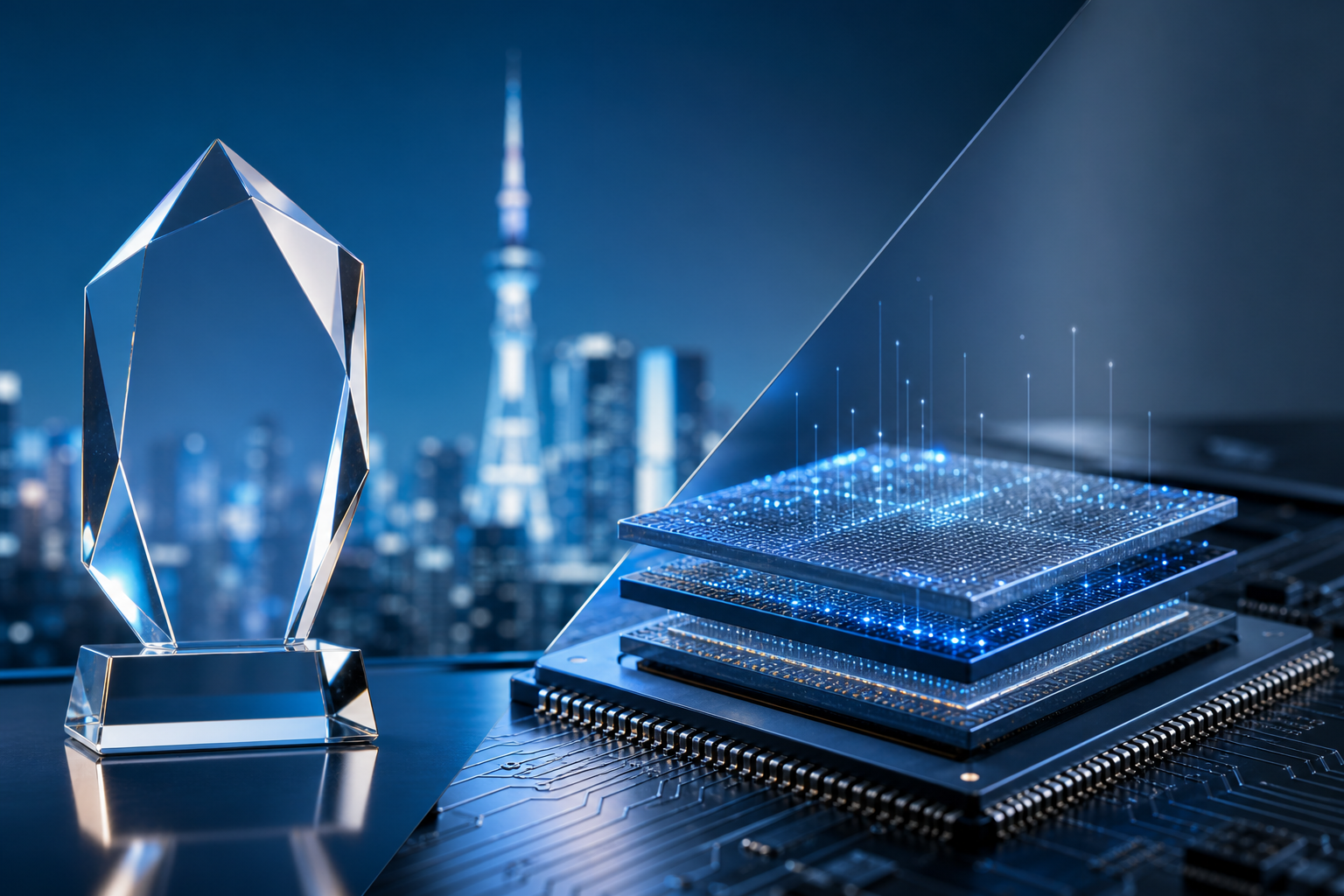
Tokyo Electron won an award for its 3D integration technology, which stacks semiconductor devices vertically to shorten interconnect distances and improve processing speed and energy efficiency in AI hardware. Those gains make real-time AI tasks more feasible, including faster decision-making in autonomous driving and quicker analysis in medical diagnostics.
Key takeaways
- 3D integration reduces the physical space required for circuits, enabling more compact and efficient chip designs.
- The approach addresses limitations of traditional 2D chips, including slower data transfer and higher heat generation.
- Tokyo Electron's recognition is likely to push competitors toward similar 3D integration efforts and set a new industry benchmark.
- Recommended steps for organizations adopting 3D integration include focused research and development, thorough testing before deployment, and collaboration with industry partners to share knowledge and reduce risk.
Tokyo Electron Wins Award: Accelerating 3D Integration for AI Hardware
In a significant development, Tokyo Electron wins award for its groundbreaking contributions to AI hardware through advanced 3D integration technology. This accolade recognizes the company's pivotal role in pushing the boundaries of AI hardware capabilities, which is crucial as the demand for more efficient and powerful AI systems grows. The award highlights Tokyo Electron’s innovative approaches in the semiconductor industry, positioning them as leaders in technological advancements. This article delves into the specifics of their achievement, exploring the implications for AI hardware development and the broader tech landscape.
1. Understanding the Significance of Tokyo Electron's Award
The announcement that Tokyo Electron wins award for its 3D integration in AI hardware is a testament to the company's commitment to innovation. This technology fundamentally enhances the processing power and efficiency of AI systems, which are vital as AI applications become more complex and data-intensive.
- Practical point 1: The award underscores the importance of 3D integration in reducing latency and improving energy efficiency, critical factors in AI hardware performance.
- Practical point 2: By stacking chips vertically, Tokyo Electron's technology minimizes the distance data must travel, leading to faster processing speeds.
- Practical point 3: This innovation opens new possibilities in AI applications, from autonomous vehicles to advanced robotics, where real-time processing is non-negotiable.
For more insights into AI's role in business, explore our interview on Unlocking Local Visibility: AI's Role in Business Content.
2. The Role of 3D Integration in AI Hardware Evolution
The core of Tokyo Electron's award-winning solution lies in 3D integration, a process that stacks semiconductor devices vertically to enhance performance. This approach addresses several limitations of traditional 2D chip designs, such as slower data transfer speeds and increased heat production.
- Efficiency improvement: 3D integration dramatically reduces the physical space required for circuits, allowing for more compact and efficient designs.
- Performance gains: By shortening the distance between circuits, 3D integration enables faster data transfer and reduced power consumption.
For a detailed analysis of AI integration in various sectors, consider reading our blog on Proprietary Intelligence: How to Win with AI.
External resources like NIST provide further technical specifications and standards that guide these advancements.
3. The Impact of Tokyo Electron's Innovations on the Semiconductor Industry
As Tokyo Electron wins award, it sets a new benchmark in the semiconductor industry, influencing both market trends and technological developments.
- Market influence: Tokyo Electron's cutting-edge technologies are likely to drive competitors towards similar innovations, fostering a competitive environment that accelerates overall industry growth.
- Technological implications: The successful implementation of 3D integration could pave the way for other future-forward technologies, such as quantum computing and neuromorphic chips.
For further insights into the future of AI and its impact on various industries, check out our discussion on The Burnout Epidemic: Why High Achievers Struggle.
4. Real-World Applications of Tokyo Electron's 3D Integration
The practical applications of Tokyo Electron's 3D integration technology are vast and varied, promising significant advancements across multiple fields.
- Example 1: In autonomous driving systems, quicker data processing could lead to faster decision-making, enhancing safety and efficiency on the roads.
- Example 2: In healthcare, faster processing speeds can improve diagnostic tools, enabling real-time analysis of medical data to assist in early detection and treatment planning.
Explore more about the AI-driven transformation in industries through our article on Why Artificial Intelligence Won't Replace Bankers Anytime Soon.
5. Best Practices for Implementing 3D Integration in AI Hardware
Organizations looking to adopt 3D integration in their AI hardware can benefit from several best practices.
- Best Practice 1: Engage in thorough research and development to tailor the technology to specific needs, ensuring compatibility and scalability.
- Best Practice 2: Implement robust testing phases to identify and resolve potential issues before full-scale deployment.
- Best Practice 3: Collaborate with industry leaders to leverage shared knowledge and resources, minimizing risks and accelerating innovation.
For practical tips on content planning and strategy, visit our comprehensive guide on Content Calendar Planning for Consultants.
6. Common Challenges and Solutions in Adopting 3D Integration
While the benefits of 3D integration are clear, the path to implementation is not without its challenges. Overcoming these obstacles requires strategic planning and resource allocation.
- Challenge 1: High initial costs can be a barrier; however, investing in this technology can lead to substantial long-term savings and performance improvements.
- Challenge 2: Complexity in design and manufacturing processes requires skilled professionals and advanced equipment, which might necessitate additional training and investment.
For more on overcoming technological challenges, the full article offers detailed insights.
Conclusion: Making the Most of Tokyo Electron Wins Award
As Tokyo Electron wins award, it not only cements its position as a leader in the semiconductor industry but also sets a precedent for future innovations. By embracing 3D integration, companies can significantly enhance their AI hardware capabilities, making strides in efficiency and performance. For organizations aiming to stay at the forefront of technology, aligning with pioneers like Tokyo Electron and utilizing platforms like ContentPod for strategic insights can be invaluable.
Frequently Asked Questions
What is Tokyo Electron wins award?
This award recognizes Tokyo Electron's significant advances in AI hardware through innovative 3D integration technology. This achievement highlights their role in enhancing processing power and efficiency in AI systems.
How does 3D integration benefit AI hardware?
3D integration allows for stacking semiconductor devices vertically, reducing data transfer distances and enhancing processing speeds. This technology improves energy efficiency and performance, essential for advanced AI applications.
What challenges exist in implementing 3D integration?
Challenges include high initial costs and complexity in design and manufacturing. However, strategic planning and investment in skilled professionals and equipment can mitigate these issues.
References & Further Reading
- Tokyo Electron Wins AI Award
- 3D Integration and Its Impact on AI Hardware
- Advancements in AI Hardware
- 3D Integration in AI Development
Put this into practice
Share this post
You Might Also Like
Discover more content tailored to your interests
 Highly Relevant
How AI technical debt problems spread through codebases
AI technical debt problems are the maintenance, reliability, security, and architecture costs that build up when AI systems generate code faster than teams can review, test, document, and own it.
Read More Highly Relevant
Why anthropic model rivals fable on enterprise cost
Anthropic's model is being pitched as close enough in quality to a premium frontier model that cost-conscious enterprises may switch or diversify. The real test for buyers is whether the model delivers acceptable output on their highest-volume tasks while lowering total operating cost and governance overhead.
Read More Highly Relevant
AI risks to global security at the U.N. briefing 2026
AI risks to global security are the ways advanced AI systems can increase cyberattacks, accelerate disinformation, lower barriers to biological or weapons misuse, and outpace the laws meant to control them. In the AI briefing to the U.N.
Read MoreReady to create amazing podcast content?
Choose a plan and start generating professional podcast content with AI
View Pricing Plans