Why Nvidia AI lobbying in Congress is being tested
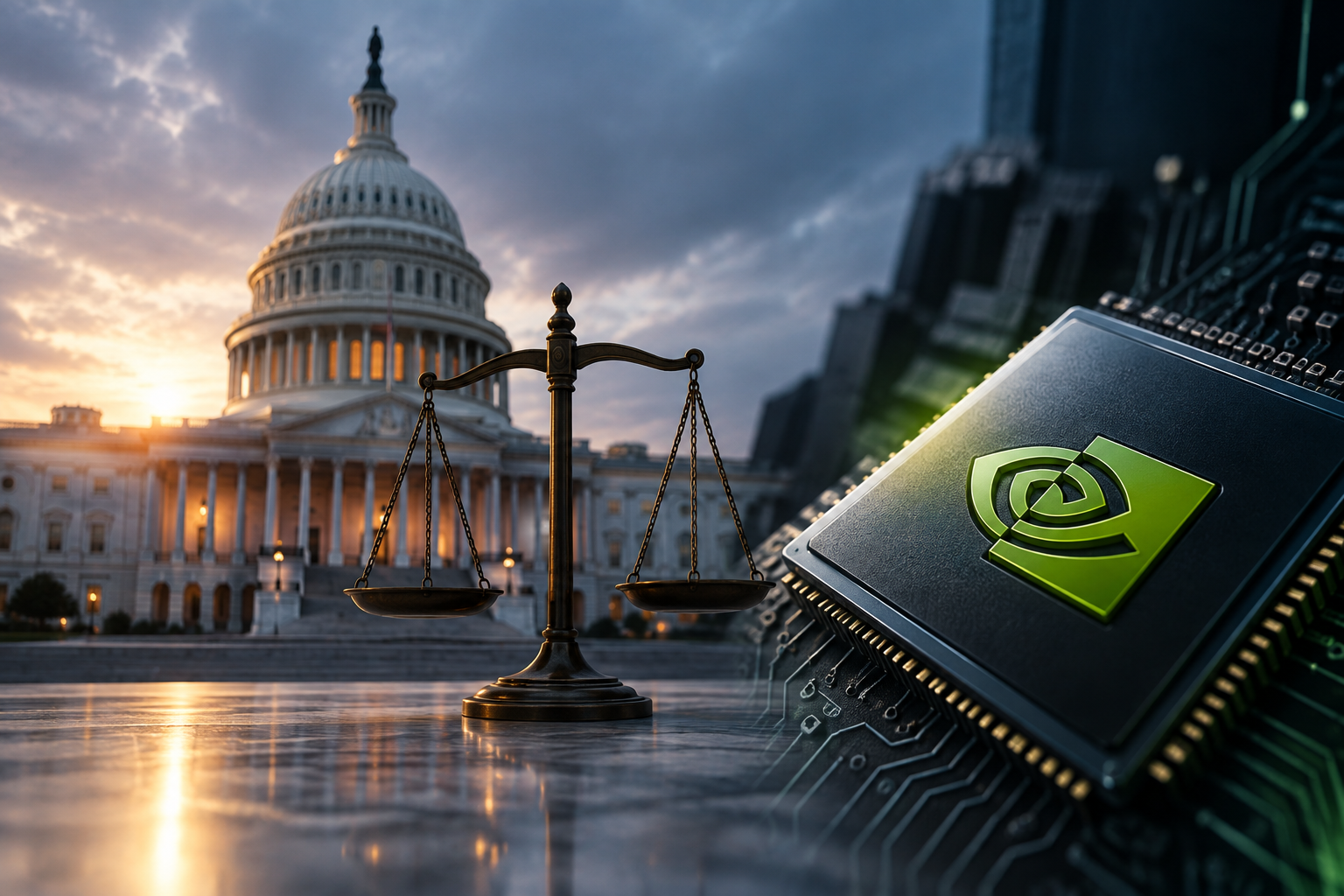
Nvidia AI lobbying in Congress is the set of efforts Nvidia uses to shape how lawmakers write AI, export, competition, energy, and semiconductor rules in 2026. Washington is testing that influence because Congress wants AI growth, national security limits, and market competition at the same time, and those goals often conflict.
Key takeaways
- Nvidia’s policy exposure is broader than chips: Congressional debate now links AI chips, export controls, grid power, data center growth, antitrust questions, and safety testing.
- Influence does not mean control: Nvidia can shape framing, provide technical input, and back coalitions, but Congress still answers to national security agencies, competition concerns, and voter politics.
- The most important battleground is rule design: Specific definitions around advanced compute, model training thresholds, and export categories matter more than broad pro or anti AI rhetoric.
- Public evidence is available: You can track lobbying claims through disclosure databases, hearing records, agency frameworks, and company statements instead of relying on rumor.
Why Nvidia AI lobbying in Congress is being tested
The hard part for you as a reader is separating ordinary corporate advocacy from real policy power. Nvidia AI lobbying in Congress matters because GPU supply, export controls, cloud spending, and safety rules now sit in the same debate. If Congress tightens federal lobbying disclosure and policy scrutiny around AI and chips, Nvidia has to argue for policies that protect its business without looking like it is writing the rules for everyone else. This article explains where Nvidia has influence, where that influence runs into limits, how AI regulation in Congress affects chip policy, and what signals to watch if you track the US AI policy debate for business, investing, or content analysis.
1. Why Nvidia AI lobbying in Congress centers on rule design
Nvidia AI lobbying in Congress centers on rule design because the most valuable policy fights are about definitions, thresholds, and exemptions rather than broad slogans about supporting innovation. When lawmakers discuss AI, they are rarely talking about one issue. They are talking about who can buy advanced chips, how data centers get built, whether model developers must report training runs, and how export controls affect American firms that sell overseas. Nvidia has reason to engage in all of those questions because each one changes demand for its hardware or the pace at which customers deploy systems.
The company’s strongest argument in Washington is practical. Many congressional offices do not write technical chip policy from scratch. Staff often depend on industry briefings, trade groups, civil society reports, and agency input to understand how compute supply works. That creates room for Nvidia AI lobbying in Congress to frame a bill as workable or unworkable based on how AI systems are trained and deployed. If a reporting threshold is too low, Nvidia can say it sweeps in ordinary enterprise use. If an export definition is too broad, Nvidia can argue it hurts American suppliers more than foreign competitors.
This is also where the company’s influence gets tested. Lawmakers know Nvidia has direct commercial interests. They can use the firm’s technical input while discounting its preferred outcome. If you publish or monitor policy analysis with ContentPod, that distinction matters. A hearing statement may be informative about engineering constraints without being a neutral guide to what Congress should do.
- Definitions drive outcomes: Small wording changes in AI chip policy can determine whether a rule hits frontier model training, ordinary cloud workloads, or both.
- Technical credibility has value: Congressional offices often need vendor input to understand compute bottlenecks, supply chains, and deployment limits.
- Credibility has limits: The more a company appears to seek narrow carveouts, the easier it is for rivals and critics to challenge its position.
2. The Washington debate is bigger than one company
The Washington debate is bigger than Nvidia because Congress is trying to write AI rules that also satisfy defense agencies, antitrust concerns, cloud providers, labor interests, utilities, and universities. That is why Nvidia political influence is real but never absolute. A chip maker can push for flexible standards, but senators and representatives still have to answer questions about concentration in compute markets, power demand from data centers, export restrictions to strategic rivals, and whether a few firms are setting the pace for everyone else.
When you read Nvidia AI lobbying in Congress as a policy story, it helps to track the coalitions around it. Nvidia’s interests often overlap with cloud platforms that want access to high end accelerators, research institutions that want less friction in compute access, and regional economic groups that want data center investment. Those alliances do not hold on every issue. Export policy can split firms that sell globally from officials who prioritize security. Safety rules can split developers who want lighter reporting from labs that want government backed evaluation standards.
You can see the same wider argument in other AI policy coverage. Content creators following the What Trump AI czar plan could mean for U.S. policy debate have already seen how personnel choices can change enforcement style without immediately changing statute. You can also compare congressional thinking on model risks with security focused reporting such as Google Gemini AI hack and the new AI security rules, where the policy question shifts from chip access to system misuse and red teaming. According to the National Institute of Standards and Technology, the AI Risk Management Framework is meant to help organizations govern and map AI risks, which shows why some members of Congress prefer process requirements over model specific bans.
If you are reading the 2026 debate for practical reasons, ask a simple question: which policy problem is Congress trying to solve in each hearing or draft? The answer changes whether Nvidia is an expert witness, an interested party, or both.
3. Where Nvidia AI lobbying in Congress has the most room to work
Nvidia AI lobbying in Congress has the most room to work where lawmakers need technical translation and where no political coalition has settled the issue. Export control implementation is one example. Congress can state a broad national security goal, but the details about chip performance thresholds, interconnect limits, cloud access, and product segmentation require technical judgment. That gives Nvidia a channel to argue for lines that are strict enough to satisfy security officials but not so blunt that they block lawful sales or push buyers toward non US alternatives.
A second area is infrastructure. AI policy in 2026 is no longer confined to software and safety papers. It now includes transmission lines, permitting, data center siting, and the economics of massive electricity demand. Nvidia does not own the grid, but it benefits when Congress treats compute growth as national industrial policy. That does not mean every pro build proposal is a win for the company. Local resistance, utility regulation, and environmental review still slow projects, and members of Congress hear from those groups too.
A third area is standards language. Members may ask whether obligations should fall on model developers, cloud operators, chip suppliers, or downstream deployers. Nvidia’s incentive is plain. It wants rules that do not shift broad liability onto chip makers simply because advanced models need advanced hardware. That argument may persuade some offices and fail with others that see concentrated compute supply as part of the policy problem.
If you want a business side view of how AI narratives move from hype to procurement and governance, the interview The Future of AI in Business: From Hype to Reality is useful background. It does not discuss Congress directly, but it helps explain why lawmakers hear constant pressure from companies that want clear rules before making large AI bets. That pressure creates the setting in which Nvidia AI lobbying in Congress can matter.
4. The real tests: export controls, competition, and safety spillovers
The real test of Nvidia’s influence is whether the company can shape policy on export controls, competition, and safety without becoming the symbol of concentrated AI power. These are the areas where Nvidia Washington lobbying meets the hardest resistance. National security hawks may accept business costs if they think compute restrictions slow strategic rivals. Antitrust minded lawmakers may see dependency on one dominant accelerator provider as a market structure issue, not just a supply issue. Safety focused members may ask whether access to more compute should trigger stronger reporting, audits, or incident disclosure.
This is why coverage of AI governance often moves quickly from chips to model evaluation. If lawmakers decide frontier systems need pre deployment testing, the question becomes who has to provide evidence and who keeps the records. That theme appears in Anthropic AI safety testing partnership: 2026 guide, which shows how safety testing is turning into an operational policy issue rather than an abstract ethics debate. Nvidia may prefer to stay on the hardware side of the line, but Congress can write obligations that touch every layer of the stack.
You can think about the pressure points this way:
- Example 1: A bill tightens reporting for large training runs. Nvidia may support clear thresholds but resist any structure that treats chip vendors as direct compliance gatekeepers.
- Example 2: A committee backs tougher export rules. Nvidia may argue for technically precise controls so US firms are not boxed out of lawful markets without measurable security gains.
Those examples show why Nvidia AI lobbying in Congress is being tested. The company can make technically sound arguments and still lose if Congress decides concentration or security risk outweighs commercial flexibility. That is a political test, not just an engineering one.
5. How to read Nvidia AI lobbying in Congress without getting misled
You can read Nvidia AI lobbying in Congress more accurately if you separate evidence of access from evidence of policy success. A meeting, filing, or public statement tells you a company is engaged. It does not tell you the final bill will reflect the company’s preferred language. The best method is to compare disclosures, hearing agendas, draft text, and the positions of competing stakeholders. If you are summarizing this debate for clients or an audience, that discipline matters more than picking a side early.
The workflow below is a good way to track the story.
- Start with the paper trail: Check lobbying filings, committee schedules, and public statements before drawing conclusions about Nvidia AI lobbying in Congress. Public records show where the effort is directed.
- Map the policy target: Separate export policy, safety reporting, procurement, immigration, and power infrastructure. A company may win on one issue and lose on another in the same month.
- Compare language over time: If draft text changes from broad compute restrictions to narrower thresholds or exemptions, that is stronger evidence of influence than a high profile hearing appearance.
This approach also makes your own content better. If you use ContentPod to plan analysis, build your outline around the rule being debated, the stakeholders involved, and the evidence available. You will produce something more useful than generic commentary about lobbying. You should also watch for quiet issues that receive less press but matter a lot, such as visa policy for AI talent, federal procurement preferences, and grid interconnection delays. Those issues may shape AI capacity as much as headline grabbing safety bills do.
6. Why Nvidia AI lobbying in Congress may face more limits in 2026
Nvidia AI lobbying in Congress may face more limits in 2026 because the company now sits at the center of too many political arguments at once. When one firm is linked to AI leadership, export concerns, high cloud spending, and concentration questions, it becomes harder for lawmakers to treat its preferences as narrow technical advice. The company still has expertise Congress needs, but it also has visibility that invites scrutiny.
One limit is bipartisan suspicion of concentrated private power in strategic technologies. Another is the simple fact that AI policy no longer belongs to one committee. Commerce, armed services, judiciary, energy, and appropriations channels can all touch the outcome. That fragmentation reduces the odds that any single lobbying effort controls the whole debate. A third limit is competition among agencies. Congress may listen to industry, but agencies responsible for export enforcement, standards, and national security have their own views and their own incentives.
There is also a messaging limit. Nvidia AI lobbying in Congress works best when the company argues from shared national goals such as domestic capacity, technical precision, and workable compliance. It works less well if opponents can frame the company as trying to preserve bottlenecks or avoid accountability. For readers following the US AI policy debate, that framing battle is often the real story.
If you want additional context, the National Institute of Standards and Technology’s AI guidance is a useful baseline for how government talks about risk management, and broader policy reporting can help you compare congressional proposals with what labs and infrastructure providers are preparing for. The question to ask next is simple: are lawmakers building rules around measurable risks, or are they reacting to the market power of the firms that supply AI compute?
Conclusion: Making the most of Nvidia AI lobbying in Congress
Nvidia AI lobbying in Congress is best understood as a test of how much technical expertise, market power, and policy timing can shape AI rules before national security, competition politics, and public scrutiny push back. If you follow this story for business planning, investment research, or editorial work, focus on the narrow questions hidden inside the broad debate: What counts as advanced compute. Who carries compliance duties. Which exports stay legal. How data center growth gets approved. Those details are where influence becomes visible. If you need a clean workflow for turning those signals into publishable analysis, ContentPod is a practical place to organize sources, angles, and follow up pieces without flattening the debate into a single talking point.
Bottom line: Nvidia AI lobbying in Congress matters most where lawmakers need technical detail, and it matters least where Congress decides market concentration or national security should override the company’s preferred rules.
Frequently Asked Questions
What is Nvidia AI lobbying in Congress?
Nvidia AI lobbying in Congress is Nvidia’s effort to influence federal lawmakers on AI chip exports, safety reporting, competition policy, infrastructure, procurement, and related semiconductor rules. Nvidia AI lobbying in Congress includes direct advocacy, coalition work, technical briefings, and public positioning aimed at shaping how Congress writes and interprets AI policy in 2026.
Why is Congress paying so much attention to Nvidia’s role in AI?
Congress is paying attention because Nvidia sits near the center of advanced AI compute supply, and compute supply affects national security, cloud spending, model development, and market concentration. When a company has that kind of position, lawmakers ask whether its technical advice improves policy design or whether its commercial interests could narrow policy choices.
How can I track Nvidia’s political influence without relying on hot takes?
You can track Nvidia AI lobbying in Congress by reviewing lobbying disclosures, committee hearing records, draft bill language, agency frameworks, and credible reporting that names sources and documents. The best method is to compare what Nvidia requests with what Congress writes, because influence is easier to see in policy text than in headlines.
References & Further Reading
- Google News source article on Washington’s AI debate and Nvidia
- U.S. Senate Lobbying Disclosure Act database
- NIST AI Risk Management Framework
- Anthropic news and policy updates
Share this post
You Might Also Like
Discover more content tailored to your interests
 Highly Relevant
How AI technical debt problems spread through codebases
AI technical debt problems are the maintenance, reliability, security, and architecture costs that build up when AI systems generate code faster than teams can review, test, document, and own it.
Read More Highly Relevant
Why anthropic model rivals fable on enterprise cost
Anthropic's model is being pitched as close enough in quality to a premium frontier model that cost-conscious enterprises may switch or diversify. The real test for buyers is whether the model delivers acceptable output on their highest-volume tasks while lowering total operating cost and governance overhead.
Read More Highly Relevant
How AI in sports marketing is changing broadcast ads
AI in sports marketing is enabling rights holders, networks, streaming platforms, and brands to sell more relevant inventory, adjust creative in real time, and tie ad performance to audience behavior across linear TV, streaming, social clips, and second-screen engagement. Those capabilities let teams coordinate campaigns across fragmented viewing paths and react to moment-level attention during live games.
Read MoreReady to create amazing podcast content?
Choose a plan and start generating professional podcast content with AI
View Pricing Plans