30 Solo Podcast Ideas with Setup and Script Example
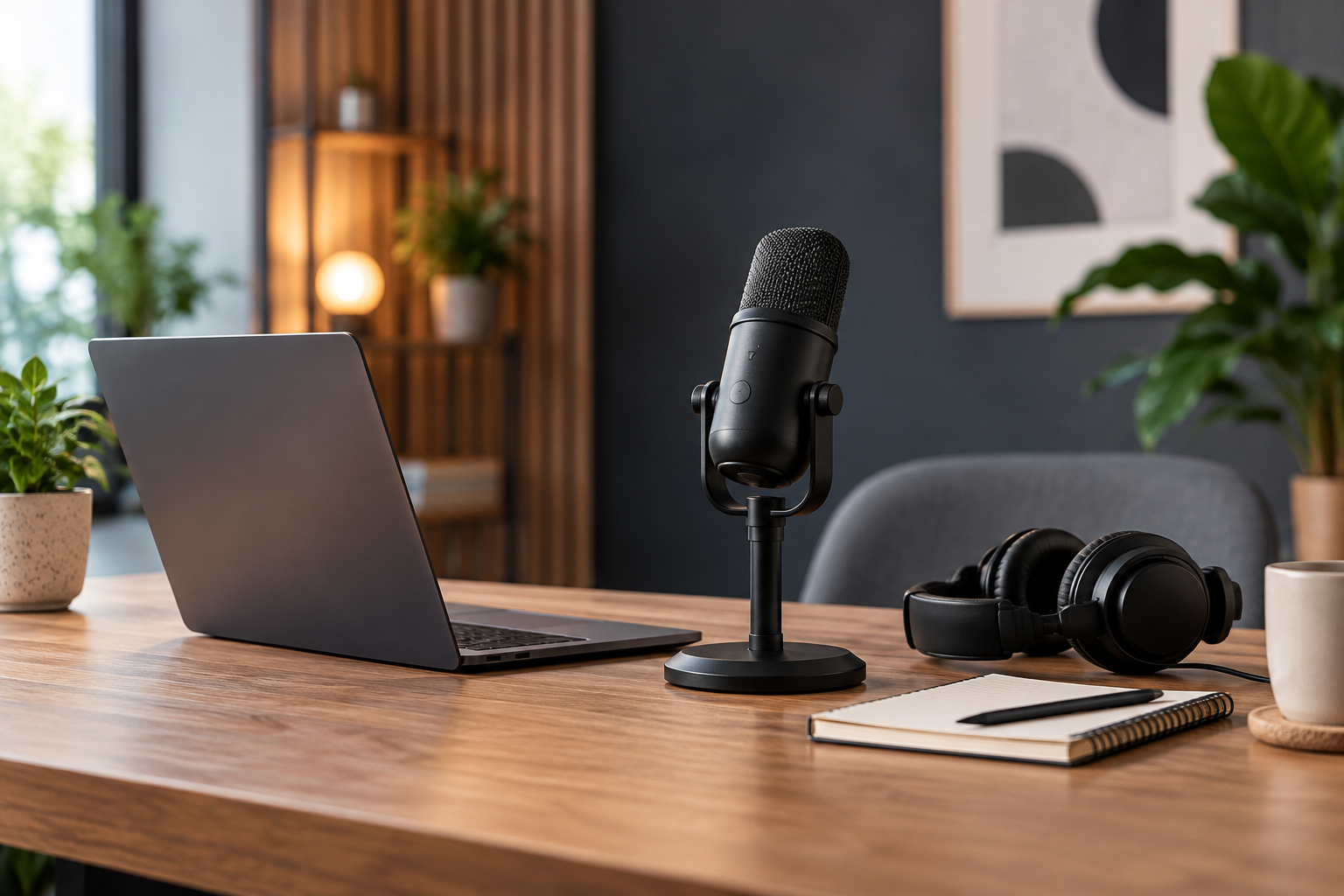
Solo podcast ideas are repeatable episode formats you can record alone, such as quick lessons, stories from your work, FAQs, reviews, experiments, and breakdowns of news or trends. The best solo podcast ideas are narrow enough to plan fast and useful to one specific listener, with enough structure to publish on a steady schedule without needing guests.
Key takeaways
- The strongest solo format is repeatable: A good solo episode idea gives you the same basic structure every week so planning gets easier after the first few recordings.
- Beginner podcasters do better with narrow topics: A focused listener problem and a clear promise usually produce a stronger episode than broad commentary.
- A short outline beats a full script for most episodes: Bullet points keep your delivery natural while still reducing rambling and long pauses.
- Your setup can stay simple: A quiet room, one decent microphone, basic editing, and a consistent format matter more than buying extra gear early.
A solo show is easier to start than an interview show, but it creates a different problem: you have no guest to carry the conversation or bring surprise examples. That is why many new creators stall after one or two episodes. Good solo podcast ideas fix that problem because they give you a format, not just a topic. In this guide, you will get 30 ideas you can use right away, a beginner-friendly solo podcast setup, and a solo podcast script example you can copy. If you want to build a larger system around AI podcast and interview content, this article also shows where a simple solo episode can turn into blog, social, and email content.
Solo podcast ideas that teach one clear thing
The easiest solo podcast ideas for beginners are teaching formats because each episode can answer one question or explain one concept from start to finish. If you can help one listener do one task better, you already have an episode.
- The one-question episode: Pick a single question your audience asks often and answer it in 8 to 12 minutes with an example and a next step.
- The beginner mistake breakdown: Choose one mistake people make when starting and explain why it happens, how to spot it, and how to fix it.
- The glossary episode: Define one industry term in plain language and explain when it matters, who uses it, and what beginners usually misunderstand.
- The process walk-through: Record yourself explaining a step-by-step workflow such as planning a launch, writing a newsletter, or editing audio.
- The tool explainer: Take one tool you use, explain what it does, who should use it, and where it falls short so the episode stays balanced.
- The before-and-after lesson: Compare a weak version of something to a stronger one, such as a poor intro versus a clear intro, and explain the difference line by line.
This teaching style works well if you later want to reuse your spoken ideas as written content. A simple solo recording can become podcast content in other formats, and if you also publish articles, a guide on turning a podcast to blog post will help you plan with repurposing in mind from the start.
Solo podcast ideas that turn your experience into episodes
The most believable solo podcast ideas often come from your own work because specific experience gives you details, tradeoffs, and mistakes that general advice usually lacks. You do not need to be famous to make these episodes useful. You need clear observation.
- The post-project debrief: After you finish a project, explain what you planned, what changed, what worked, and what you would do differently next time.
- The weekly experiment log: Test one tactic for seven days and report the setup, the result, and whether the tactic is worth repeating.
- The behind-the-scenes day: Describe how you spend a typical workday, including the parts that take longer than people expect and the tasks you skip.
- The decision diary: Walk through one hard decision, the options you considered, the criteria you used, and what finally tipped the choice.
- The lesson from a failure: Share one thing that went wrong, what caused it, and the system you changed afterward so the story teaches more than it dramatizes.
- The opinion update: Revisit an opinion you used to hold, explain why it changed, and tell listeners what evidence or experience shifted your view.
If you want examples of how spoken experience can become stronger thought leadership, browse interviews such as AI and the Future of Content Marketing: A Dynamic Discussion. Even though that piece is not a solo show, it shows how concrete observations carry more weight than generic commentary. For content teams, this same principle appears in guides for interview-based content marketing, where the most useful material starts with firsthand detail.
Solo podcast ideas for commentary, news, and audience questions
Commentary-based solo podcast ideas work when you react to a clear input, such as a news story, audience question, trend, or claim, because the outside prompt gives the episode shape. Without that prompt, commentary can drift.
- The headline reaction: Take one news item in your niche and explain what happened, what it means, and what listeners should do with the information.
- The myth check: Pick one common claim in your field and test whether it holds up in practice, then explain the conditions where it may still apply.
- The audience mailbag: Answer two or more listener questions in one episode and group them around a common theme so the episode still feels focused.
- The hot take with evidence: State one opinion clearly, then support it with your own examples, a source, and at least one limitation.
- The trend translation: Explain a new tool, platform change, or business shift in plain terms so beginners understand the practical effect on their work.
- The prediction episode: Make a few careful predictions for your niche and explain the signals you are watching rather than making broad guesses.
Audience-led episodes also make planning easier because listeners tell you what they need. According to Edison Research's The Infinite Dial 2024, podcast listening remains a mainstream habit in the United States, which means there is room for focused shows that answer specific questions well. For solo creators, the opportunity is not to cover everything. The opportunity is to become the clear voice on one narrow set of problems.
Solo podcast ideas built around stories, reviews, and recurring series
Series-based solo podcast ideas reduce planning stress because you are not inventing a new format every week. You are filling in a proven template with a new story, review, or case.
- The case breakdown: Pick one campaign, product launch, episode, or business move and explain what happened and what listeners can copy or avoid.
- The book or article review: Summarize the main argument, say what holds up, and point out what the source misses for your audience.
- The personal story with a lesson: Tell one story with a clear beginning, middle, and end, then finish with the exact takeaway for listeners.
- The 5 things I learned episode: Group five short lessons from one month, one project, or one event into a single concise recording.
- The resource round-up: Recommend a few tools or articles around one theme and explain why each made the list.
- The recurring challenge series: Set yourself a monthly challenge, document the rules and the result, and let listeners follow the series over time.
How to choose the right solo podcast setup and format
The right solo podcast setup is the one that removes friction, keeps your audio clear, and matches how often you can publish. Beginners usually need fewer tools and more structure.
If you are deciding between formats, compare them by prep time, energy, and repeatability. A short teaching show may take less editing than a story-heavy show, while a commentary show may depend more on timely research. This quick table can help you choose a starting point.
| Format | Best for | Prep time | Risk to watch |
|---|---|---|---|
| Teaching episode | Clear expertise and evergreen topics | Low to medium | Sounding too dense or too scripted |
| Experience debrief | People running projects or teams | Low | Becoming too personal without a listener takeaway |
| Commentary episode | People who follow a niche closely | Medium | Drifting off-topic or reacting without evidence |
| Story or review series | Creators who want a strong recurring format | Medium | Spending too long on setup before the lesson |
Your physical setup can stay simple. A USB microphone, closed-back headphones, basic recording software, and a quiet room are enough to start. Soft furnishings help absorb echo. Recording at the same time of day helps you keep your voice and room sound consistent. If you need a simple technical walk-through, Riverside's guide on how to start a podcast is a useful reference.
- Pick one repeatable format: Choose teaching, commentary, debrief, or story before you name your first 10 episodes.
- Set an episode length: Many beginner solo shows work well at 8 to 20 minutes because shorter episodes force clearer planning.
- Create a reusable outline: Use the same intro, segment order, and outro for at least your first five episodes.
- Batch topic ideas: Write 20 possible episodes in one sitting so you are not starting from zero every week.
- Edit for clarity, not perfection: Remove long pauses, restarts, and obvious repetition, then publish.
If you speak more naturally than you write, ContentPod can fit into your workflow without changing your process too much. Its AI Interview tool is voice-only and asks adaptive follow-up questions, which can help you talk through an idea before you turn it into a tighter solo episode outline. Teams that publish around interviews may also want the planning ideas in this piece on interview-based content marketing teams.
A solo podcast script example you can record today
A good solo podcast script example gives you enough structure to stay focused without making your delivery sound stiff. The script below uses one of the strongest beginner formats: the one-question teaching episode.
Episode idea: “How to plan your first three solo podcast episodes”
Target listener: A beginner who wants to launch but has no episode roadmap.
Estimated length: 8 to 10 minutes.
- Opening hook: “If you can only name one episode idea, you do not have a podcast plan yet. You have a topic. In this episode, I am going to give you a simple way to plan your first three solo episodes so you can record this week.”
- Set the promise: “By the end of this episode, you will have three episode types, a simple structure for each one, and a faster way to keep your show going after launch.”
- Point one: “Start with a teaching episode. Choose one question people ask you often. Do not try to cover your whole niche. If you help one listener solve one clear problem, your first episode has a reason to exist.”
- Point two: “Make your second episode a personal debrief. Talk about one project, one mistake, or one decision you made recently. This gives listeners your point of view, which is what turns a generic show into your show.”
- Point three: “Make your third episode a Q and A or myth check. Answer a question you hear often, or take a claim in your niche and explain whether it holds up. This adds variety without changing your format too much.”
- Concrete example: “If your podcast is about freelancing, your three episodes could be: how to price your first project, what I got wrong in my first client proposal, and should freelancers offer discounts to win work.”
- Close with action: “Write three episode titles before you buy more gear. Record the easiest one first. A clear episode idea will help your show more than another hour of research.”
- Outro: “If this helped, save the format: one lesson, one story, one question. Use that pattern for your first month and you will have a stronger solo show.”
You can write your own outline with this simple template:
- Problem: What is the listener struggling with right now?
- Promise: What will this episode help the listener do or understand?
- Three main points: What are the smallest number of points needed to deliver on the promise?
- Example: What specific case, story, or scenario makes the advice easier to picture?
- Action step: What should the listener do next?
If you want to expand a spoken outline into an article, newsletter, or social posts later, ContentPod includes an Article Writer, FAQ Builder, Caption Writer, and AI Refine for polishing drafts. That can be useful after recording, especially when one solo episode needs to feed more than one channel.
Conclusion: Making the Most of solo podcast ideas
The best solo podcast ideas are not random prompts. They are repeatable formats built around one clear listener need. Start with a teaching episode, a work debrief, a focused commentary piece, or a story-driven series. Keep your solo podcast setup simple, use a short outline instead of a word-for-word script unless you need one, and plan your first five episodes before you worry about branding details. If you want your recording process to feed a broader content system, ContentPod can help you turn spoken ideas into written assets without forcing you into a guest-based workflow. Pick one of the solo podcast ideas above, write a 5-point outline, and record a test episode today.
Bottom line: The most useful solo podcast ideas are narrow, repeatable, and easy to explain out loud in one sitting.
Frequently Asked Questions
What is solo podcast ideas?
Solo podcast ideas are episode concepts and repeatable formats designed for one host speaking alone. Solo podcast ideas usually include teaching episodes, personal stories, reviews, commentary, and listener Q and A topics that can be planned and recorded without a guest.
How do I keep a solo podcast from sounding boring?
A solo podcast sounds stronger when each episode has one clear question, one promise, and a short outline with examples. A solo host should vary pacing, use real stories or specific cases, and cut long tangents in editing so the episode keeps moving toward a useful takeaway.
What is a good beginner solo podcast setup?
A good beginner solo podcast setup is one USB microphone, headphones, basic recording software, and a quiet room with soft surfaces to reduce echo. A beginner setup works best when it is easy to repeat, because recording consistently matters more than buying extra gear early.
References & Further Reading
- The Infinite Dial 2024
- Podcast Format
- How to Start a Podcast
- Spotify for Podcasters
Put this into practice
Share this post
You Might Also Like
Discover more content tailored to your interests
 Highly Relevant
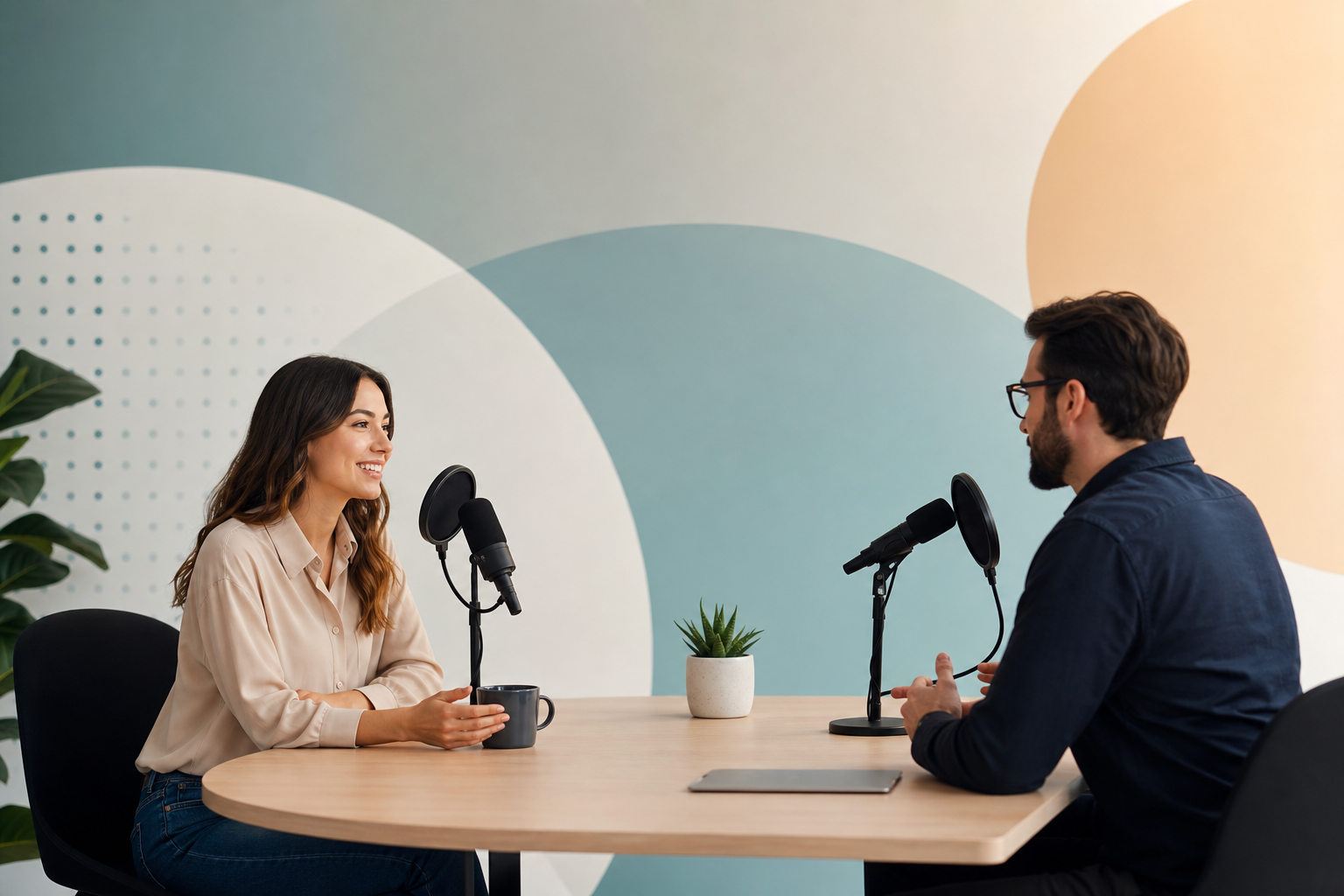
A Playbook for Interview-Based Content Marketing Teams
Record focused conversations with people who have direct experience, transcribe them, and turn the transcript into publishable assets. A simple, repeatable process for sourcing, questioning, recording, and repurposing interviews is the fastest way for teams to get specific, usable content without asking experts to write full drafts.
Read More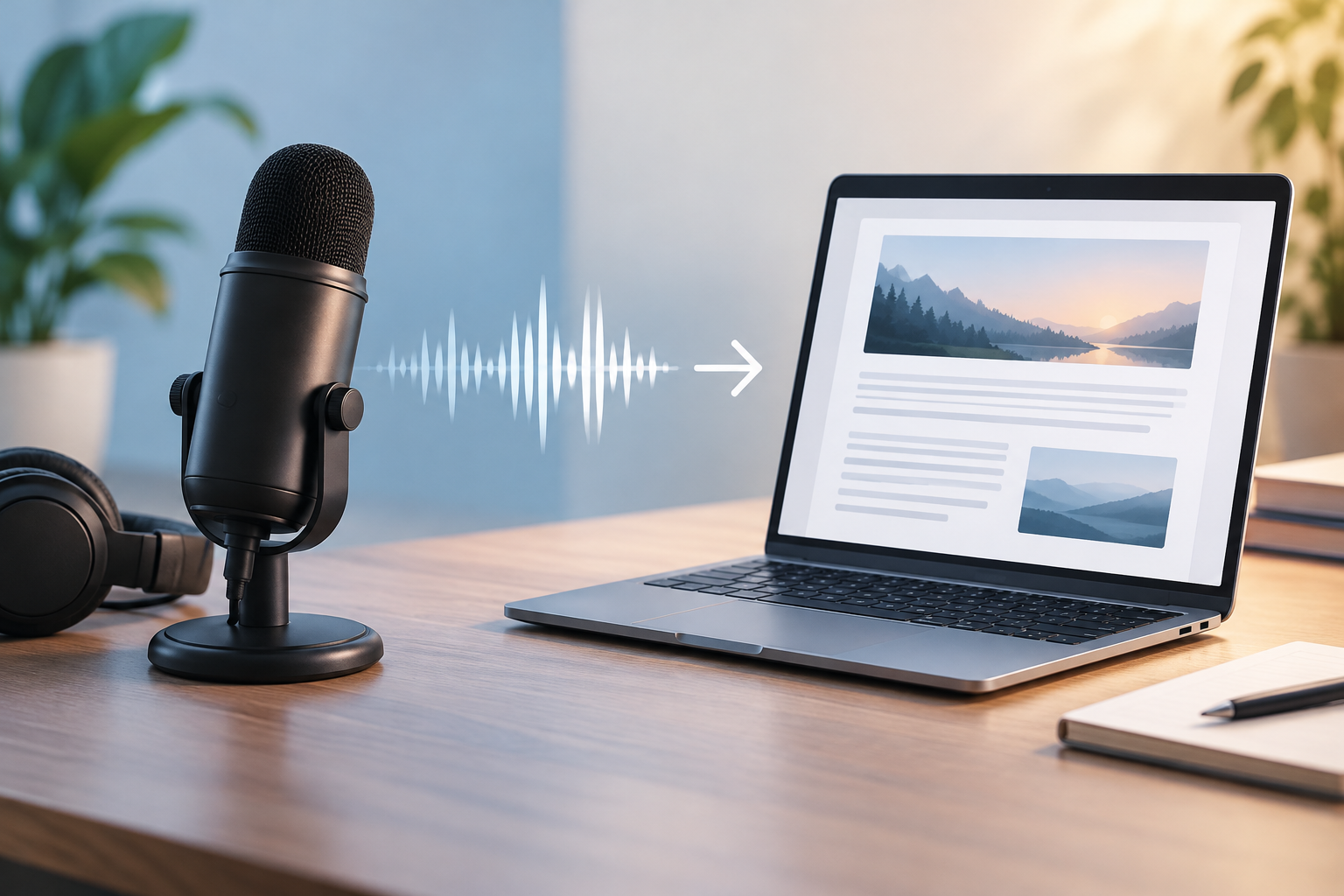
How to Turn a Podcast to Blog Post Guide
A podcast to blog post process means turning a recorded episode into a structured article by transcribing the audio, choosing one clear angle, organizing the strongest points, and editing the draft for search intent and readability.
Read More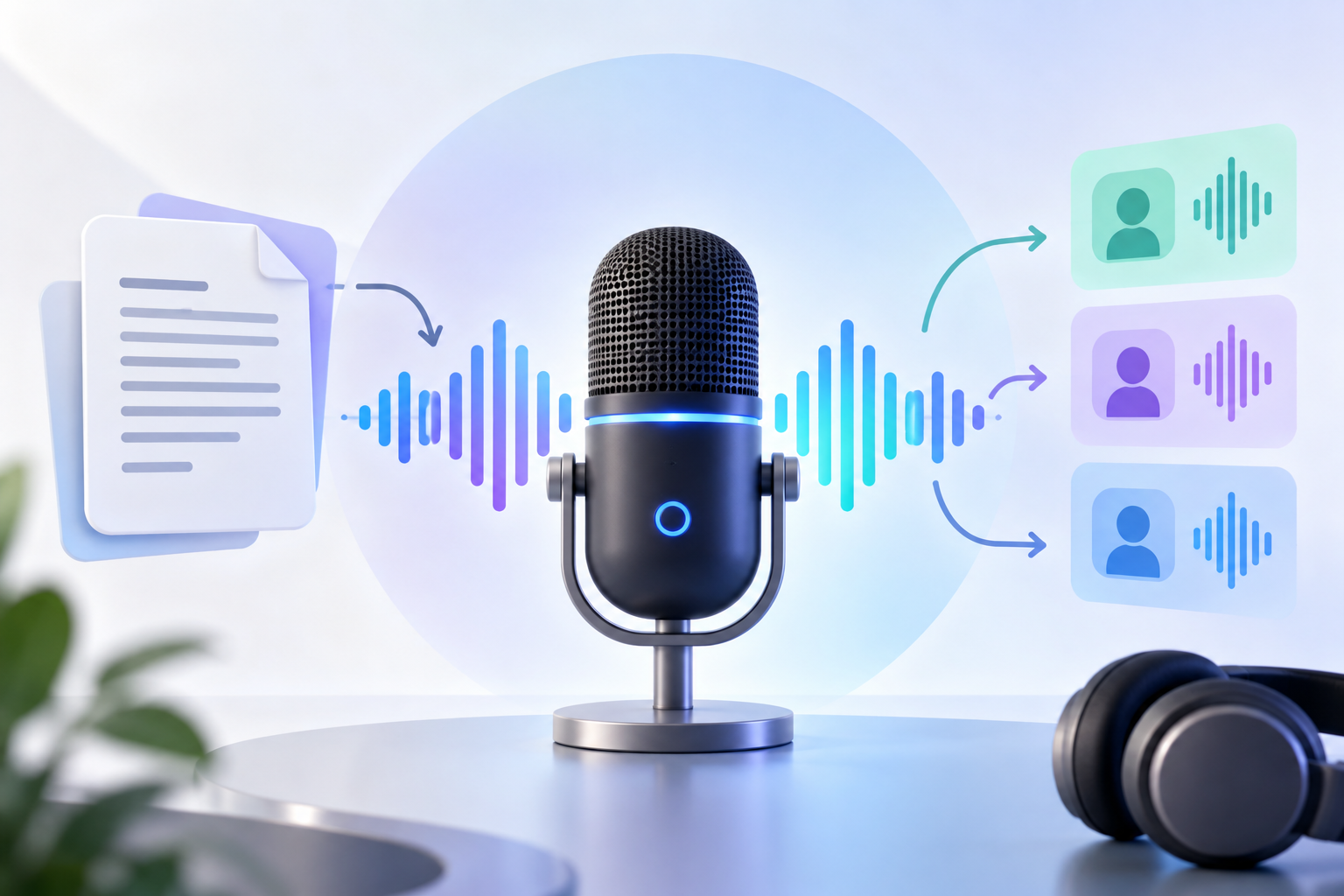
Best AI Podcast Generator Like NotebookLM Picks
An ai podcast generator like notebooklm is a tool that turns source material or a script into spoken audio, often with AI voices, conversational structure, and editing support.
Read MoreReady to create amazing podcast content?
Choose a plan and start generating professional podcast content with AI
View Pricing Plans