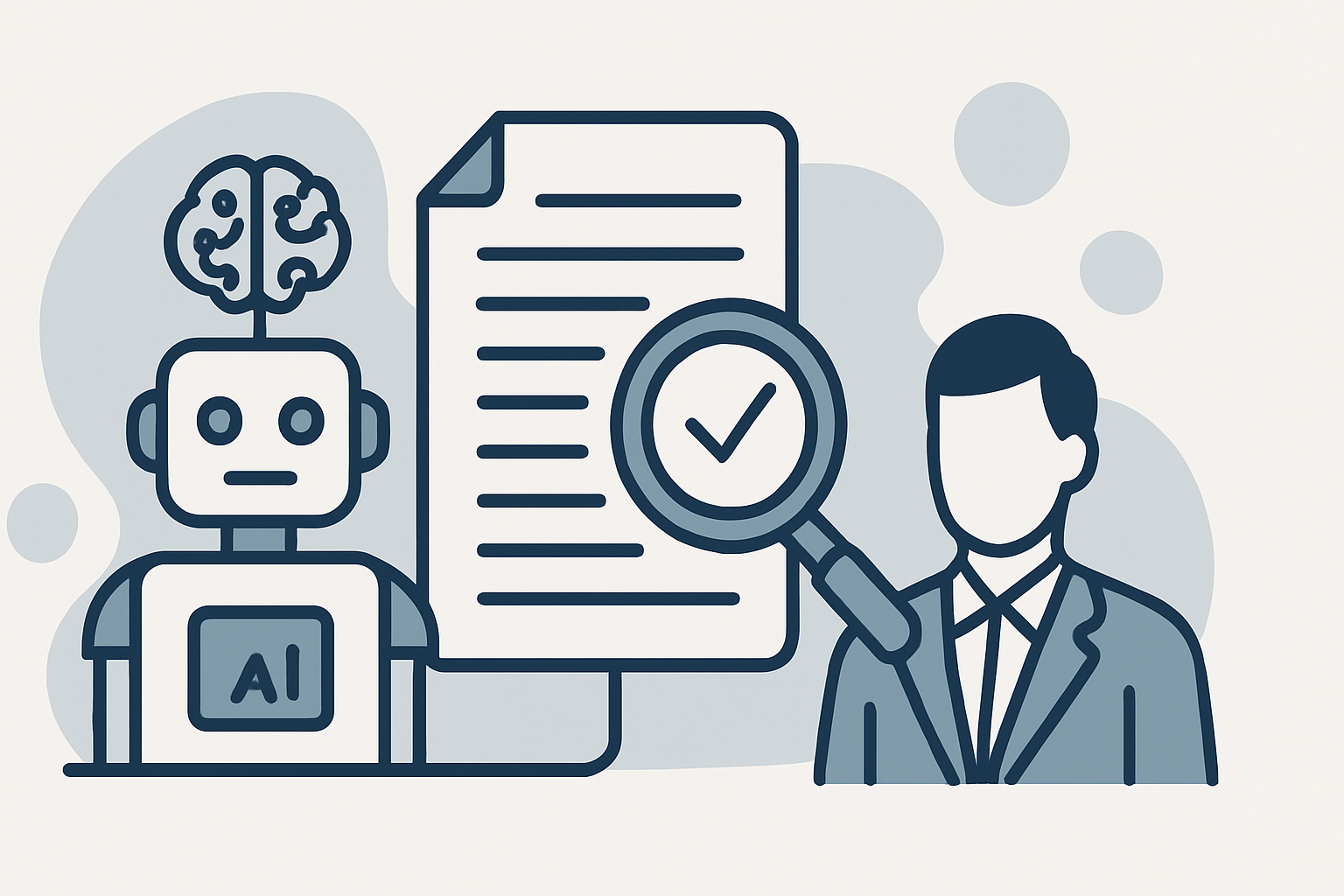
AI content quality control automates editorial review so teams can scale checks for grammar, style, factual accuracy and brand voice. It speeds publication and reduces editorial workload while enforcing consistent quality standards.
Key takeaways
- AI tools can identify grammatical errors and style inconsistencies that human editors might miss.
- AI can cross-reference content with reputable sources to support fact-checking and evaluate factual accuracy.
- A major tech company reduced publication errors by 30% after using AI in their content review process.
- A media organization used AI to maintain consistency across platforms and saw audience engagement increase by 20%.
- Best practices include choosing tools that integrate with your content management system, updating AI algorithms with new data, and training teams to work alongside AI; common challenges are over-reliance on AI and the need for substantial data inputs.
In the age of digital media, maintaining a consistent brand voice and ensuring content accuracy are key challenges for businesses. Enter AI content quality control, a transformative approach that leverages artificial intelligence to streamline content review processes. By integrating AI into content strategies, companies can enhance their brand's credibility while ensuring their message is both accurate and engaging. This article explores the mechanisms of AI content quality control, offering insights into how it can revolutionize your content marketing strategy. For a deeper dive into how AI is reshaping content marketing, check out this resource.
1. Understanding AI Content Quality Control
AI content quality control is a process that uses artificial intelligence to evaluate and improve the quality of content. This involves checking for grammar, style consistency, factual accuracy, and alignment with a brand's voice. AI tools can analyze large volumes of text swiftly, identifying errors and offering suggestions for enhancements. For businesses aiming to maintain high content standards, leveraging AI offers efficiency and precision.
- Practical point 1: AI tools can ensure grammatical accuracy by identifying errors that human editors might miss.
- Practical point 2: These tools help maintain a consistent brand voice by analyzing the tone and style across different content pieces.
- Practical point 3: AI content quality control can enhance user engagement by ensuring content is both informative and well-structured.
For more about AI's role in personalizing content, visit our blog on Unlocking the Power of AI Content Personalization.
2. The Role of AI in Content Review
AI content review is integral to AI content quality control. It involves using AI algorithms to scrutinize content for relevance, accuracy, and engagement potential. By employing AI, businesses can automate the review process, saving time and resources while ensuring high-quality output. AI's ability to learn from data allows it to continuously improve, adapting to new content standards and audience preferences.
Consider the insights from our interview on AI and the Future of Content Marketing: A Dynamic Discussion for more understanding of AI's evolving role.
External resources like HubSpot's content management system provide excellent examples of AI-driven content management solutions.
3. Ensuring Content Quality Assurance with AI
Content quality assurance is about verifying that content meets specific quality standards before publication. AI plays a pivotal role here by performing tasks traditionally done by human editors. This includes checking for spelling errors, grammatical mistakes, and stylistic inconsistencies. AI also evaluates the factual accuracy of content, which is crucial for upholding a brand's integrity.
For instance, AI can cross-reference data with reputable sources to ensure accuracy, a key component of AI fact-checking. Learn more about this in our article on AI Content Calendar for Endless Ideas.
4. Real-World Applications of AI Content Quality Control
Companies across various industries are leveraging AI content quality control to enhance their content strategies. For example, a major tech company used AI to streamline their content review process, reducing publication errors by 30%. Another case saw a media organization using AI to maintain consistency across multiple platforms, resulting in a 20% increase in audience engagement.
- Example 1: A global e-commerce brand employed AI to ensure product descriptions were accurate and engaging, leading to higher customer satisfaction.
- Example 2: An educational platform utilized AI to standardize their course content, improving both quality and user experience.
5. Best Practices for Implementing AI Content Quality Control
When implementing AI content quality control, it's essential to follow best practices to maximize its benefits. Here are some strategies:
- Best Practice 1: Choose AI tools that integrate seamlessly with your existing content management systems.
- Best Practice 2: Regularly update AI algorithms with new data to keep up with evolving content standards.
- Best Practice 3: Train your team to work alongside AI tools effectively, ensuring a balance between human creativity and machine efficiency.
For comprehensive strategies, visit our post on how SaaS companies are revolutionizing content production.
6. Common Challenges in AI Content Quality Control
While AI offers numerous advantages, there are challenges to consider. One common issue is over-reliance on AI, which can lead to overlooking the nuances of human creativity. Additionally, AI systems require substantial data inputs to function effectively, which can be resource-intensive. It's crucial to balance AI and human input to overcome these challenges.
For additional insights, explore the comprehensive guide on Moz's SEO strategies.
Conclusion: Making the Most of AI Content Quality Control
Incorporating AI content quality control into your content strategy can significantly enhance your brand's credibility and efficiency. By automating quality checks and ensuring consistency, AI helps maintain a strong brand voice and accurate content. As you integrate AI, remember to balance technology with human insight to fully realize its potential. For further assistance, consider partnering with ContentPod to optimize your content strategy.
Frequently Asked Questions
What is AI content quality control?
AI content quality control is the use of artificial intelligence to assess and improve the quality of content. It involves checking for grammar, style, and factual accuracy, ensuring that content aligns with brand standards.
How does AI enhance content quality assurance?
AI enhances content quality assurance by automating the review process, reducing human error, and ensuring consistency across different content pieces. It also allows for faster content evaluation, saving time and resources.
What are the challenges of using AI for content review?
Challenges include the potential for over-reliance on AI, which might lead to a lack of human creativity, and the need for substantial data inputs to train AI systems effectively. Balancing AI with human oversight is crucial.
References & Further Reading
- The Role of AI in Content Marketing - semrush.com
- HubSpot Content Management System - hubspot.com
- Beginner's Guide to SEO - moz.com
- ContentPod - contentpod.co
Put this into practice
Share this post
You Might Also Like
Discover more content tailored to your interests
 Highly Relevant
Content Repurposing Examples from One Source
Content repurposing examples are practical ways to turn one original asset, such as a webinar, interview, or blog post, into multiple formats like social posts, email copy, short videos, FAQs, and downloadable guides.
Read More Highly Relevant
Content Calendar Planning for B2B: Mistakes to Avoid
Align your calendar to recurring buyer questions and buying-stage needs so each asset helps prospects compare options, reduce implementation risk, or move closer to purchase. Pick a sustainable cadence of fewer, stronger pieces and make the calendar a repeatable operating system rather than a collection of urgent one-offs.
Read More Highly Relevant
AI-Assisted Content Repurposing Marketing in 30 Days
Use AI to turn one strong source into multiple channel-ready assets while your team edits and approves them. A practical 30-day plan starts with a content audit, moves into template-based drafting and clear ownership, and finishes with measurement so you know which formats to scale next month.
Read MoreReady to create amazing podcast content?
Choose a plan and start generating professional podcast content with AI
View Pricing Plans