How SaaS Companies Revolutionize Content Production with Synthetic Podcasts

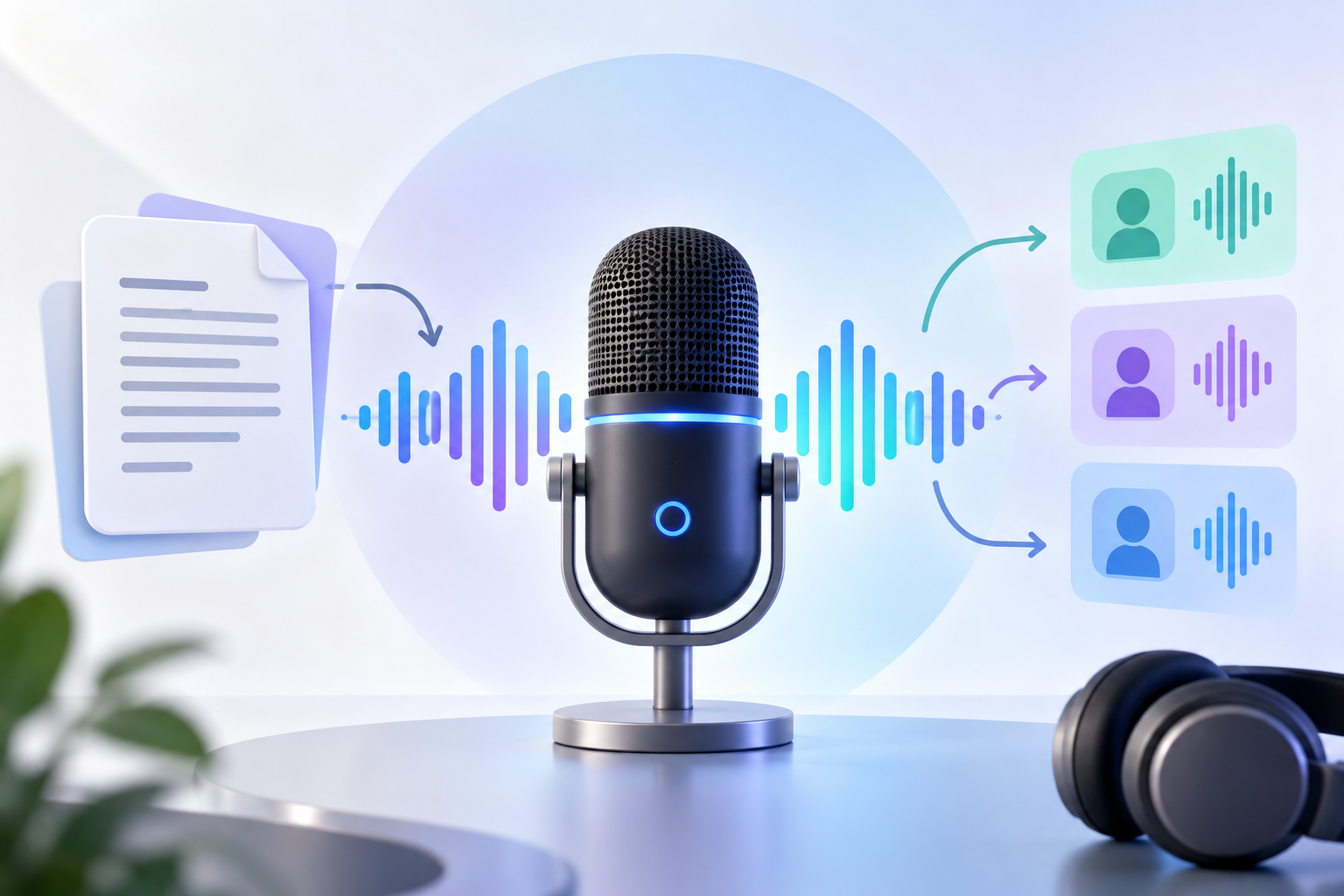
Synthetic podcasts let SaaS companies use AI to turn written content into audio, personalize episodes for different audience segments, and publish more frequently with less manual work. That combination increases reach and engagement while keeping production costs and time lower than traditional podcast workflows.
Key takeaways
- AI-generated podcasts can be customized for different audience segments to improve personalization and relevance.
- AI podcast creation involves three main steps: selecting topics using analytics, organizing content into coherent episodes, and synthesizing voice audio from that content.
- A SaaS firm reported higher user engagement after converting technical blog posts into podcast episodes; another used weekly synthetic podcasts to keep international clients updated across time zones.
- Recommended practices include regularly refreshing podcast episodes and using audience feedback to refine content and format.
In the rapidly evolving landscape of technology and marketing, SaaS content production stands as a pivotal strategy for companies aiming to scale their content output efficiently. The advent of synthetic podcasts is transforming how SaaS companies approach content creation, enabling them to reach broader audiences with minimal effort. This guide will explore how synthetic podcasts are leveraged in SaaS content production, the benefits they bring, and the strategies companies can employ to maximize their impact. By the end of this article, you'll understand the role of AI in reshaping content strategies, making your SaaS offerings more compelling and accessible to your target audience. For a deeper dive into AI's role in marketing, you can also check out HubSpot's marketing statistics.
1. Understanding SaaS Content Production through Synthetic Podcasts
The concept of SaaS content production has expanded with the integration of synthetic media, particularly in the form of podcasts. Synthetic podcasts utilize artificial intelligence to generate audio content that can be distributed across various platforms. This method not only reduces the time and resources needed for traditional content creation but also enhances scalability. By implementing AI-driven tools, SaaS companies can produce high-quality audio content that resonates with their audience.
- Practical point 1: Synthetic podcasts can be created quickly, allowing for frequent and consistent content updates.
- Practical point 2: AI tools can customize podcast content to suit different audience segments, enhancing personalization.
- Practical point 3: Companies can leverage these tools to translate written content into engaging audio formats, reaching new audiences.
2. Advantages of Synthetic Podcasts in SaaS Content Strategy
Integrating synthetic podcasts into your SaaS content strategy offers numerous benefits. Not only do they provide a new medium to disseminate information, but they also allow for creative storytelling and engagement. According to a discussion on AI and the Future of Content Marketing, leveraging AI in content creation can significantly enhance the reach and effectiveness of marketing campaigns. Moreover, AI-generated podcasts can automate repetitive tasks, freeing up resources for more strategic initiatives.
- Efficiency: Automates content creation, saving time and costs.
- Scalability: Easily scales content production to meet growing demands.
- Engagement: Increases audience engagement through diverse content delivery methods.
3. Implementing AI Podcast Creation in SaaS Content Production
For SaaS companies aiming to enhance their SaaS content production, AI podcast creation offers a viable solution. The process involves using AI to select, organize, and synthesize content into an audio format. This technology can parse through vast amounts of data, identify trending topics, and generate podcasts that align with current audience interests. To explore the ethical considerations of AI in content creation, you can read more in The Ethics of AI Voice Cloning: Guiding Content Creators.
- Content Selection: AI algorithms can identify relevant topics based on data analytics and audience preferences.
- Content Organization: Structuring the podcast in a coherent and engaging manner using AI tools.
- Content Synthesis: Generating voice content that resonates with the target audience.
4. Real-World Applications of Synthetic Podcasts in SaaS
Several SaaS companies have successfully integrated synthetic podcasts into their content strategies, showcasing the potential of this technology. For instance, a leading SaaS firm utilized AI to transform their blog content into podcasts, significantly increasing their reach and engagement. Similarly, another company employed synthetic podcasts to provide weekly updates to their clients, enhancing customer satisfaction and loyalty. These examples highlight the versatility and effectiveness of synthetic podcasts in SaaS content production. For insights into harnessing AI for content, explore Harnessing AI for Seamless Social Media Content Creation.
- Example 1: A SaaS company increased user engagement by converting technical blogs into easy-to-digest podcast episodes.
- Example 2: Weekly synthetic podcasts helped another firm maintain regular communication with international clients, bridging time zone gaps.
5. Best Practices for Effective SaaS Content Production with Podcasts
To maximize the impact of synthetic podcasts in SaaS content production, it's essential to follow best practices that ensure quality and relevance. By adhering to these guidelines, companies can create content that not only informs but also captivates their audience. For additional strategies, consider exploring AI Content SEO: Best Practices for 2025.
- Best Practice 1: Regularly update and refresh podcast content to keep it relevant and engaging.
- Best Practice 2: Utilize audience feedback to refine content and tailor it to listener preferences.
- Best Practice 3: Avoid over-reliance on AI; ensure a human touch in content to maintain authenticity.
6. Overcoming Challenges in SaaS Content Production with Synthetic Podcasts
While synthetic podcasts present numerous opportunities, they also come with challenges that must be addressed to optimize SaaS content production. Common issues include maintaining content quality and managing the balance between automation and creativity. For additional resources on overcoming these challenges, you might find Moz's Beginner's Guide to SEO helpful.
- Quality Assurance: Implement rigorous quality checks to ensure content accuracy and relevance.
- Creative Balance: Maintain a creative edge by integrating human insights with AI capabilities.
Conclusion: Making the Most of SaaS Content Production
The integration of synthetic podcasts into SaaS content production represents a significant advancement in how companies can efficiently produce and distribute content. By leveraging AI, SaaS companies can enhance their content strategies, reach broader audiences, and maintain a competitive edge in the market. For those looking to explore the potential of AI in their content efforts, platforms like ContentPod offer invaluable tools and insights. Embracing these technologies not only optimizes content production but also positions your brand as a forward-thinking leader in the SaaS industry.
Frequently Asked Questions
What is SaaS content production?
SaaS content production refers to the process by which software as a service (SaaS) companies create, manage, and distribute content to engage their target audience. This involves leveraging various media formats, including blogs, videos, and increasingly, synthetic podcasts.
How can synthetic podcasts enhance SaaS content strategy?
Synthetic podcasts can significantly enhance a SaaS content strategy by providing a scalable and efficient method to distribute information. They allow companies to convert existing content into engaging audio formats, thus reaching a wider audience and improving engagement.
What are the key challenges of using synthetic podcasts in SaaS?
Key challenges include ensuring content quality, managing the balance between automation and human creativity, and addressing ethical considerations in AI-generated content. Overcoming these challenges requires strategic planning and the integration of human oversight in the content production process.
References & Further Reading
- Beginner's Guide to SEO - moz.com
- Marketing Statistics 2025 - hubspot.com
- Content Marketing Strategy - semrush.com
- What is Content Marketing? - contentmarketinginstitute.com
Put this into practice
Share this post
You Might Also Like
Discover more content tailored to your interests
 Highly Relevant
Best AI Podcast Generator Like NotebookLM Picks
An ai podcast generator like notebooklm is a tool that turns source material or a script into spoken audio, often with AI voices, conversational structure, and editing support.
Read More Highly Relevant
A Playbook for Interview-Based Content Marketing Teams
Record focused conversations with people who have direct experience, transcribe them, and turn the transcript into publishable assets. A simple, repeatable process for sourcing, questioning, recording, and repurposing interviews is the fastest way for teams to get specific, usable content without asking experts to write full drafts.
Read More Highly Relevant
Interview-Based Content Marketing SaaS Templates Guide
Use short, structured interviews with experts, customers, founders, or partners to capture real expertise and turn a 20–30 minute conversation into multiple publishable assets that are faster to produce, more credible, and more useful for search and buyers than generic brand copy. This guide explains when to use interviews, who to interview, how to prepare a focused brief and recording workflow, and how to turn one conversation into blog posts, case studies, newsletters, social posts, and sales snippets.
Read MoreReady to create amazing podcast content?
Choose a plan and start generating professional podcast content with AI
View Pricing Plans