Explained: Artificial Intelligence in Poultry: Building the Nervous System of the Modern Broiler, Breeder & Layer Industries
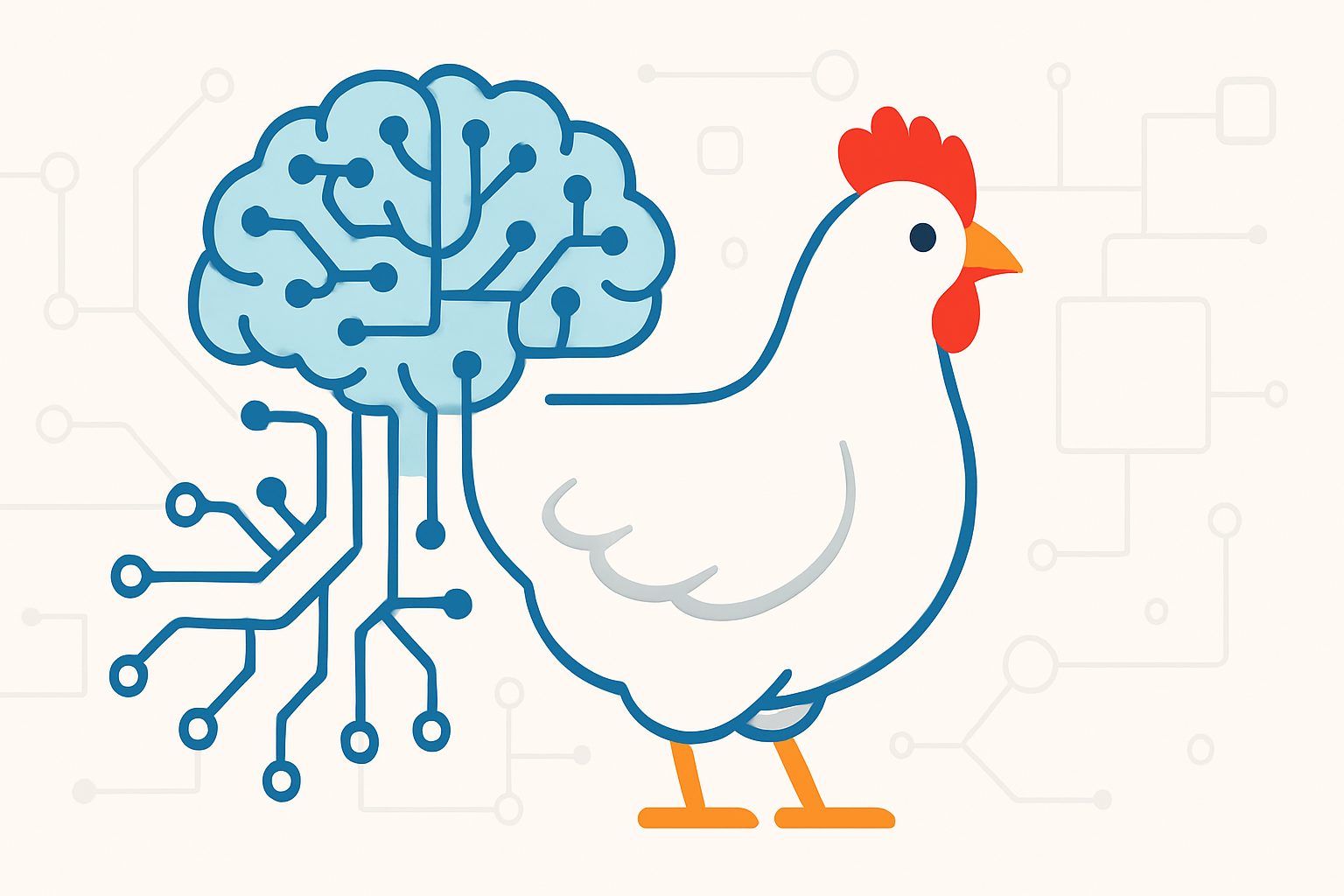
Artificial intelligence links sensors, cameras, drones, robotics and IoT with data analytics so poultry operations can monitor birds and environments in real time and make automated, data-driven decisions. That connected system reduces waste, schedules maintenance, and supports earlier detection of health issues to improve productivity and animal welfare.
Key takeaways
- AI systems analyze images and sensor data to track individual bird health and growth.
- Machine learning models predict optimal feeding times, which reduces feed wastage and improves growth rates.
- AI is used for predictive maintenance of equipment to reduce downtime and increase operational efficiency.
- The article cites case studies: one farm reduced feed costs by 20% and increased growth rates by 15%; another cut energy costs by 30%.
- Best practices for implementation are to start with a clear strategy, train staff to use AI tools, and regularly review and update systems.
In recent years, the integration of technology in agriculture has transformed the poultry industry into a sophisticated, data-driven enterprise. At the forefront of this transformation is artificial intelligence poultry building, a concept that is redefining how we manage broiler, breeder, and layer operations. This article explores how AI is creating a 'nervous system' for the poultry industry, enhancing productivity, and ensuring sustainable practices. We'll delve into the technologies being employed, their applications, and the implications for the future of poultry farming. For a deeper understanding of AI's impact on various sectors, consider checking out AI and the Future of Content Marketing: A Dynamic Discussion.
1. The Role of Artificial Intelligence in Poultry Building
Artificial intelligence has become an integral part of modern poultry building, offering unprecedented opportunities for efficiency and control. By leveraging AI, poultry operations can achieve precise monitoring and management, which minimizes waste and maximizes output. AI technologies are being used to analyze data from various sources in real-time, allowing for immediate decision-making and adjustments.
- Practical point 1: AI systems can track the health and growth of poultry by analyzing images and data collected from sensors and cameras.
- Practical point 2: Machine learning algorithms predict optimal feeding times, reducing feed wastage and enhancing growth rates.
- Practical point 3: Real-world application of AI in poultry includes predictive maintenance of equipment, reducing downtime and increasing efficiency.
For more insights into how AI is transforming industries, explore ContentPod.
2. Innovative Technologies in Poultry Building
The adoption of AI in poultry building involves several innovative technologies. These include robotics, IoT devices, and advanced data analytics. Each plays a crucial role in creating a cohesive system that mimics a nervous system, responding dynamically to changes and challenges. The application of these technologies is not just beneficial but essential for modern poultry operations.
One example of this innovation is the use of drones equipped with AI for monitoring large poultry farms. Drones can cover extensive areas quickly, providing real-time data that is crucial for making informed management decisions. Additionally, IoT devices can monitor environmental conditions such as temperature and humidity, ensuring optimal living conditions for poultry.
For further reading, consider Unlocking the Power of Interview-Based Content Marketing B2B, which explores how AI can be leveraged in content strategies.
3. AI-Driven Analysis and Decision Making
Artificial intelligence poultry building is heavily reliant on data analysis and decision-making. AI systems can analyze massive datasets quickly, identifying patterns and trends that would be impossible for humans to discern. This capability allows for predictive analytics, which can forecast outcomes and optimize strategies in the poultry industry.
For instance, AI can predict disease outbreaks by analyzing data from various sources, including health records and environmental factors. This predictive capability enables proactive measures, reducing disease spread and improving animal welfare. The decision-making process is further enhanced by AI algorithms that recommend actions based on the analyzed data.
To explore how AI impacts business strategies, check out the interview on AI's Role in Business Content.
4. Real-World Applications of AI in Poultry Building
The implementation of AI in poultry building is not theoretical; it is happening now with tangible results. Several case studies highlight how AI is transforming the industry by improving efficiency and productivity.
- Example 1: A leading poultry farm implemented an AI-driven system that reduced feed costs by 20% while increasing growth rates by 15%.
- Example 2: Another operation used AI to monitor and adjust environmental conditions, resulting in a 30% reduction in energy costs.
These examples demonstrate the significant impact of AI on operational efficiency. For more examples of AI in action, consider reading Mastering SEO Workflows for Content Marketing.
5. Best Practices for Implementing AI in Poultry Building
To maximize the benefits of AI in poultry building, it's essential to follow best practices. These practices ensure that AI systems are effectively integrated and utilized.
- Best Practice 1: Start with a clear strategy that outlines the goals and objectives of AI implementation.
- Best Practice 2: Invest in training for staff to ensure they can effectively use and manage AI technologies.
- Best Practice 3: Avoid common pitfalls by regularly reviewing and updating AI systems to adapt to new challenges and opportunities.
For further guidance, visit ContentPod for resources and expert advice.
6. Common Mistakes and Challenges in AI Poultry Building
While AI offers numerous benefits, implementing it in poultry building comes with its challenges. Understanding these challenges can help operations avoid common mistakes.
One major challenge is data management. AI systems require vast amounts of data, and ensuring data quality and security is paramount. Another challenge is the integration of AI with existing systems, which can be complex and require significant investment.
For additional resources on overcoming these challenges, consider visiting authoritative sources such as Harvard Business Review.
Conclusion: Making the Most of Artificial Intelligence Poultry Building
Artificial intelligence poultry building is revolutionizing the industry by providing the tools needed for smarter, more efficient operations. By understanding and implementing AI technologies, poultry operations can enhance productivity, reduce costs, and improve animal welfare. As you explore these opportunities, consider leveraging resources like ContentPod for expert insights and support.
Frequently Asked Questions
What is artificial intelligence poultry building?
Artificial intelligence poultry building refers to the integration of AI technologies in managing and optimizing poultry operations, creating a system that mimics a nervous system for real-time monitoring and decision-making.
How does AI improve poultry management?
AI improves poultry management by analyzing data for precise control over feeding, health monitoring, and environmental conditions, leading to increased efficiency and productivity.
What challenges exist in implementing AI in poultry building?
Challenges include managing large data sets, ensuring data quality, and integrating AI systems with existing infrastructure. Overcoming these requires strategic planning and investment.
References & Further Reading
- AI in Poultry Industry - news.google.com — This article discusses the latest advancements in AI technology within the poultry sector.
- AI and the Future of Work - hbr.org — Explore the broader implications of AI in transforming various industries, including agriculture.
- AI in Content Marketing - contentmarketinginstitute.com — Understand how AI is reshaping content marketing, paralleling its impact on agriculture.
- How AI is Changing Agriculture - marketingprofs.com — Offers insights into the transformative role of AI across agricultural practices.
Put this into practice
Share this post
You Might Also Like
Discover more content tailored to your interests
 Highly Relevant
Newsletter Growth Marketing Teams: Practical Playbook
A newsletter growth marketing team is a repeatable operating model that combines audience targeting, signup conversion, editorial planning, and performance review into one shared workflow to attract qualified subscribers, retain attention, and produce measurable business results. For the model to work, teams must define a clear audience and a primary growth outcome before deploying tactics.
Read More Highly Relevant
Content Calendar Planning for B2B: Mistakes to Avoid
Align your calendar to recurring buyer questions and buying-stage needs so each asset helps prospects compare options, reduce implementation risk, or move closer to purchase. Pick a sustainable cadence of fewer, stronger pieces and make the calendar a repeatable operating system rather than a collection of urgent one-offs.
Read More Highly Relevant
Newsletter Growth SaaS Companies Complete Guide 2026
Newsletter growth for SaaS means growing qualified email subscribers who support activation, retention, pipeline, and revenue rather than chasing list size alone. The most effective approach pairs a clear subscriber promise with targeted signup paths, useful content and segmentation, and measurement that links to business outcomes.
Read MoreReady to create amazing podcast content?
Choose a plan and start generating professional podcast content with AI
View Pricing Plans