Explained: Generative AI Business Use Cases 2026
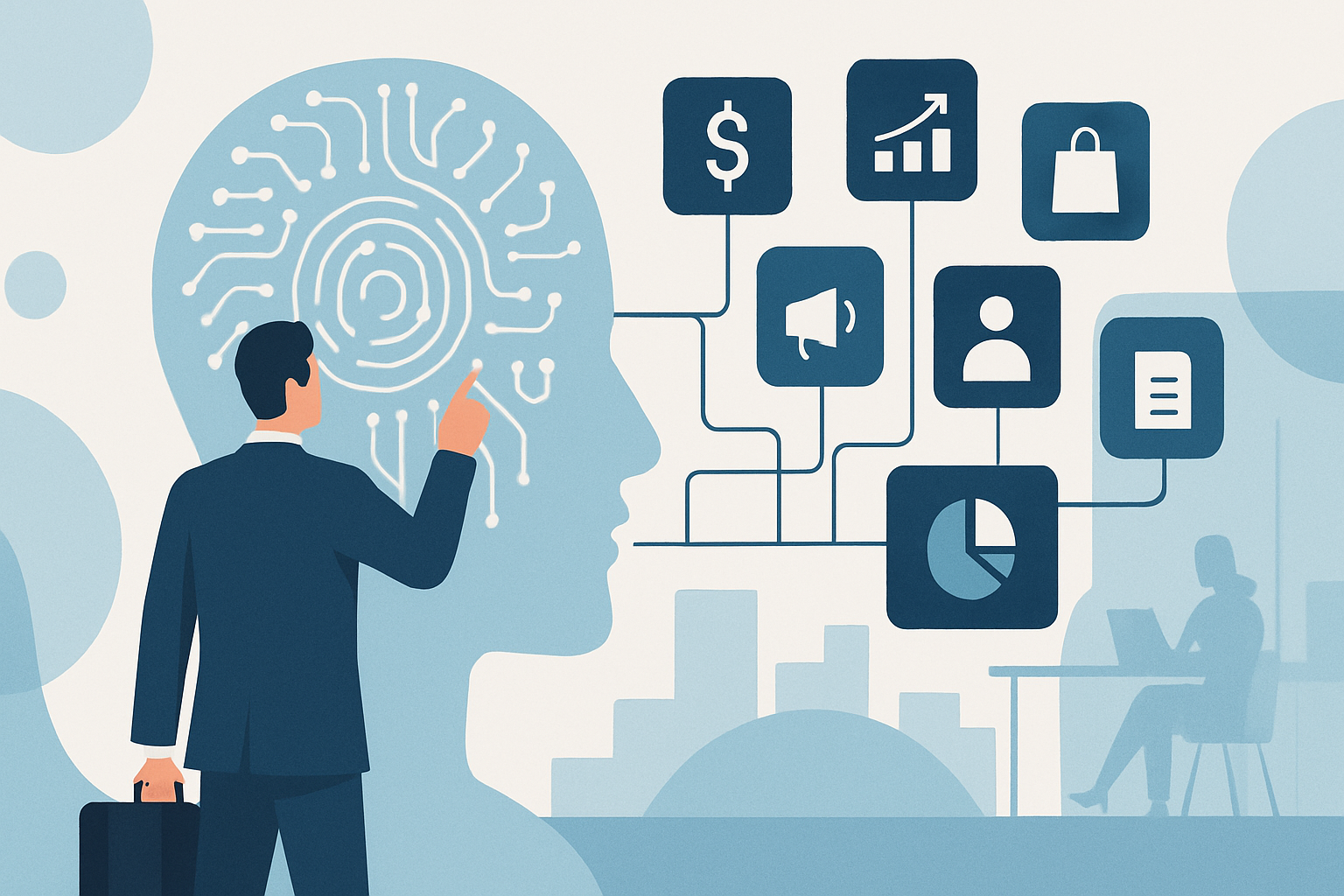
Generative AI is already delivering measurable ROI across functions such as content creation, customer support, product design, and supply chain optimization. This article lists the top 11 business applications for 2026 and gives practical steps and common mistakes to avoid when implementing them.
Key takeaways
- AI tools can create marketing copy, blog posts, and social media content at scale, and platforms such as ContentPod support AI-assisted content repurposing.
- AI chatbots and virtual assistants handle routine customer inquiries, free human agents for complex issues, and integration with CRM systems enables real-time personalized interactions; OpenAI says improvements in natural language processing are increasing response accuracy.
- Generative design software can explore thousands of design permutations to identify optimal options, and companies like Autodesk use it for products from furniture to automotive components.
- AI-driven platforms forecast demand, align inventory levels, and optimize delivery routes to reduce waste, lower costs, cut fuel consumption, and improve delivery times.
- Best practices for implementing generative AI include starting with clear business goals, investing in data management and quality, avoiding over-reliance without human oversight, building AI literacy in teams, and keeping deployment flexible to address integration complexity.
In the rapidly evolving world of technology, generative AI is setting the stage for transformative changes across various industries. As we look towards 2026, the question isn't whether businesses will adopt generative AI, but rather how they will harness its potential. This article delves into the "generative business use cases" that are not only feasible but are already delivering real ROI. From enhancing creative processes to automating complex tasks, the applications are vast and varied. Let's explore the top 11 applications that are set to redefine business landscapes.
1. Transforming Creative Content Generation
One of the most prominent generative business use cases is in creative content generation. Businesses are leveraging AI to automate content creation, thus saving time and resources. Platforms like ContentPod are at the forefront, helping companies maximize success with AI-assisted content repurposing.
- Practical point 1: AI tools can create marketing copy, blog posts, and social media content at scale.
- Practical point 2: Generative AI can produce personalized content tailored to specific audience segments.
- Practical point 3: Real-world application includes using AI to generate video scripts and storyboards, significantly reducing production time.
2. Enhancing Customer Interactions and Support
Generative business use cases extend significantly into customer service. AI chatbots and virtual assistants are revolutionizing how businesses interact with customers. By 2026, these tools will provide even more sophisticated and human-like interactions.
Companies are implementing AI-driven chatbots to handle routine inquiries, leaving human agents to manage complex issues. This not only improves efficiency but also enhances customer satisfaction. For instance, integrating AI with CRM systems allows for real-time data analysis and personalized customer interactions.
According to OpenAI, advancements in natural language processing are allowing AI systems to understand and respond to customers with unprecedented accuracy. This capability is critical for businesses aiming to provide exceptional customer service.
3. Revolutionizing Product Design and Development
Another compelling generative business use case is in product design and development. AI is not just assisting in the design process but is actively involved in creating novel product designs.
For instance, generative design software can explore thousands of permutations of a design idea, testing each and selecting the best options. This process accelerates innovation and reduces time-to-market for new products. Companies like Autodesk are already using AI to aid in the design of everything from furniture to automotive components.
In a recent interview, industry leaders discussed how AI is driving innovation, emphasizing its role in not only enhancing aesthetics but also improving functionality and sustainability of products.
4. Optimizing Supply Chain and Logistics
The optimization of supply chains is another area where generative business use cases are making a significant impact. AI can analyze vast datasets to predict demand, optimize routes, and manage inventory more efficiently.
- Example 1: AI-driven platforms are used to forecast demand and align inventory levels accordingly, reducing waste and costs.
- Example 2: Real-time data analysis helps logistics companies optimize delivery routes, reducing fuel consumption and improving delivery times.
For companies looking to streamline operations, AI offers tools that can integrate with existing systems to provide insights and recommendations. This approach is highlighted in a ContentPod blog post on streamlining workflows.
5. Best Practices for Implementing Generative AI
To fully leverage generative business use cases, companies need to adopt best practices for implementation. Here are some strategies to consider:
- Best Practice 1: Begin with a clear understanding of your business goals and how AI can help achieve them.
- Best Practice 2: Invest in data management and ensure data quality, as AI relies heavily on accurate and comprehensive data.
- Best Practice 3: Avoid common pitfalls such as over-reliance on AI without human oversight. AI should augment human capabilities, not replace them entirely.
For more insights, consider resources from ContentPod, which offers guidance on implementing AI solutions effectively.
6. Overcoming Common Mistakes and Challenges
While the potential of generative business use cases is vast, there are challenges that businesses must address. Common mistakes include underestimating the complexity of AI integration and failing to train staff adequately.
To overcome these hurdles, businesses should focus on building AI literacy within their teams and maintaining a flexible approach to AI deployment. Additionally, external resources such as this news article provide valuable insights into recent developments and strategies.
Conclusion: Making the Most of Generative Business Use Cases
In conclusion, the future of generative business use cases is both exciting and challenging. By 2026, companies that effectively integrate AI will enjoy significant competitive advantages. From boosting creativity to optimizing supply chains, the potential applications are numerous and impactful. As you consider how to implement these technologies, remember that successful AI deployment requires careful planning, investment in data infrastructure, and continuous learning.
For more resources and expert insights, visit ContentPod, where a wealth of information on AI and business innovation is available.
Frequently Asked Questions
What is generative business use cases?
Generative business use cases refer to the applications of generative AI technologies in business environments to solve complex problems, improve efficiency, and drive innovation. These use cases span various industries, including content creation, customer service, product design, and supply chain management.
How can businesses effectively implement generative AI?
To effectively implement generative AI, businesses should start with a clear strategy that aligns with their goals. It involves investing in quality data, training employees, and maintaining flexibility in AI deployment to adapt to new challenges and opportunities.
What are the common challenges in adopting generative AI?
Common challenges include data quality issues, lack of skilled personnel, and integration complexities. Overcoming these obstacles requires a strategic approach to AI literacy and infrastructure development, ensuring that AI systems augment rather than replace human capabilities.
References & Further Reading
- Generative AI: Transforming Business
- OpenAI Research on Generative Models
- NIST: Artificial Intelligence Research
- Anthropic Insights on Generative AI
Put this into practice
Share this post
You Might Also Like
Discover more content tailored to your interests
 Highly Relevant
How AI Technical Debt Problems Spread Through Codebases
AI technical debt problems are the maintenance, reliability, security, and architecture costs that build up when AI systems generate code faster than teams can review, test, document, and own it.
Read More Highly Relevant
Why Anthropic Model Rivals Fable on Enterprise Cost
Anthropic's model is being pitched as close enough in quality to a premium frontier model that cost-conscious enterprises may switch or diversify. The real test for buyers is whether the model delivers acceptable output on their highest-volume tasks while lowering total operating cost and governance overhead.
Read More Highly Relevant
AI Risks to Global Security at the U.N. Briefing 2026
AI risks to global security are the ways advanced AI systems can increase cyberattacks, accelerate disinformation, lower barriers to biological or weapons misuse, and outpace the laws meant to control them. In the AI briefing to the U.N.
Read MoreReady to create amazing podcast content?
Choose a plan and start generating professional podcast content with AI
View Pricing Plans