Why Bill Gates AI regulation may outlast nuclear talks

Bill Gates AI regulation is the view that advanced AI needs rules, testing, and international coordination, but global AI rules may be harder than nuclear talks because AI is cheap to copy, mostly built by private firms, and can be hidden inside ordinary software and cloud systems. Nuclear arms control focused on scarce materials, visible facilities, and state actors, while AI governance has to cover models, chips, data, cloud access, open weights, and fast-changing commercial tools at the same time.
Key takeaways
- AI is harder to count than warheads: Nuclear treaties could focus on missiles, reactors, and fissile material, while global AI rules have to track models, compute, cloud access, training data, and downstream uses.
- Private firms are at the center of the problem: Bill Gates AI regulation keeps coming up because AI power is concentrated in companies that span countries, vendors, and cloud providers rather than in a small club of governments alone.
- Verification is the sticking point: AI governance explained in plain terms means deciding who checks models, what gets measured, and how states can inspect without exposing trade secrets or security-sensitive details.
- Smaller deals may beat one grand treaty: International AI agreements are more likely to emerge as linked standards on chips, model evaluations, incident reporting, and high-risk use than as a single nuclear-style pact.
Why Bill Gates AI regulation may outlast nuclear talks
The reason this comparison matters in 2026 is practical. If you work in policy, business, security, or publishing, you need to know whether the world is heading toward one grand treaty or a stack of narrower deals. The phrase Bill Gates AI regulation often points to a broader question: what kind of international system can slow down the worst risks without freezing useful work in medicine, science, accessibility, and education. This article explains why AI versus nuclear talks is an imperfect but useful comparison, where the real AI regulation challenges sit, and what a workable path to international AI agreements may look like if a single global rulebook stays out of reach.
1. Why Bill Gates AI regulation keeps coming up
Bill Gates AI regulation keeps coming up because it names a real tension: AI is becoming more capable and widely available before governments have agreed on who should test it, who can deploy it, and what counts as unacceptable risk. When people search this phrase, they are usually not looking for one person’s opinion. They are trying to understand whether AI needs the same kind of cross-border discipline that nuclear technology eventually required.
Bill Gates AI regulation is best understood as shorthand for a policy position that advanced AI should face oversight proportional to its potential impact. That does not mean copying nuclear policy line by line. Nuclear weapons and frontier AI both raise global security concerns, but the technologies move through different channels. Nuclear capability depends on scarce inputs and specialized facilities. AI capability depends on compute, data, talent, model design, cloud infrastructure, and deployment choices that can shift in months rather than decades.
This difference matters if you are trying to build rules that companies can follow and governments can enforce. A regulator can inspect a reactor site. A regulator has a much harder task when a frontier model is trained across distributed data centers, fine-tuned by another company, embedded into a third company’s product, and used by thousands of customers in different jurisdictions. That is why the debate around Bill Gates AI regulation often turns into a debate about layered controls rather than one master law.
If you want a business-focused view of how AI policy affects communication and visibility, ContentPod regularly covers where AI governance meets practical content operations.
- The public concern is broad: People worry about election misuse, cyber assistance, fraud, bias, and autonomous decision systems, not just one catastrophic scenario.
- The compliance target keeps moving: A model may be safe for one use and unsafe for another, which means fixed rules age quickly.
- The global problem is fragmented: One country can tighten deployment rules, while another can still host training, fine-tuning, or open release.
2. Why global AI rules are harder than nuclear treaties
Global AI rules are harder than nuclear treaties because AI is a dual-use digital technology with commercial, scientific, and military value all at once. Nuclear arms control grew around a limited set of actors and visible assets. AI regulation challenges span governments, cloud providers, labs, chip makers, open-source communities, universities, and ordinary enterprises that buy access through APIs or software suites.
The first difference is entry cost. Building a nuclear weapon demands materials and infrastructure that are hard to hide. Building or adapting AI systems can be far cheaper, and the barrier changes as tools improve. A country does not need a missile program to create harmful AI uses. A criminal network may use rented compute and modified open models. A company may deploy a high-risk system without seeing itself as part of a security debate at all.
The second difference is speed. Nuclear technology moved through long industrial cycles. AI model capability can change after a new training run, a new agent framework, or a new release policy. That makes legal drafting slow by comparison. A rule written for one model class may miss the next deployment pattern entirely.
The third difference is scope. Nuclear talks could focus on a narrow set of weapon-related outcomes. AI governance explained in policy terms has to address misuse, labor effects, copyright disputes, critical infrastructure, synthetic media, and cross-border market power. That is why the same policy conversation can include safety benchmarks, export controls, privacy law, antitrust, and procurement standards in the same week.
You can see how these threads connect in What shared AI safety standards could mean next and AI risks to global security at the U.N. briefing 2026. For a standards baseline, the NIST AI Risk Management Framework is useful because it frames governance as mapping, measuring, and managing risk rather than pretending one law can solve every AI problem at once.
3. Bill Gates AI regulation runs into a private-sector problem
Bill Gates AI regulation runs into a private-sector problem because much of the most advanced AI work is created, hosted, and shipped by companies whose operations cross borders faster than laws do. That makes international AI agreements harder to negotiate and harder to enforce. A state can sign a document. A cloud platform, model lab, and enterprise distributor still need compatible obligations, audit procedures, and reporting channels.
This is where the AI versus nuclear talks analogy starts to break. Nuclear negotiations were built around states that owned or tightly controlled the relevant systems. In AI, governments still matter, but private infrastructure matters just as much. The firms training large models hold technical knowledge, usage logs, evaluation methods, and deployment controls that regulators need to understand. At the same time, those firms have trade secrets, security concerns, and market incentives that make full transparency unlikely.
Bill Gates AI regulation therefore points less toward classic disarmament and more toward a mixed model of public law plus industry standards. Governments may require incident reporting, model evaluations, red-team testing, or export controls on advanced chips. Companies may still decide how they stage releases, what access they provide, and how they log dangerous use. That blended model is messier than a treaty, but it matches how AI is built.
If you work on content, brand safety, or information integrity, this company-centered problem already shows up in ordinary workflows. Synthetic text, voice, and images move through publishing stacks long before lawmakers agree on global terms. AI and the Future of Content Marketing: A Dynamic Discussion is useful here because it treats AI adoption as an operational question, not only a policy headline.
A more grounded reading of Bill Gates AI regulation is that governments need direct lines into private technical systems without taking control of every model release. That requires reporting thresholds, liability rules, secure sharing of evaluation results, and procurement standards that reward companies for safer deployment instead of speed alone.
4. AI versus nuclear talks breaks on verification
AI versus nuclear talks breaks on verification because governments still do not have a universally accepted way to inspect advanced AI systems without exposing code, data, or security-sensitive methods. Verification is the center of most AI regulation challenges. If countries cannot verify claims about model capability, compute use, incident history, and access controls, then international AI agreements become statements of intent rather than enforceable commitments.
Nuclear verification relied on a mix of site inspections, material accounting, satellite imagery, and treaty reporting. AI has no direct equivalent. A model can be copied, fine-tuned, distilled, or deployed behind an API. Training runs happen on cloud hardware that also supports benign commercial activity. Open model weights may spread beyond the original developer. None of that makes governance impossible, but it changes the toolkit.
A practical verification model for AI governance explained in operational terms would probably combine several layers:
- Compute reporting: Large training runs above a threshold may require confidential notification to a regulator or trusted oversight body.
- Pre-deployment evaluation: Frontier systems may need structured testing for cyber misuse, bio-related assistance, deception, or autonomy in sensitive environments.
- Access controls: High-risk capabilities may require identity checks, usage monitoring, or tiered access rather than open release.
- Incident disclosure: Material failures and dangerous misuse patterns should move into a secure reporting channel quickly enough to inform other jurisdictions.
These ideas already connect to issues outside national security. Publishing, rights management, and provenance all require some method for checking what a system generated and how it was used. That is one reason AI detection in publishing for prizes and publishers matters in this debate. Verification does not begin and end with treaties. It also shows up in schools, newsrooms, legal review, and procurement.
Bill Gates AI regulation becomes more credible when it names verification as the hard part instead of implying that agreement alone solves the problem.
5. Bill Gates AI regulation needs smaller agreements first
Bill Gates AI regulation needs smaller agreements first because a single global AI treaty is less realistic than a set of narrower accords tied to compute, chips, safety testing, and high-risk deployment. This is the part many readers miss. When people ask for global AI rules, they often imagine one document with broad principles. In practice, the durable path is more likely to look like aviation safety, banking supervision, and export controls woven together.
That approach has several advantages. Smaller agreements can target one problem at a time, produce clearer obligations, and adapt when technology shifts. A compute reporting arrangement among a handful of countries may be possible even if they disagree on speech regulation or copyright. Shared evaluation standards for frontier systems may move ahead even if there is no consensus on open-source release. Procurement rules for governments may spread faster than criminal law harmonization.
Bill Gates AI regulation fits this incremental path better than a grand bargain. It points toward layered governance, where the hardest systems get the highest scrutiny. If you build products, advise boards, or manage risk, this matters because you are unlikely to face one universal rulebook in 2026. You are more likely to face overlapping obligations by sector, geography, and model capability.
- Start with compute and chips: Monitoring advanced compute clusters and chip exports is imperfect, but it is more concrete than trying to police every model release globally.
- Standardize evaluations: Countries and firms need common testing language for dangerous capability thresholds, even if they disagree on many policy details.
- Tie rules to high-risk uses: Military targeting, critical infrastructure control, biometric surveillance, and autonomous cyber operations need tighter controls than ordinary office software.
If your team needs to translate policy shifts into editorial, product, or go-to-market work, ContentPod is useful because it tracks how abstract governance debates turn into practical business decisions.
6. What policymakers and companies should do in 2026
Policymakers and companies should treat 2026 as a period for building enforcement plumbing, because waiting for one universal pact will leave major gaps in accountability. The most useful response to AI regulation challenges is a decision framework that works even when global AI rules stay uneven across jurisdictions.
For governments, the near-term task is to define which models and uses trigger enhanced duties. That usually means thresholds for compute, dangerous capability testing, sector-specific deployment rules, and mandatory reporting of serious incidents. Governments also need protected channels to receive technical evidence from companies without forcing full public disclosure of model internals.
For companies, the task is more immediate. If you rely on advanced AI, you need governance before your regulator asks for it. A practical workflow looks like this:
- Map your AI inventory: Identify where you build, buy, fine-tune, or embed models across products and workflows.
- Classify risk by use case: Separate low-risk drafting tools from systems that touch hiring, health, legal advice, security operations, or identity.
- Document evaluations: Keep records of red-team findings, refusal behavior, access controls, and known failure modes.
- Create an incident path: Assign who reviews harmful outputs, data leakage, impersonation, or unsafe automation.
- Review vendors: Ask cloud and model suppliers what they test, what they log, and how they report abuse.
This is where AI governance explained stops being abstract. The same company may need one set of controls for internal drafting, another for customer-facing agents, and a third for anything that touches regulated sectors. If you want to see how governance pressure is already shaping market behavior and political strategy, Why Nvidia AI lobbying in Congress is being tested offers a useful angle.
Conclusion: Making the Most of Bill Gates AI regulation
Bill Gates AI regulation is useful because it pushes you to compare AI with the last technology that forced serious global restraint, but the better lesson is not that AI needs a perfect copy of nuclear arms control. The better lesson is that enforceable rules start with what can be measured, inspected, and updated. For AI, that means compute thresholds, model evaluations, access controls, incident reporting, procurement standards, and targeted international AI agreements rather than one sweeping promise.
If you are writing policy, building products, or planning content around AI, treat the phrase Bill Gates AI regulation as a prompt to ask four plain questions. What exactly is being regulated. Who holds the technical evidence. How will claims be verified. Which smaller agreement can move first. Those questions produce better decisions than broad calls for either total freedom or total control. For teams that need ongoing analysis of AI policy shifts and how they affect communication strategy, ContentPod is a practical place to keep the signal separate from the noise.
Bottom line: Bill Gates AI regulation makes sense as a call for layered, verifiable, cross-border AI oversight, but global AI rules will be harder than nuclear talks because AI is faster, more commercial, and far harder to inspect.
Frequently Asked Questions
What is Bill Gates AI regulation?
Bill Gates AI regulation refers to the argument that advanced AI systems need oversight, safety testing, and international coordination proportionate to their risks. Bill Gates AI regulation usually comes up in debates about frontier models, misuse prevention, and whether governments should create shared rules for the most capable AI systems.
Why is AI harder to regulate globally than nuclear weapons?
AI is harder to regulate globally than nuclear weapons because AI can be built, copied, fine-tuned, and deployed through commercial infrastructure that spans many companies and countries. Nuclear programs depend on scarce materials and visible facilities, while AI depends on compute, software, cloud access, and downstream uses that are harder to count and inspect.
What would a realistic international AI agreement look like in 2026?
A realistic international AI agreement in 2026 would probably focus on narrow, enforceable commitments instead of one all-purpose treaty. Bill Gates AI regulation points most clearly toward shared evaluation standards, confidential reporting of large training runs, access controls for high-risk capabilities, and incident reporting rules for dangerous failures or misuse.
References & Further Reading
- Google News source on the Bill Gates AI regulation debate
- NIST AI Risk Management Framework
- OpenAI, Planning for AGI and Beyond
- Anthropic, Constitutional AI: Harmlessness from AI Feedback
Put this into practice
Share this post
You Might Also Like
Discover more content tailored to your interests
 Highly Relevant
How AI technical debt problems spread through codebases
AI technical debt problems are the maintenance, reliability, security, and architecture costs that build up when AI systems generate code faster than teams can review, test, document, and own it.
Read More Highly Relevant
Why anthropic model rivals fable on enterprise cost
Anthropic's model is being pitched as close enough in quality to a premium frontier model that cost-conscious enterprises may switch or diversify. The real test for buyers is whether the model delivers acceptable output on their highest-volume tasks while lowering total operating cost and governance overhead.
Read More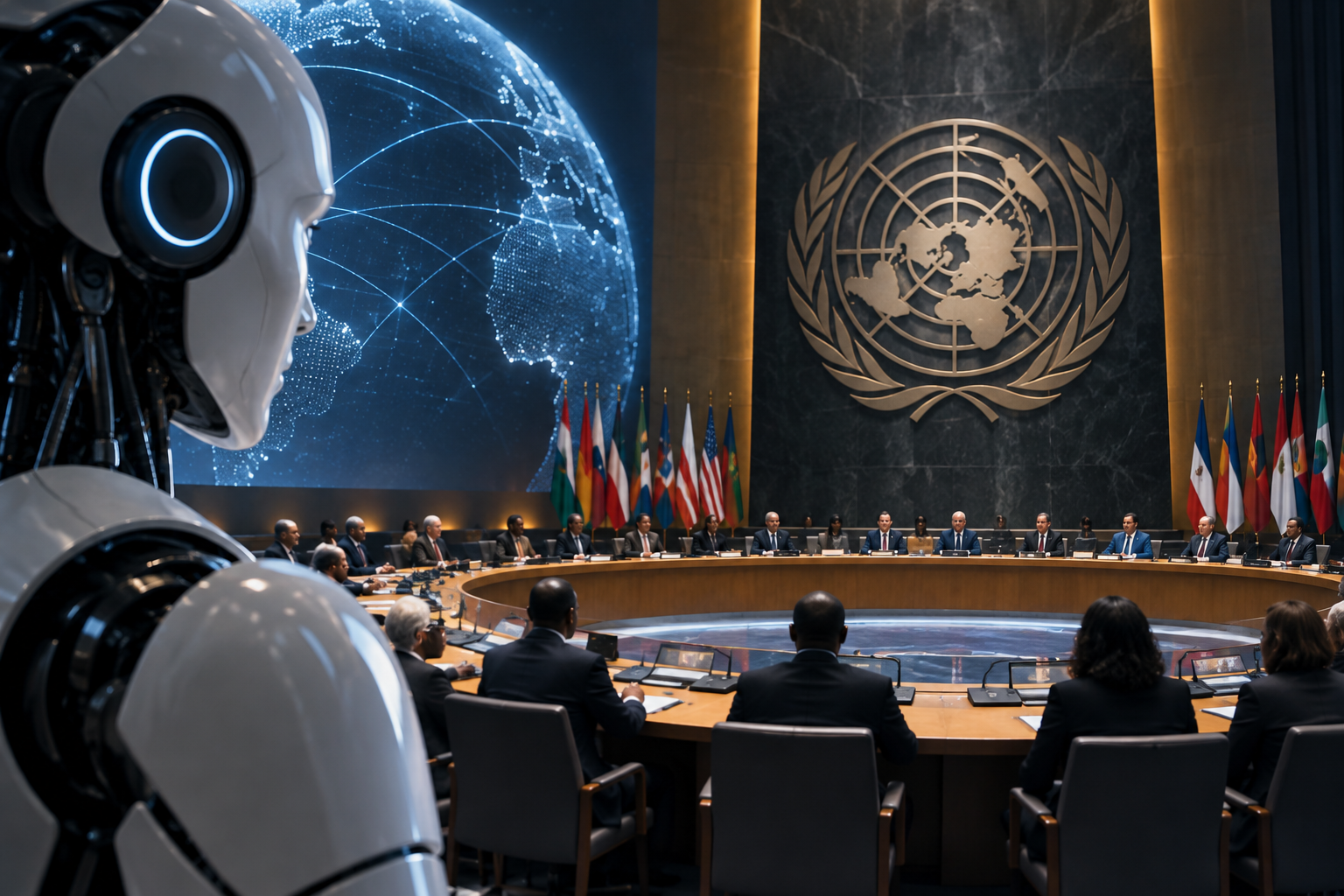 Highly Relevant
AI risks to global security at the U.N. briefing 2026
AI risks to global security are the ways advanced AI systems can increase cyberattacks, accelerate disinformation, lower barriers to biological or weapons misuse, and outpace the laws meant to control them. In the AI briefing to the U.N.
Read MoreReady to create amazing podcast content?
Choose a plan and start generating professional podcast content with AI
View Pricing Plans